Skip to content

Tags

Zero Data Retention

6 items
Modelsmedium signal

Amazon Bedrock added Kimi K3, and its agent runtime now starts in about two seconds

Two Bedrock announcements landed on September 18, 2026. Kimi K3, which Moonshot AI describes as the first open model with 2.8 trillion parameters, is generally available, and it is the first open-weight model on Bedrock that supports explicit prompt caching. The runtime agents run inside was replaced at the same time: AWS measured a P75 cold start of 1.9 to 2.0 seconds for container images from 200 MB to 2 GB, against 5.4 to 30 seconds on the previous version. Memory is now released during a session instead of being held at the peak.

Amazon Web Servicesverified
Agentsstrong signal

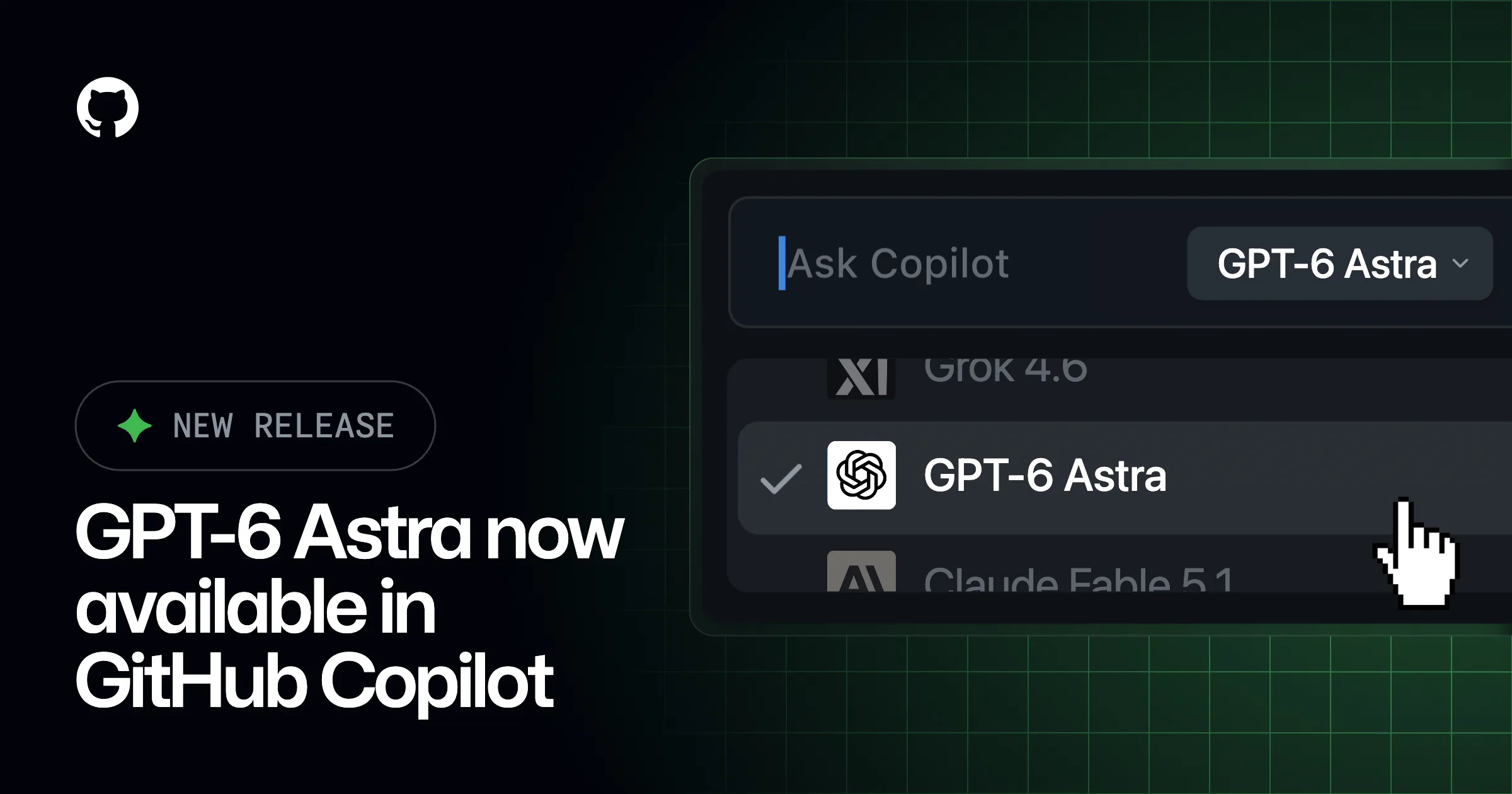
GitHub Copilot switches GPT-6 Astra on by itself and leaves Claude Fable 5.1 off

GPT-6 Astra became generally available in GitHub Copilot on September 4, 2026, for the Pro+, Max, Business, and Enterprise plans. Claude Fable 5.1 reached the same four plans three days earlier. The two arrived with opposite administrator defaults: Astra is enabled automatically under default model enablement, while the Fable 5.1 policy is off until someone turns it on. Fable 5.1 is also the one that retains prompts and outputs, and the zero-retention exemption runs only to the end of the calendar year.

GitHubverified

Modelsstrong signal

OpenAI ships GPT-6 Astra at $10 per million input tokens, with enterprise access off by default

GPT-6 Astra went out on September 3, 2026, first to a limited set of organizations and then, over the following days, to ChatGPT Plus, Pro, Business, and Enterprise. In the API it answers to the name gpt-6-astra at $10 per million input tokens and $50 per million output tokens, and it is also served through Microsoft Azure and Amazon Bedrock. Enterprise workspaces do not get it automatically, because access is off by default at launch and an administrator has to turn it on. OpenAI also says the extra safety checks around this model can pause work in ChatGPT and Codex and stop it outright in the API.

OpenAIverified

Modelsstrong signal

Anthropic moves the monitoring record into the customer's own cloud account

Anthropic announced Enterprise Frontier Safeguards on September 1, 2026. It pairs zero data retention with automated misuse detection by keeping the activity data in the customer's cloud account rather than Anthropic's. The rollout is phased, and eligible customers get zero data retention on Fable 5 and Fable 5.1 until it reaches them. Anthropic charges nothing for it; the cloud provider bills the storage.

Anthropicverified

Modelsstrong signal

Anthropic ships Claude Fable 5.1 and cuts the price of cache reads

Claude Fable 5.1 and Claude Mythos 5.1 are one model at two levels of safeguards, and only the first is generally available. The change that shows up on a bill is the cache read, which drops to $0.25 per million tokens. Anthropic estimates that as roughly 25% off a typical workload and up to about 45% off a heavily agentic one. The model is also allowed to look for software vulnerabilities now, while exploit work stays behind the older restrictions.

Anthropicverified

Industrymedium signal

OpenAI introduces Private Safety Processing

On August 19, OpenAI released a preview of a system that recognizes abuse patterns across several linked sessions without retaining user content. The idea is that only a narrowly defined safety signal is passed on, without exposing the prompts and responses themselves, which keeps the zero data retention guarantee for paid API customers in force. The target is attackers who split a request across several conversations to avoid detection. The approach is the opposite of Anthropic's policy, which keeps data for 30 days with controlled human review on its covered models, the Mythos class among them, and holds to non-retention outside that set; if you are choosing a vendor for a project with sensitive client data, that difference is worth understanding before you sign. Wider rollout and a technical paper were announced for September.

TechCrunch / OpenAIverified