GitHub Copilot in Slack and Teams now reads shared files and keeps your chosen model for the whole thread
GitHub shipped four Copilot changes on September 25, 2026. The largest update is to Copilot in Slack and Microsoft Teams, which now uses shared files and forwarded messages as context. Agentic autofix now learns from Copilot Memory, and administrators get review-time metrics and a settings validator.
Source
Updates to GitHub Copilot for Slack and Microsoft TeamsGitHub Changelog: Copilot · Original published September 25, 2026
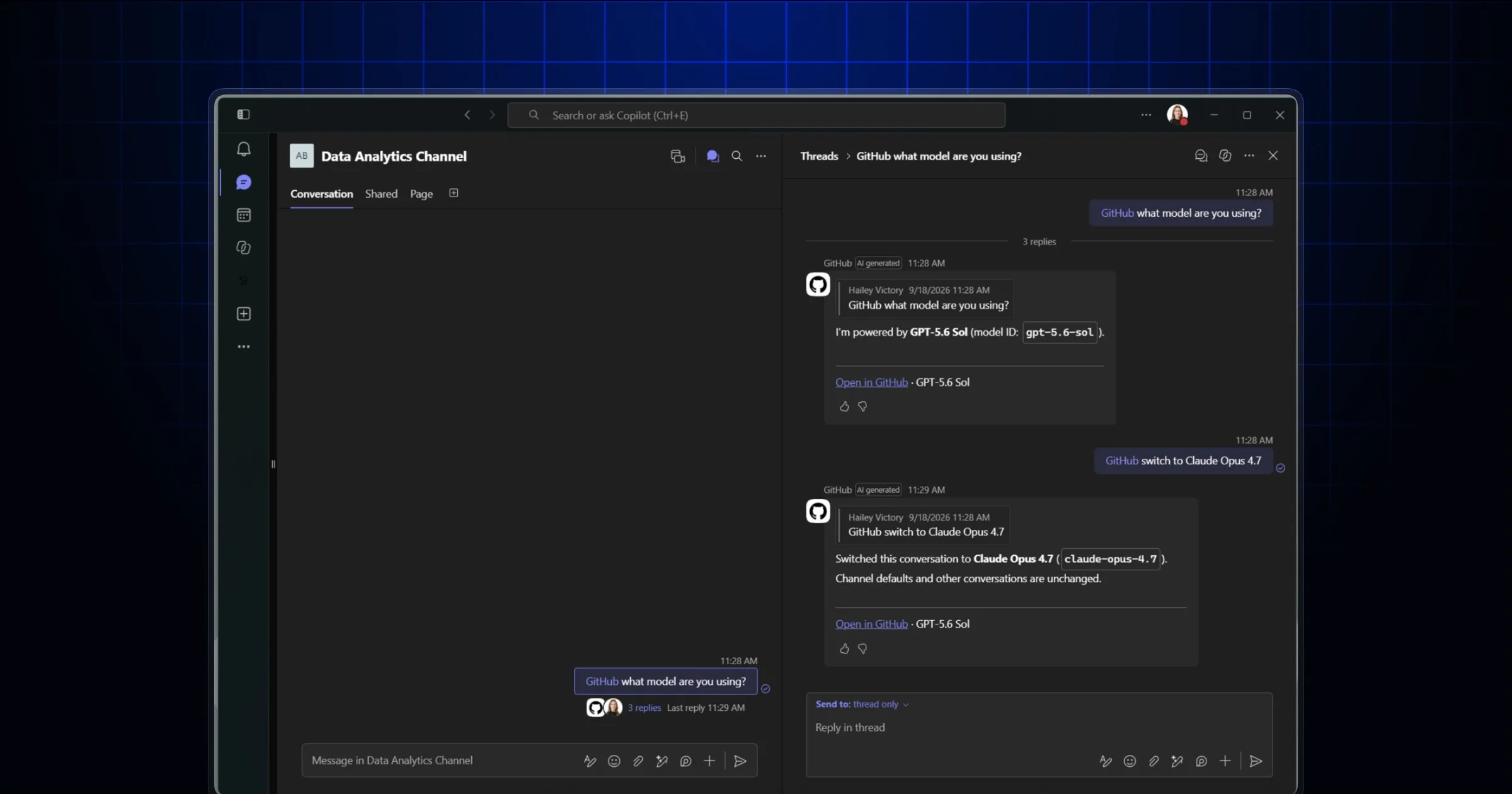
Copilot in Slack and Microsoft Teams turns a chat conversation into GitHub work, such as an issue or a pull request. The public preview for Copilot Business and Copilot Enterprise now gives it more of the conversation to work from and closes a gap in how Slack sessions switch repositories.
More context from the conversation
In Slack, you can now give Copilot supported files, attachments, and message links. In Teams, it can use inline images, forwarded messages, and channel and thread history.
Before it opens a new issue, Copilot checks for similar existing ones. The work it creates links back to the conversation it came from.
Model choice and repository switching
You can switch the model for your next message, and Copilot keeps that choice for the rest of the conversation. In Slack, you can also set default owners and repositories.
GitHub changed how Slack sessions switch repositories, so a superseded session can no longer keep acting in the old repository. Usage counts against your existing Copilot entitlements and can be capped with Copilot cloud agent budgets.
Agentic autofix now uses Copilot Memory
For customers who have enabled Copilot Memory, agentic autofix reads existing memories when it works on a security alert. When it produces a fix, it stores the fix pattern as a new memory.
Copilot code review and Copilot cloud agent can then draw on those memories in the same repository. Both agentic autofix and Copilot Memory are in public preview.
Two changes for administrators
The repository-level daily reports in the Copilot usage metrics API gain a pull_request_review_times array. It gives the median and the 90th percentile, in minutes, for three stages: ready for review to first review, first to final review, and final review to merge.
Only human reviews are timed, so reviews from Copilot code review and other bots are ignored. There is no backfill: pull requests that became ready for review before September 21, 2026 are left out.
A new validator on the enterprise AI controls page checks copilot/managed-settings.json, copilot/team-mappings.json, and the team files they reference. It reports malformed JSON, unsupported settings, and invalid team mappings, with the file and JSON path of each error.
„Only human reviews are timed.“
Sources
Related
OpenClaw 2026.10.2 stops long tool output from slipping credentials past redaction
A bug in OpenClaw's secret masking let a credential through whenever it straddled the boundary between two slices of a long text. The fix ships in 2026.10.2 along with repaired updates from 2026.10.1 and a new compaction default for OpenAI and Anthropic API keys.
OpenClawverified

OpenClaw 2026.10.1 lets agents search installed skills and changes how sessions message each other
OpenClaw released version 2026.10.1 on October 10, 2026, its first stable release since 2026.9.7. Agents can now search the skills installed on a machine and read only the one a task needs, instead of carrying the whole library in the prompt. Opt-in MCP Apps run beside chat, and full backups can go to an external drive or Cloudflare R2. Three changes can break existing setups: session-to-session messaging, the old required argument, and Workboard data stored before July 2026.
OpenClawverified
Claude Code 2.1.294 fixes prompt hooks that let through the actions they were written to block
Anthropic released Claude Code 2.1.294 on October 8, 2026. It fixes prompt and agent hooks phrased as instructions, which could allow exactly the actions they were meant to stop. Version 2.1.295 followed the same day with an onFailure setting that makes a crashed or timed-out command or HTTP hook block the action. Releases 2.1.292 and 2.1.293 from earlier in the week closed several permission and sandbox gaps.
Claude Code Releases (GitHub)verified