GitHub Copilot lets enterprise admins tie telemetry to a user's GitHub login and machine name
GitHub added an identity setting to Copilot's enterprise telemetry on October 12, 2026. When an administrator turns it on, OpenTelemetry data carries the developer's GitHub login, local operating-system account, and machine name. Five separate switches decide whether prompts, responses, and tool data are captured, and all of them start off.
Source
Client telemetry user attribution and configurable captureGitHub Changelog: Copilot · Original published October 12, 2026
On October 12, 2026, GitHub gave enterprise administrators a way to attribute Copilot activity to a specific person. A new managed setting, telemetry.capture.identity, adds the developer's GitHub login, local operating-system account, and machine name to the telemetry Copilot sends. GitHub says this works without collecting prompts, responses, or tool content. The setting is off by default and applies in Copilot CLI, the GitHub Copilot app, and VS Code sessions that use Agent Host.
What the identity setting adds
Copilot reports its activity through OpenTelemetry (OTel), an open standard for traces, metrics, and logs that companies route into their own monitoring systems. The administrator names the collector that receives the data in managed settings. The data already carried a pseudonymous ID, enduser.pseudo.id, and the new setting leaves it unchanged.
With identity capture on, each record gets three more attributes. user.name is the account signed in to Copilot, currently the GitHub login; process.user.name is the local operating-system account; and host.name is the machine's name. The legacy captureContent setting never turns identity on, so an administrator has to enable it explicitly.
Five switches for content
Administrators can also control five content classes one by one: prompts, model responses with supported reasoning content, raw tool arguments and commands, tool results and errors, and policy details such as sandbox filesystem paths. Every class starts off. Values set in managed settings take precedence over local settings, SDK configuration, and environment variables, so a local setting cannot override them.
The older captureContent setting still works as a shorthand for all five content classes. GitHub warns that prompt, tool, and policy capture can include source code, file contents, commands, tool results, and workspace or user-profile paths. It advises turning on only the classes an audit needs and sending them to an approved collection endpoint.
Sources
Related
OpenClaw 2026.10.5 blocks plugin hooks from changing tool calls after approval
OpenClaw's new release closes a gap that let an ordinary plugin hook alter a tool call after a trusted policy had already approved it. Such a call is now blocked unless the hook asks for its own approval, which breaks plugins that relied on the old order. The release also makes Gemini 4 Argon the default Google model and points the gemini alias at it.
OpenClawverified
GitHub will retire Claude Opus 5, Opus 4.8, and GPT-5.6 Terra from Copilot on November 16
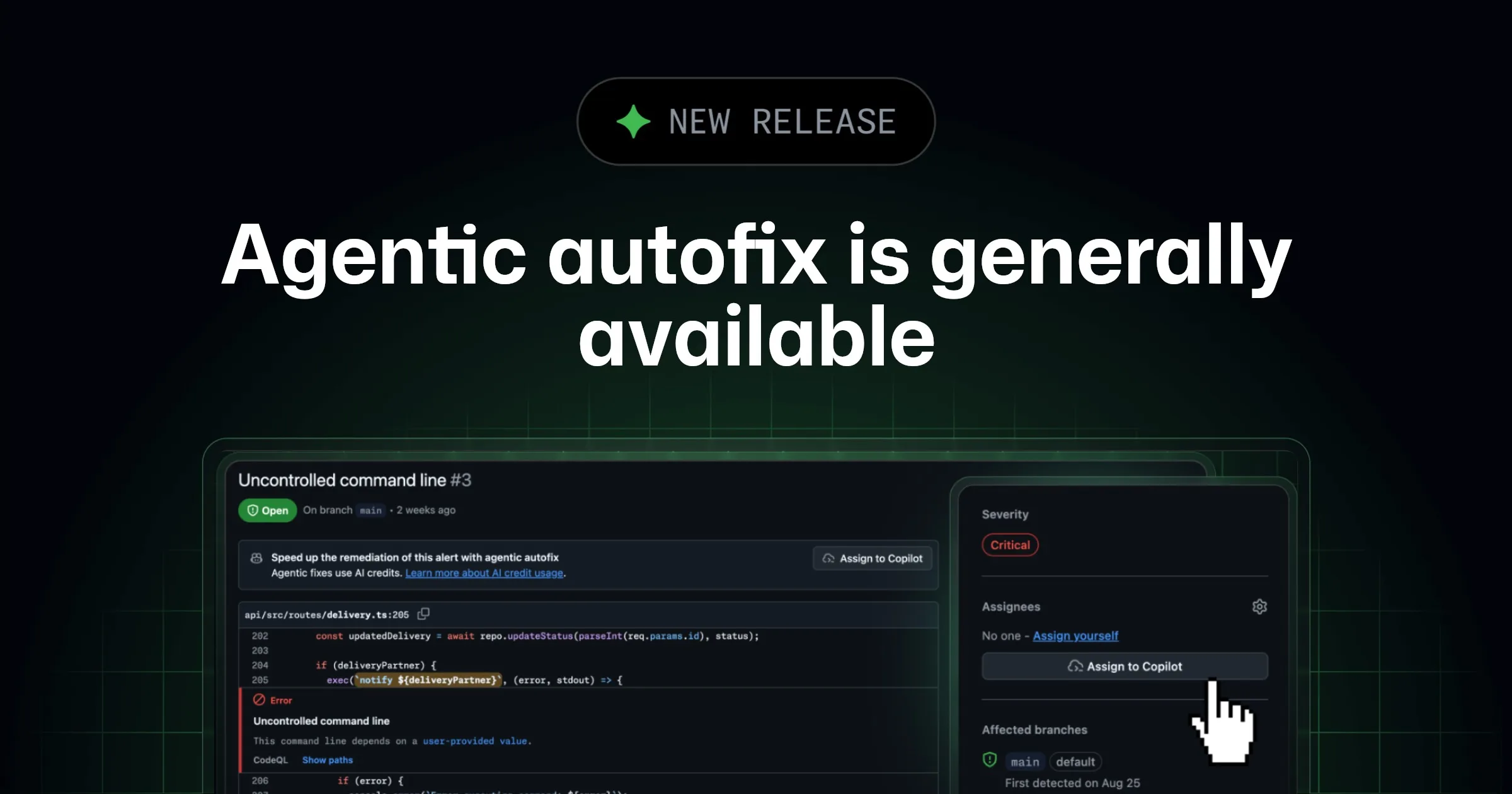
GitHub announced on October 15, 2026, that three models leave every Copilot experience on November 16, 2026, with Claude Opus 5.5 and GPT-6.1 Sol or GPT-6 Luna as suggested replacements. The same day, agentic autofix for code scanning alerts became generally available to Enterprise Cloud customers with Code Security or Advanced Security.
GitHub Changelogverified
OpenClaw 2026.10.2 stops long tool output from slipping credentials past redaction
A bug in OpenClaw's secret masking let a credential through whenever it straddled the boundary between two slices of a long text. The fix ships in 2026.10.2 along with repaired updates from 2026.10.1 and a new compaction default for OpenAI and Anthropic API keys.
OpenClawverified