Skip to content

Source

Hugging Face Blog

8 items

Model releases, inference benchmarks, and library changes from the largest open model hub. Often the first place a new open model is documented.

huggingface.co ↗

LLAMA.CPP B115567.63 GBBonsai 2 27B without the fork
Machines & local modelsmedium signal

llama.cpp now runs PrismML's ternary Bonsai 2 27B without the company's fork

Build b11556 adds the weight rotation step that Bonsai 2 27B was missing in stock llama.cpp. The 7.63 GB Q2_0 file now gives correct output there, while PrismML's smaller PQ2_0 and PTQ1_0 packs still require the company's own build.

llama.cppverified

Microsoft's graphic for ThinkingBox: the name spelled in dotted letters on a yellow-green background covered with small blocks of horizontal lines.
Modelsmedium signal

Microsoft's ThinkingBox shows no model passes half of 507 agent tasks 20 times in a row

Microsoft's Copilot Studio team published results from its ThinkingBox benchmark on the Hugging Face blog on October 3, 2026. The benchmark runs 507 business workflows 20 times per model and grades the database state an agent leaves behind, not its final message. Microsoft reports that Claude Opus 5.5 leads single-attempt accuracy at 67.16%, yet it passes only 241 tasks on all 20 attempts. According to the authors, roughly four in five failures come from tool handling rather than reasoning.

Microsoft, Hugging Faceverified

Ai2's graphic for AstaBrief: the model's name in green letters on a dark background scattered with outlined document icons, a few of them highlighted.
Modelsweak signal

Ai2 releases AstaBrief, an open-weights model that writes cited research reports

Ai2 released the weights and training data for AstaBrief on October 2, 2026. The model takes a research question plus retrieved excerpts from the literature and writes a report with citations. Ai2 measures it at 51.1 seconds per report in its Asta platform, against 178.5 seconds for the Claude-powered mode beside it. The license is Apache 2.0, and Ai2 says its evaluation predates the current frontier models.

Ai2verified

Modelsmedium signal

Amazon's Strands Labs releases Decider 2B, an open decision model that runs locally

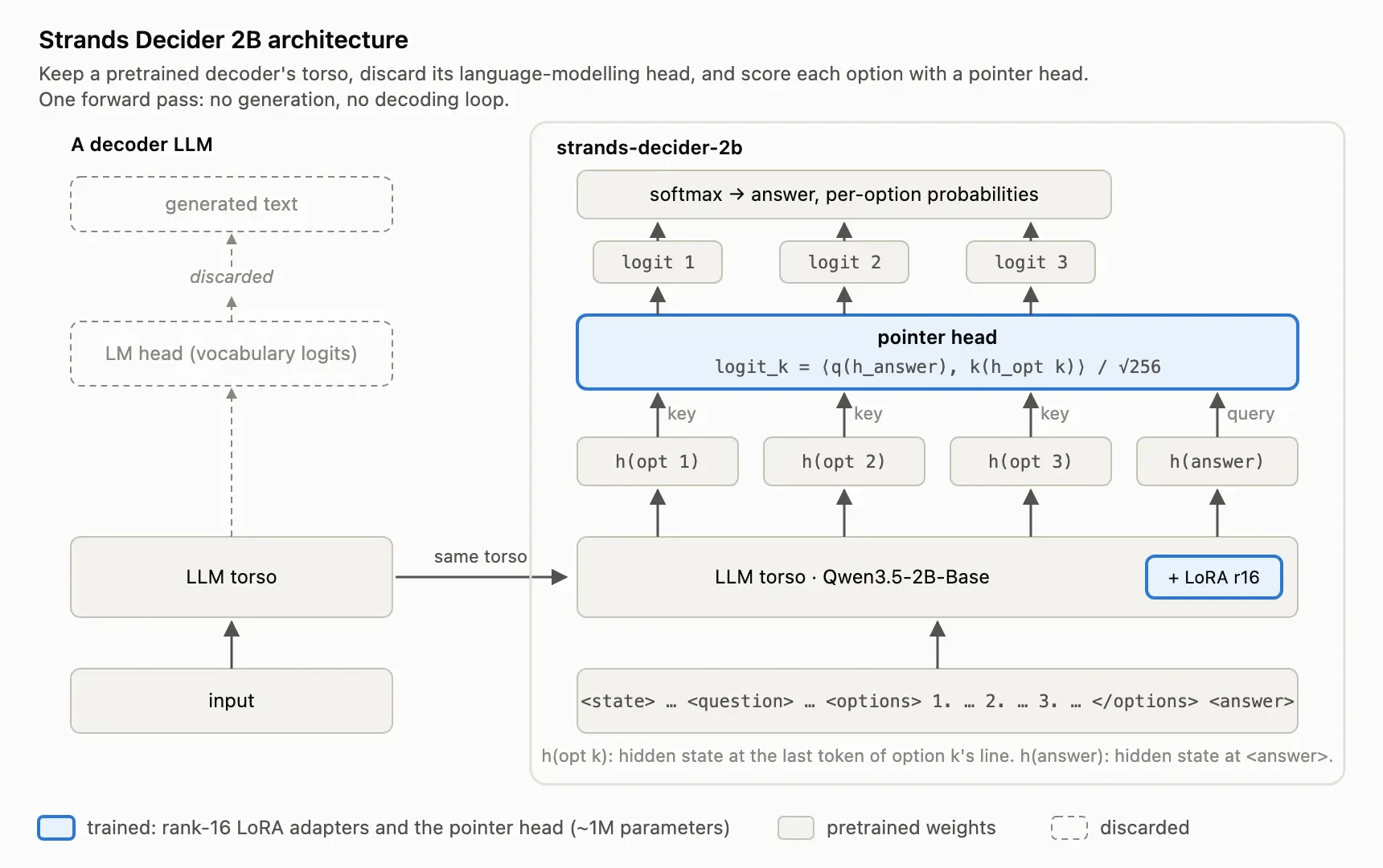
Strands Labs, the experimental arm of the Strands Agents project, released Strands Decider 2B on October 1, 2026. The model does not write text: it picks one of the options you give it, answers yes or no, or scores on a scale, and it attaches a confidence value to each answer. The team reports a median of 115 ms per decision on Nvidia's RTX 3090. Code, weights, training data, and scripts are public under Apache-2.0. If you build agents, this gives you a cheap local step for routing, tool checks, and guardrails.

Strands Agentsverified

Modelsmedium signal

NVIDIA releases Kumo Tabular, an open model that predicts table rows without training and tops four benchmarks

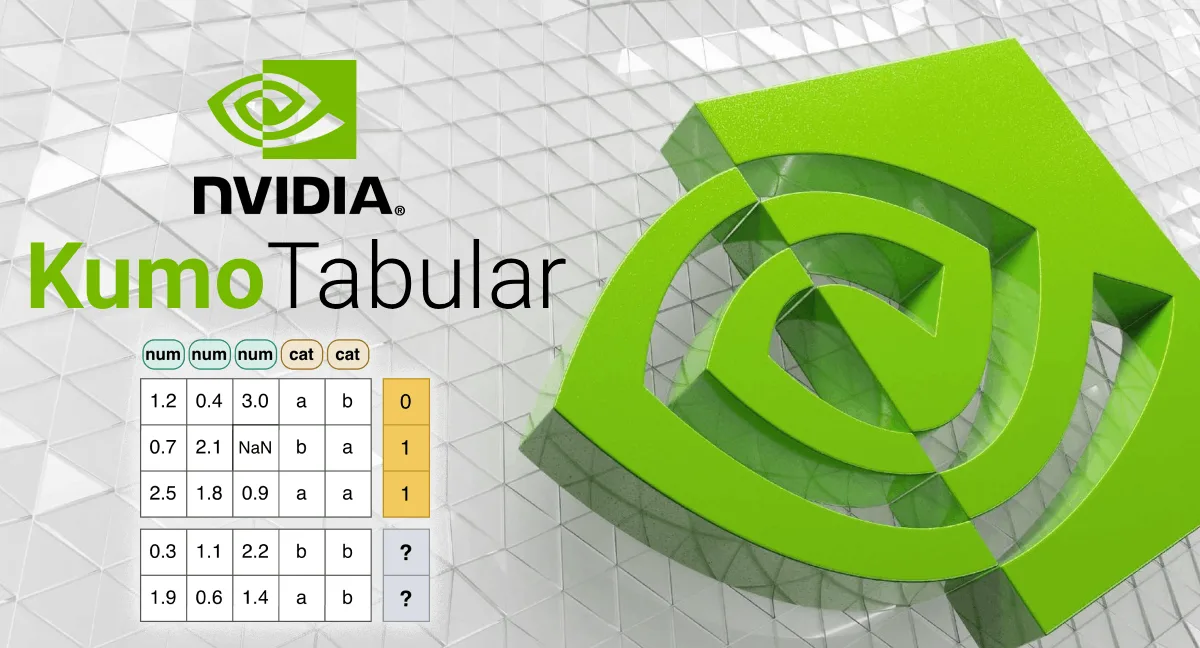
Kumo Tabular reads a table of labeled rows and returns predictions for new rows in a single forward pass, with no training, no tuning, and no feature engineering. NVIDIA published it on September 29, 2026 in three sizes from 28 million to 215 million parameters, under the OpenMDW-1.1 license that allows commercial use. By NVIDIA's own measurement it ranks first on TabArena, BeyondArena, TALENT, and ScoringBench. It handles numeric and categorical columns only, and it needs a CUDA GPU.

Hugging Face Blogverified

Agentsmedium signal

Google's Antigravity SDK can now run agents offline on a local Gemma 4 model

Google added local model support to the Antigravity SDK on September 23, 2026. The first supported setup is Gemma 4 26B A4B running through LiteRT, and Google recommends more than 24 GB of video or unified memory. The SDK can also talk to local servers such as Ollama, LM Studio, and vLLM.

Google Developers Blogverified

Machines & local modelsmedium signal

Transformers now loads llama.cpp GGUF quants on Apple Silicon

A GGUF checkpoint can be passed straight to from_pretrained and run with its weights still packed, using ggml's Metal kernels through the kernels library. The target is a single interactive conversation on an Apple Silicon Mac, and the packed path covers the Qwen3.5 dense and mixture-of-experts architectures plus compatible Qwen3.8 checkpoints. Hugging Face says the result comes close to llama.cpp on the three checkpoints it measured, while noting the two measurements were not taken under identical conditions. It still recommends llama.cpp when efficient local inference is the priority.

Hugging Faceverified