Skip to content

Google

Gemini

50 items

Page 2 of 2.

Brands
Codingmedium signal

Gemini CLI stops loading repository MCP servers in an untrusted workspace

A fix merged into Gemini CLI on August 28, 2026 changes the order in which workspace trust is decided, and it shipped the next day in the nightly build v0.59.0-nightly.20260829. Environment signals such as GEMINI_RESTRICTED_MODE are now read before local options, and an untrusted signal ends the check immediately. In the A2A server, MCP server definitions that come from the repository are dropped when the workspace is not trusted. The stated purpose is to keep the server from starting processes it should not start.

Gemini CLIverified
Images & videomedium signal

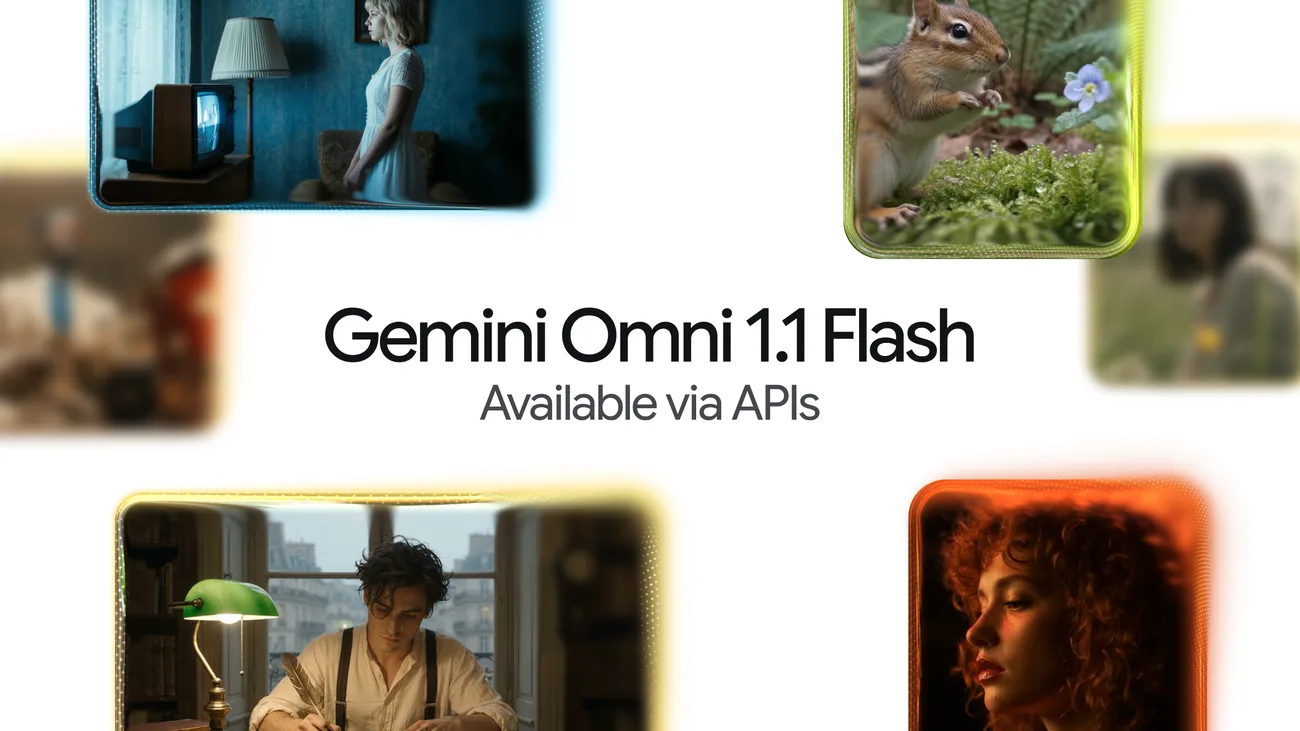
Gemini Omni 1.1 Flash extends a shot to forty seconds and drafts it in 360p first

Google's video model can now continue an existing clip in ten-second steps up to forty seconds total, reading up to ten seconds of prior footage instead of only the final second. A 360p draft mode runs up to 60 percent faster at a third of the cost, and finished work upscales to 1080p or 4K.

Googleverified

Codingmedium signal

Thirteen of twenty-four fixes in Gemini CLI 0.57 were filed by an agent

The stable release landed on August 25 with twenty-four entries. Thirteen of them are labeled SSR Agent — issue fixes written by automation and merged under one account, including two that touch how subagents behave.

Googleverified

Modelsstrong signal

Gemini 3.7 Flash, read from Google's own numbers

Google shipped it on August 13, 2026, 23 days after Gemini 3.6 Flash, with large gains on coding and agent benchmarks and an introductory price it labels as such. All of that holds. Four things are visible only if you open the model card instead of the launch post, and one of them is a score that went down.

Googleverified

Assistants & appsstrong signal

Gemini Spark vs Claude's browser toolset: whose account, whose risk

Both drive a web browser, both stop before the step that cannot be undone, and their lists of stopping points are nearly the same. The difference is what each assumes about the session it runs in: one is built on the accounts you are already signed into, the other tells you to give it a browser with no credentials in it. That single assumption decides which of the two belongs anywhere near your work.

Google, Anthropicverified

Modelsstrong signal

Best cheap models for high-volume work, priced per thousand calls

Six models, one task, one number: what a thousand calls cost when each sends 4,000 tokens in and gets 800 back. The cheapest row is $1.76 and the most expensive is $16.00, a nine-fold spread rather than the hundred-fold spread the category implies. Two things move the ranking more than the headline price does, and one of them has a date on it.

Anthropic, Google, OpenAIverified

Securitystrong signal

Encrypting the instruction walks it straight past the guardrail

Researchers at Adversa hid a prompt injection as ciphertext with the key next to it. Grok decrypted it in its own sandbox and sent the user's name, location, and chat history to an attacker's server, without a warning and without asking.

Ars Technicaverified

Modelsstrong signal

Gemini 3.7 Flash: half the price and markedly better on code

Google released Gemini 3.7 Flash on August 13, just three weeks after 3.6. The gain on coding benchmarks is large: the DeepSWE v1.1 score rises from 49.0% to 65.3%, and FrontierCode 1.1 from 34.4% to 43.6%. Introductory pricing, in force through the end of 2026, is $0.75 per million input tokens and $3.75 per million output tokens — half what its predecessor launched at. The model is available through the Gemini API, in AI Studio, Android Studio, and Antigravity, and in Spark for AI Pro and Ultra subscribers.

9to5Google / Googleverified

Assistants & appsmedium signal

Gemini Spark takes over desktop Chrome

Google's agent can now drive the desktop version of Chrome, using accounts you are already signed in to and passwords saved in the browser. It books property viewings, prepares flight searches, and fills in forms, handing the task back to the user to finalize a payment, accept terms, or create an account. This is the same pattern that has settled in with Claude and the rest: the agent does everything up to the step that cannot be undone, and a person confirms that step.

Googleverified