AWS Lambda now runs standard Node.js web servers, with up to 128 concurrent requests per environment
AWS launched Lambda Web Functions on October 12, 2026. A Node.js server built with Express, Hono, or Next.js runs on Lambda without an adapter, and CPU time is billed only while the code is actually working. Existing Lambda functions are renamed Event Functions, with no code changes required.
Source
AWS Lambda announces Lambda Web FunctionsAWS What's New — Machine Learning · Original published October 12, 2026
Amazon Web Services launched Lambda Web Functions on October 12, 2026, a new way to run web applications on AWS Lambda. Lambda is the company's serverless platform: AWS runs the machines, and you pay for what you use. Instead of rewriting an app as an event handler, you now deploy an ordinary Node.js server that listens on a port. One execution environment serves up to 128 requests at once, and time the code spends waiting on a database is not billed as CPU time.
What changes for a web app
A classic Lambda function receives an event, handles it, and returns a response, and each environment works on one request at a time. Running an Express or Next.js app on it has meant wrapping the app in an adapter that turns events into HTTP requests. Web Functions drop that layer. Lambda sets the AWS_LAMBDA_HTTP_ENDPOINT environment variable to a host and port, and the server listens there as it would on any machine. To run the same code locally, you set the variable yourself.
AWS names Express, Hono, Fastify, and Next.js as examples and says any Node.js framework works. At launch the only runtime is Node.js 24 on Arm64, so code in any other language cannot use Web Functions yet.
With the same announcement, AWS renamed existing Lambda functions to Lambda Event Functions. The change is in name only: according to AWS, existing functions need no code changes and no redeployment.
How billing differs
Event Functions are billed for the full duration of each invocation, waiting included. Web Functions bill for requests, for the CPU time the code actually uses, and for memory for as long as the execution environment exists. A request that waits on a database query or an external API uses little CPU in the meantime.
Memory keeps accruing while an environment sits idle, so the savings depend on the workload. AWS says I/O-heavy work, such as server-side rendering, API backends, and AI endpoints that stream tokens, can see lower compute costs. The announcement itself gives no per-unit prices.
Because one environment handles up to 128 concurrent requests, a burst of traffic can land on environments that are already warm. A cold start is the delay while Lambda prepares a new environment. AWS claims the shared model cuts cold starts by orders of magnitude, but it has not published a measurement.
Deployment and regions
The AWS CLI deploys with one command, aws lambda-web deploy, which bundles the code, creates the function, and returns an HTTPS address. In AWS's own walkthrough this took under a minute. Each deploy creates a revision, an immutable snapshot of code and configuration, and an endpoint can split traffic between revisions, for example 90% to the current one and 10% to the new one.
Adding --regions replicates the function to several AWS Regions behind one global address, and each request goes to the Region with the lowest latency on a best-effort basis. Web Functions are available in US East (N. Virginia), US East (Ohio), US West (Oregon), Asia Pacific (Tokyo), and Europe (Ireland). An endpoint can also act as an Amazon CloudFront origin, and CloudFront origin access control can restrict it so that only that distribution can call it.
Sources
Once a week, in your inbox
The whole week's news, gathered into one email. No ads, no passing your address on, one-click unsubscribe.
The address is used only for this roundup. It is not sold and not passed to anyone.
Related
Claude Code 2.1.321 stops MCP sign-in from sending refresh tokens to another host after a redirect
The most serious fix in the release concerns MCP servers that require an OAuth sign-in. Three more fixes cover cases where a shell command or a file write got past a permission check. Claude Fable 5.2 also becomes the default Fable model.
Anthropicverified
OpenClaw 2026.11.2 stops project settings from adding programs to the agent's PATH
OpenClaw's latest patch release adds no features and fixes a set of security problems. The most serious one let a settings file inside a project add programs from that project to the list of directories where the system looks for commands. Two of the fixes change existing behavior, so some setups need to be adjusted.
OpenClawverified
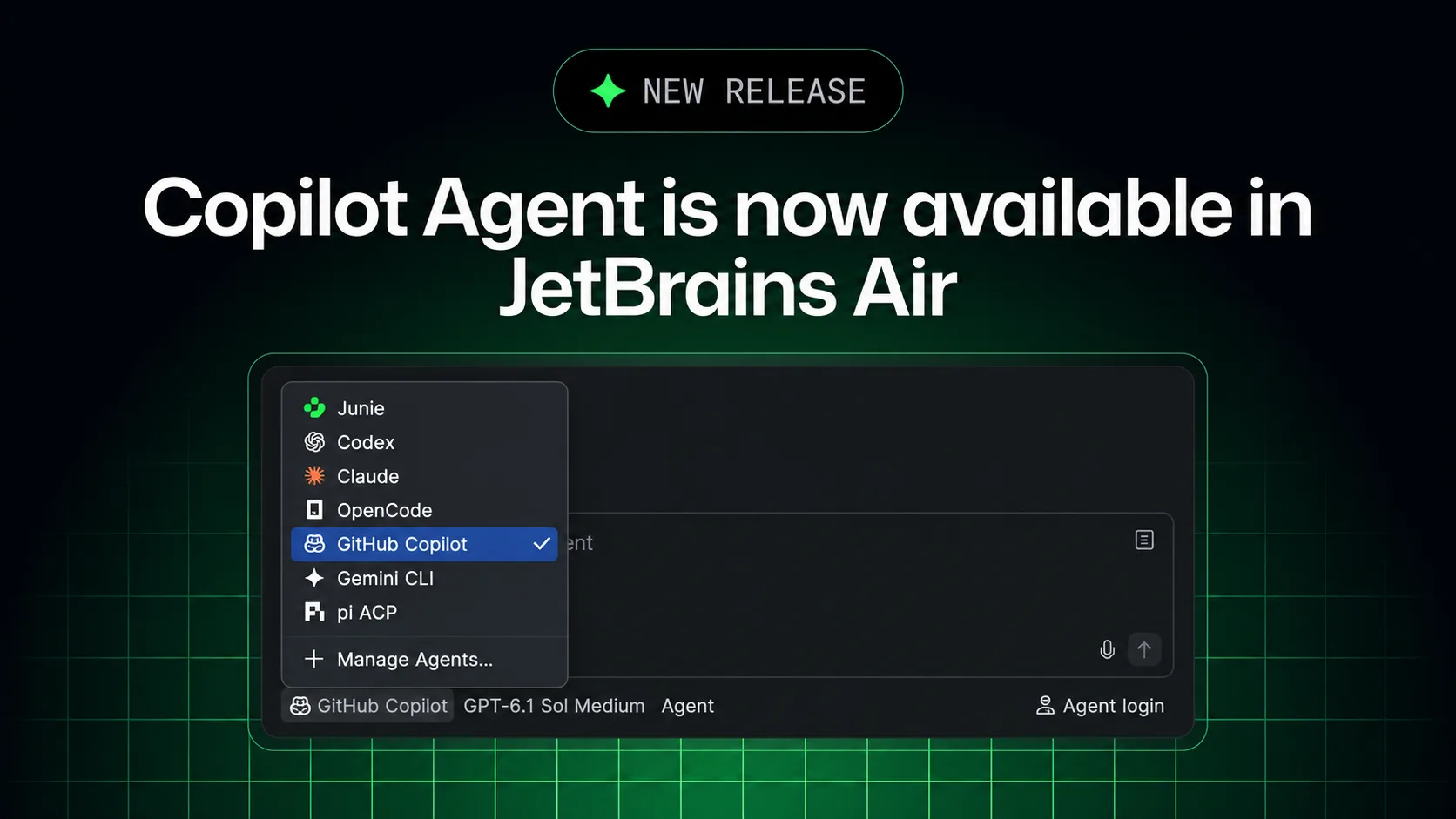
GitHub Copilot now runs in JetBrains Air, and its cloud tasks use a Copilot plan instead of JetBrains credits
Copilot can now be picked as an agent in Air for local and cloud coding work, on an existing subscription. Air administrators can switch it off, but they cannot cap its spending in Air or see its usage in Air's analytics.
GitHubverified