Best AI video generators, priced per second
Three ways to buy generated video in August 2026: per second through an API, as monthly credits with every model in one place, or as credits tuned for iteration. The same ten-second 1080p clip costs anywhere from $0.80 to $7.00 depending on which door you walk through.

| # | Name | Price | Best for |
|---|---|---|---|
| 1 | Google Veo 3.1, via Gemini API | $0.05–$0.60 per second | Lowest cost per finished second, if you are calling it from code. |
| 2 | Runway | $12–$28 per month billed yearly | Every major model behind one subscription, for people who compare shots. |
| 3 | Luma Ray3.2 | $30–$300 per month | Cheap drafts, expensive finals — right when you iterate a lot. |
| 4 | OpenAI Sora 2 | $0.10–$0.70 per second | Cheapest 720p second on the list; the Pro tier is the most expensive 1080p. |
- 01
Google Veo 3.1, via Gemini API
$0.05–$0.60 per secondLowest cost per finished second, if you are calling it from code.
Good
Three speed tiers from $0.05 to $0.40 per second at standard resolutions. Audio is included in the quoted price. 4K available on Standard and Fast.
Not good
Paid tier only, no free tier. The 3.1 models are preview, so terms and rate limits can change. No editing interface: you bring your own.
- 02
Runway
$12–$28 per month billed yearlyEvery major model behind one subscription, for people who compare shots.
Good
Standard reaches Gen-4.5, Veo 3.1, Kling 3.0, Aleph and Nano Banana Pro from one account. 4K upscaling and no watermarks from the entry paid plan. A free tier with 125 credits to try.
Not good
Credits, not seconds: 625 a month is 52 seconds of Gen-4.5, which goes fast. Per-second cost is higher than buying Veo direct.
- 03
Luma Ray3.2
$30–$300 per monthCheap drafts, expensive finals — right when you iterate a lot.
Good
Draft resolution costs 20 credits per 5 seconds against 400 at 1080p, so exploration is nearly free. Video-to-video and reframe are priced per second, which suits editing an existing shot.
Not good
Entry plan is $30, above Runway's. HDR doubles the credit cost and HDR with EXR triples it. Agent usage is metered separately by plan.
- 04
OpenAI Sora 2
$0.10–$0.70 per secondCheapest 720p second on the list; the Pro tier is the most expensive 1080p.
Good
Sora 2 is $0.10 a second at 720p, the lowest per-second price here. Portrait and landscape cost the same, which matters if you cut for both.
Not good
Plain Sora 2 is 720p only. Going to 1080p means Sora 2 Pro at $0.70 a second, which makes a ten-second clip $7.00 — the most expensive finished clip in this comparison.
This is a comparison of published terms, not a test of footage. Every figure below was copied from the vendor's own price list on August 21, 2026, and the derived cost of a ten-second 1080p clip is arithmetic on those figures. Quality is a matter of taste and shot type; price is not, and price is what most people actually decide on.
How to read the numbers
Google sells Veo by the second through the Gemini API, with audio included in the listed price and three speed tiers. Runway and Luma sell monthly credits, so the real unit price depends on which plan you are on: the same clip gets cheaper as you buy a bigger bundle. That is why the table below shows both the list unit and what a ten-second 1080p clip works out to.
One structural difference matters more than any single number. Runway resells other people's models alongside its own, so a Standard subscription reaches Gen-4.5, Veo 3.1, Kling 3.0 and Nano Banana Pro from one account. Buying Veo directly from Google is cheaper per second; buying it through Runway means you can switch models mid-project without a second invoice.
- Veo 3.1 Standard: $0.40 per second at 720p and 1080p, $0.60 at 4K, audio included.
- Veo 3.1 Fast: $0.10 per second at 720p, $0.12 at 1080p, $0.30 at 4K.
- Veo 3.1 Lite: $0.05 per second at 720p, $0.08 at 1080p. No 4K output.
- Luma Ray3.2 at 1080p: 400 credits per 5 seconds, 1200 per 10 seconds.
- Runway Standard: 625 credits a month, which the price list equates to 52 seconds of Gen-4.5.
What this comparison does not cover
It does not rank output quality. Nobody can honestly rank that from a price list, and a ranking based on a handful of prompts would say more about the prompts than the models.
It does not test audio. Audio pricing for Luma and Runway is set separately from the video rates quoted here, and Runway's credit-to-seconds ratios come from its own price list rather than our measurement. Kling and Hailuo appear only as models reachable through Runway, not on their own terms.
Which one to pick
If you are generating video from your own code and want the lowest price per finished second, go to the Gemini API and start on the Lite tier: at $0.08 a second for 1080p, a ten-second clip costs less than a coffee, and you move up a tier only when the output is not good enough.
If a person rather than a program is doing the generating, and that person wants to try Kling against Gen-4.5 against Veo on the same shot, Runway is the cheaper answer even though its per-second price is higher. One subscription, one asset library, no procurement.
If your work is iterative and the drafts outnumber the finals, Luma's tiering rewards that pattern: draft resolution costs a twentieth of 1080p, so twenty throwaway attempts cost the same as one final.
Sources
Corrections
Added OpenAI Sora 2 and Sora 2 Pro with per-second pricing from the API documentation. The first version left Sora out because its product page did not respond; the pricing was published elsewhere and we should have looked there first.
Related
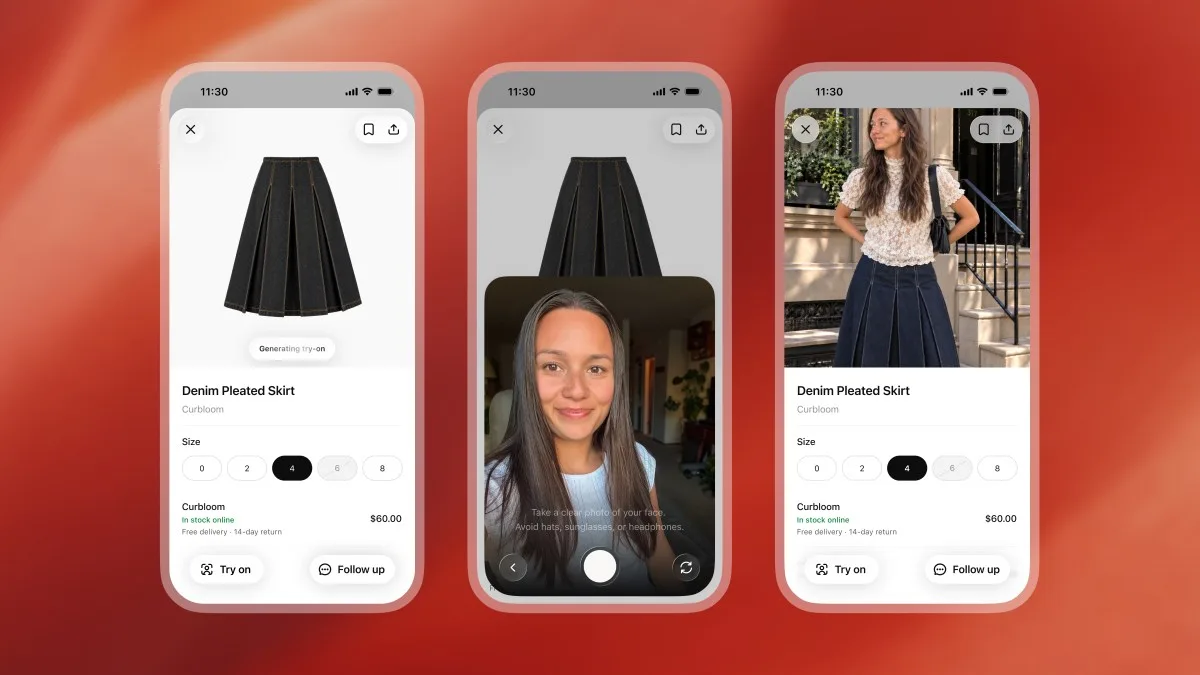
ChatGPT adds virtual try-on for clothes and keeps your reference photo for later
OpenAI added two shopping features to ChatGPT on October 1, 2026. A Try on button on listings for clothes and accessories generates an image of the item on you from a selfie. The selfie is saved as a reference photo for future try-ons until you change or delete it in settings. A second feature, Favorites, saves products to your ChatGPT Library.
OpenAIverified
Gemini 3.8 Live can now answer as a talking video avatar, and Google bills the video only while it speaks
Google made Gemini 3.8 Live with Live Avatar generally available in Gemini Enterprise on September 24, 2026, with US and EU endpoints. The model replies through a lip-synced video character while it listens, watches a camera or a shared screen, and calls tools in the background. Avatar video costs $1 per million tokens at 6,192 tokens for each second of speech. By our arithmetic, that comes to about $0.37 per spoken minute before audio, input, and context charges.
Googleverified

Google put its Nano Banana image editor into Docs and Slides and named it Google Pics
Google Pics is a standalone image creation and editing tool built on the Nano Banana model, and the same controls are being wired into Workspace apps. The integration begins with Docs and Slides on September 1, 2026, and reaches Drive in the coming weeks. Access arrives with a Google AI Pro or Ultra subscription and with most Workspace business plans, rolling out over the coming weeks. Google publishes no quota, no separate price, and no list of supported languages.
Googleverified