Firefox's Smart Window now fills forms from tabs you pick, using Google's Gemini 3.1 Flash Lite
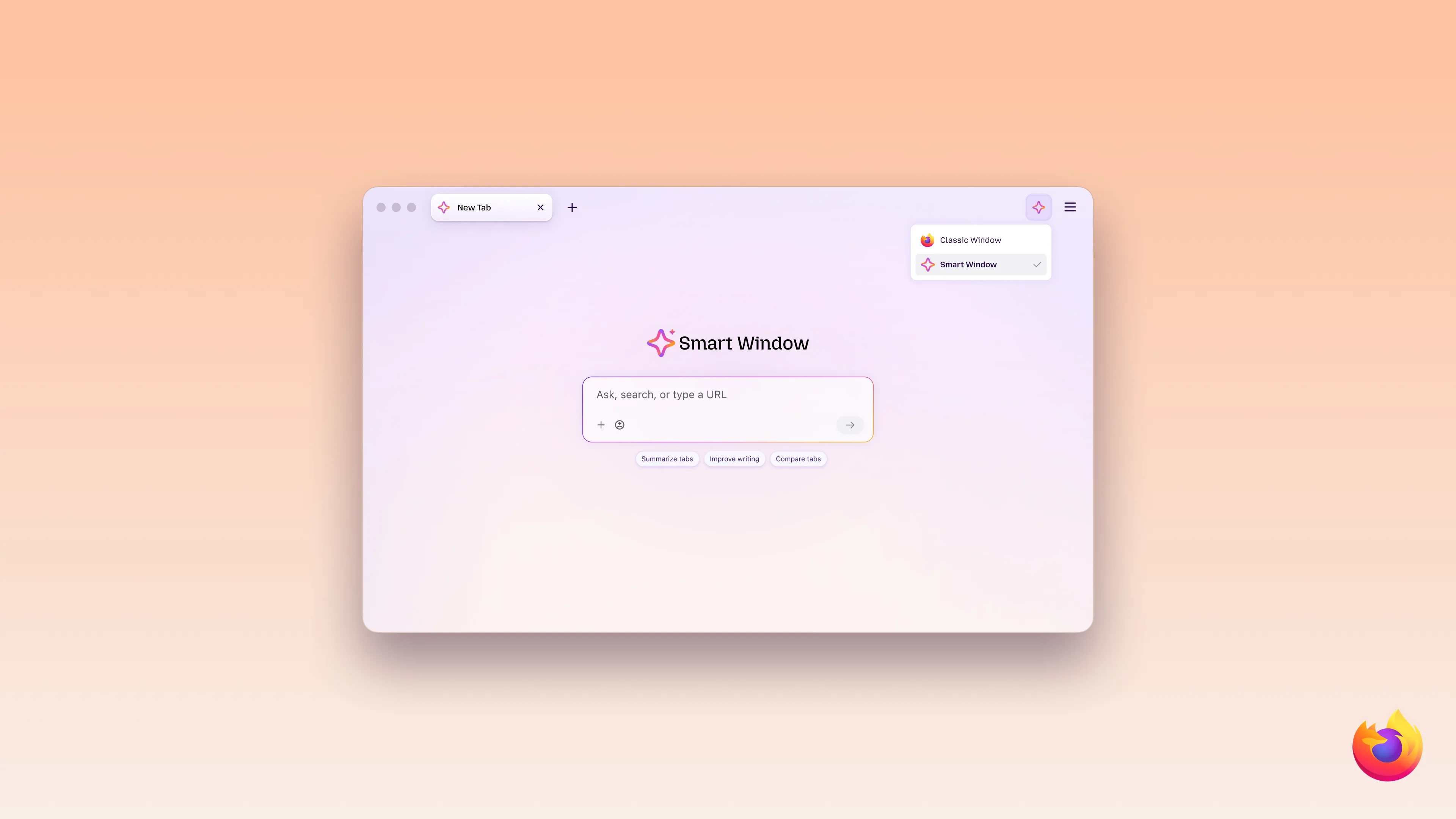
Mozilla has added two features to Smart Window, the AI mode that Firefox users switch on themselves. One drafts answers for web forms from tabs the user selects, and the other watches up to five pages per task for a change the user describes. Information from the selected tabs is shared with Gemini 3.1 Flash Lite, while page watching relies on a Qwen model.
Source
Smart Window adds new form filling and page watching featuresFirefox Release Notes · Original published October 27, 2026
Mozilla announced on October 27, 2026, that Smart Window, the opt-in AI mode in Firefox, can now fill in web forms using information from tabs you choose. A job application that asks for your work history, for example, can be filled from an open portfolio or professional profile. To do that, Firefox shares information from those tabs with Gemini 3.1 Flash Lite, a model made by Google.
How form filling works
The option appears when you click into a form with at least four text fields that Smart Window can help with. A “Fill from sources” entry shows up in the dropdown, together with a recommended source page, and a pencil icon lets you add or remove tabs. Smart Window then proposes values, which you review and can edit before sending. It never submits the form itself.
Firefox's ordinary autofill is unchanged. Saved details such as your name and address still go into forms without any AI model, and those saved values stay on the device. The new feature handles only text fields for now and does not keep the text it generates. Mozilla says it is exploring dropdown menus, PDF forms, and a way to save generated answers for later forms.
What the model gets to see
According to Mozilla, information from the selected source pages is shared with Gemini 3.1 Flash Lite, which detects the form fields and pulls out the relevant details. The model you picked for Smart Window chat stays the same. This suggests that picking source tabs is also a decision about what Google's model receives.
Mozilla's post does not say which version of Qwen handles page watching, where that model runs, or whether the content of watched pages leaves your computer. It also does not say how long information sent for form filling is kept.
Watching pages for a change
The second feature starts when you type /watch in the Smart Window chat. You describe what you are waiting for, such as a price drop or a job listing with a particular title, and add up to five pages to the task. Firefox checks them daily or weekly, but only while the browser is open.
A match appears under the Tasks button in the toolbar, and as a desktop notification if those are turned on. You can keep up to 15 tasks active at once. A task pauses after 60 days without a matching change, and checking stops entirely after 90 days.
For now, both features are limited to the English desktop beta of Smart Window in the United States and Canada. Mozilla says other markets will follow in the coming months.
„Smart Window won’t submit the form for you.“
Once a week, in your inbox
The whole week's news, gathered into one email. No ads, no passing your address on, one-click unsubscribe.
The address is used only for this roundup. It is not sold and not passed to anyone.
Related
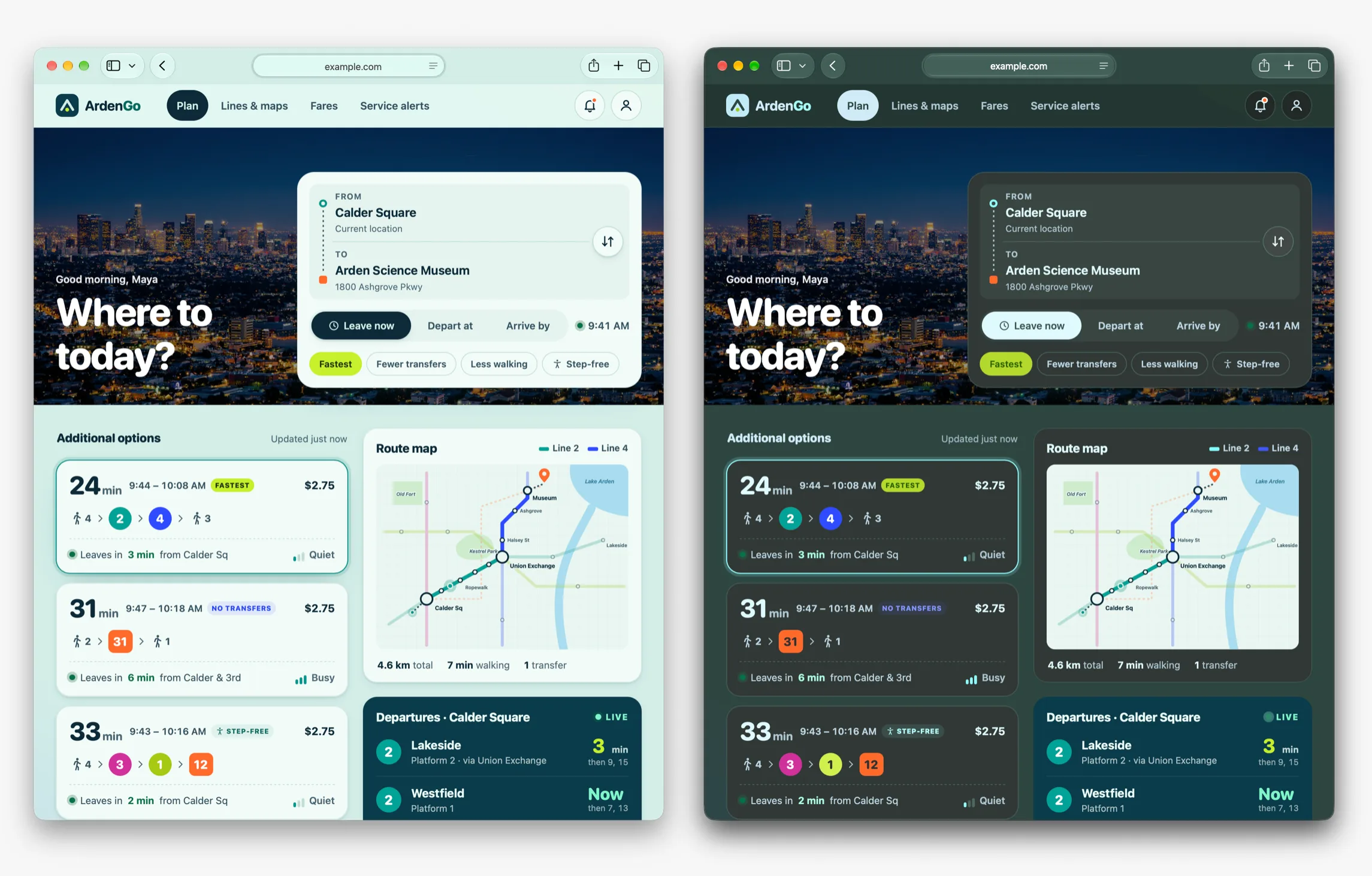
Safari 27.3 beta can darken light websites on its own, and the sites cannot detect it
The WebKit team introduced Adaptive Dark Mode on November 3, 2026. When a user turns it on, Safari recolors light pages that have no dark version of their own. Sites that declare dark mode support are left alone, and scripts keep reading the original colors.
WebKitverified

Researchers show a shared ChatGPT link could take over the account of whoever opened it
Parameter Labs chained a math library's message listener, an unsandboxed frame, and a YouTube endpoint to run code as chatgpt.com in a signed-in victim's session. According to the researchers, OpenAI fixed the flaw on October 26, 2026. MathLive, the library at the center of the chain, tightened its defaults on October 31. Sites that connect its virtual keyboard to a page on another origin now have to name the origins they trust.
Parameter Labsverified
OpenAI, Google, and Microsoft will honor one robots.txt signal against AI training
A proposed robots.txt token lets a site refuse generative AI training with one group of rules, for every company that adopts it. Microsoft starts honoring it on February 1, 2027. Google plans support in 2027, and OpenAI says it will follow in the coming months. The proposal is an individual Internet-Draft, not an IETF standard.
OpenAIverified