Skip to content

Tags

Apple silicon

9 items
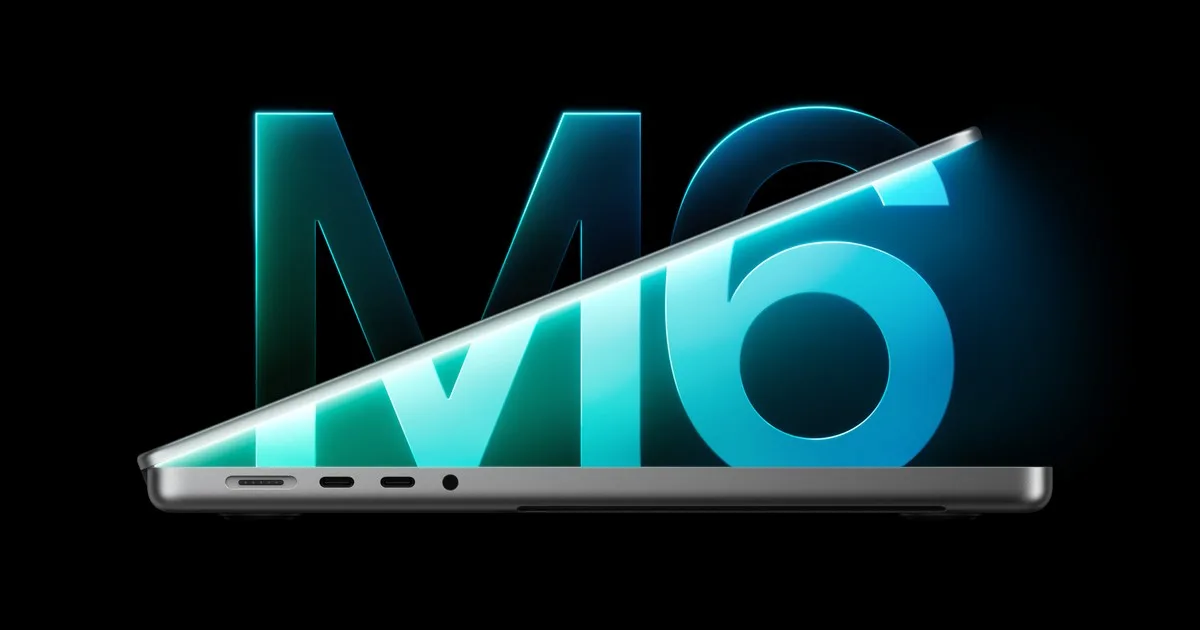
A partly closed MacBook Pro seen from the side, its lid crossing large glowing teal letters that read M6 on a black background.
Modelsmedium signal

Apple's M6 MacBook Pro and iMac start at $1,999 and $1,499, and both top out at 32GB of memory

Apple announced a 14-inch MacBook Pro and an iMac built on its new M6 chip on October 27, 2026. Pre-orders open on October 28, and deliveries start on November 6. Apple says both machines process prompts for local language models faster than the computers they replace. Unified memory still tops out at 32GB, so models that need more still call for the M5 Pro or M5 Max.

Apple Newsroomverified
Meta's artwork for the Muse Spark Open release: bundles of thin blue lines with small arrowheads flowing in a wave across a pale gray surface.
Modelsstrong signal

Meta releases the weights of Muse Spark Open, a model with 816 billion parameters

Muse Spark Open, Meta's largest open-weight model so far, came out on October 15, 2026. It takes text, images, audio, and video, and only about 42 billion of its 816 billion parameters work on any one token. The license is free for most uses, and hosted providers charge $1.25 per million input tokens.

Metaverified

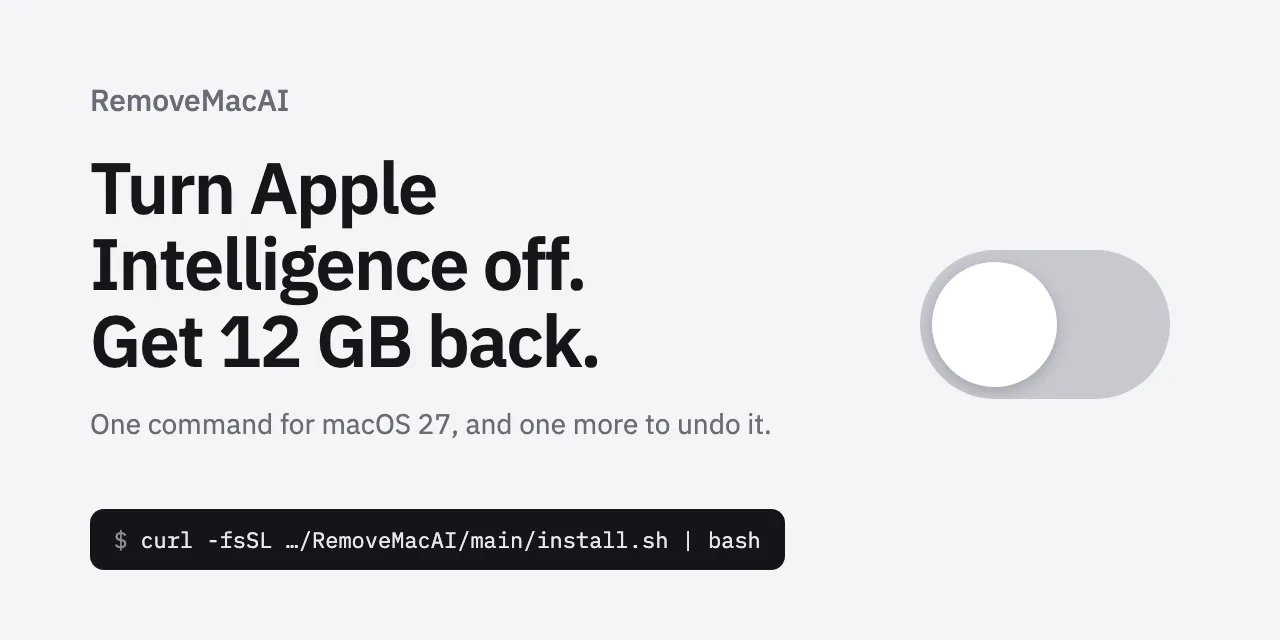
RemoveMacAI's project card: the heading Turn Apple Intelligence off. Get 12 GB back., a line about one command for macOS 27 and one more to undo it, a toggle switch in the off position, and the install command in a terminal box.
Assistants & appsmedium signal

An open source tool turns off Apple Intelligence on macOS 27 and deletes its models

RemoveMacAI is an open source command line tool that turns off Apple Intelligence on macOS 27, removes the downloaded models, and blocks macOS from downloading them again. Its author says macOS 27 no longer has a single switch for these features and keeps the models on disk after they are turned off. MacRumors puts the space freed at roughly 12 GB, depending on which models are installed. The first release came out on September 29, 2026, and four more followed by October 5, 2026.

RemoveMacAIverified

Modelsmedium signal

llama.cpp 0.6.0 adds GLM-5.3-Flash support and a server API for decision models

The llama.cpp project released version 0.6.0 on October 5, 2026. It adds support for GLM-5.3-Flash, a model for text and images with 320 billion parameters, and a new server endpoint for decision models. Two changes to speculative decoding come with measurements from their authors, one on Nvidia's DGX Spark and one on Apple GPUs. The release also changes the C API and raises the version of the saved session format, so programs built on the library need a check before you upgrade.

llama.cppverified

Modelsmedium signal

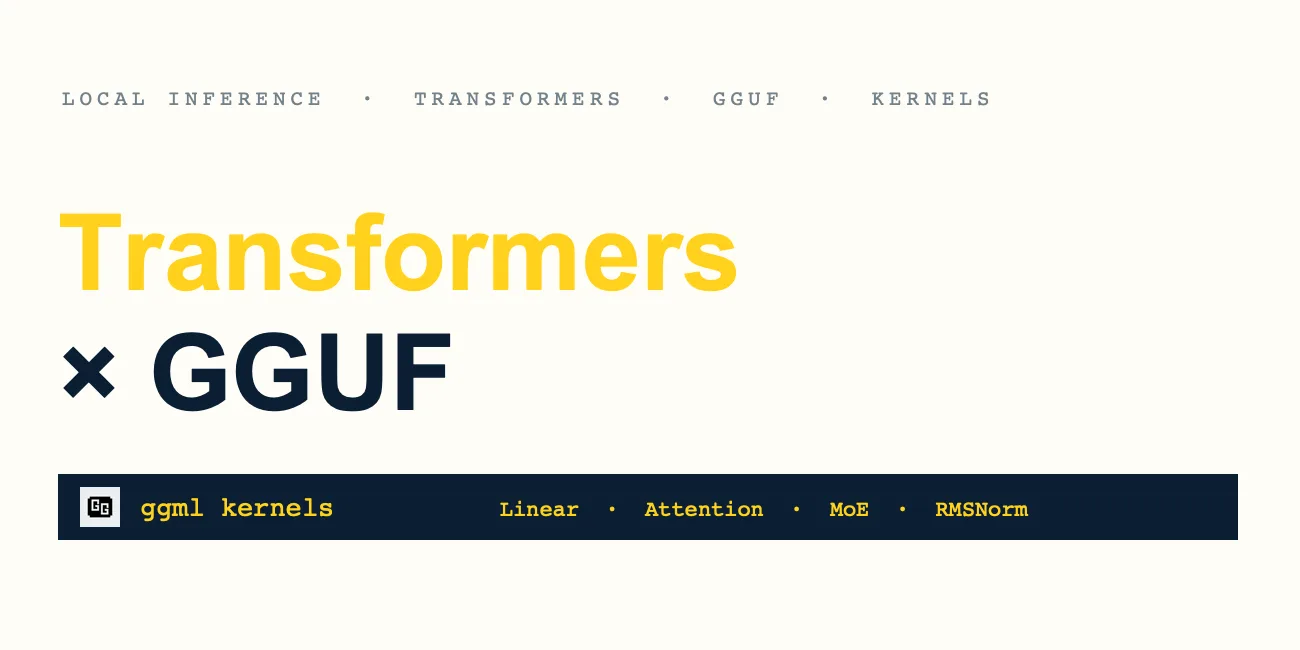
Transformers now loads llama.cpp GGUF quants on Apple Silicon

A GGUF checkpoint can be passed straight to from_pretrained and run with its weights still packed, using ggml's Metal kernels through the kernels library. The target is a single interactive conversation on an Apple Silicon Mac, and the packed path covers the Qwen3.5 dense and mixture-of-experts architectures plus compatible Qwen3.8 checkpoints. Hugging Face says the result comes close to llama.cpp on the three checkpoints it measured, while noting the two measurements were not taken under identical conditions. It still recommends llama.cpp when efficient local inference is the priority.

Hugging Faceverified

Modelsstrong signal

Apple claims 4.3x faster AI on Mac Studio, and the 512GB configuration arrives in late October

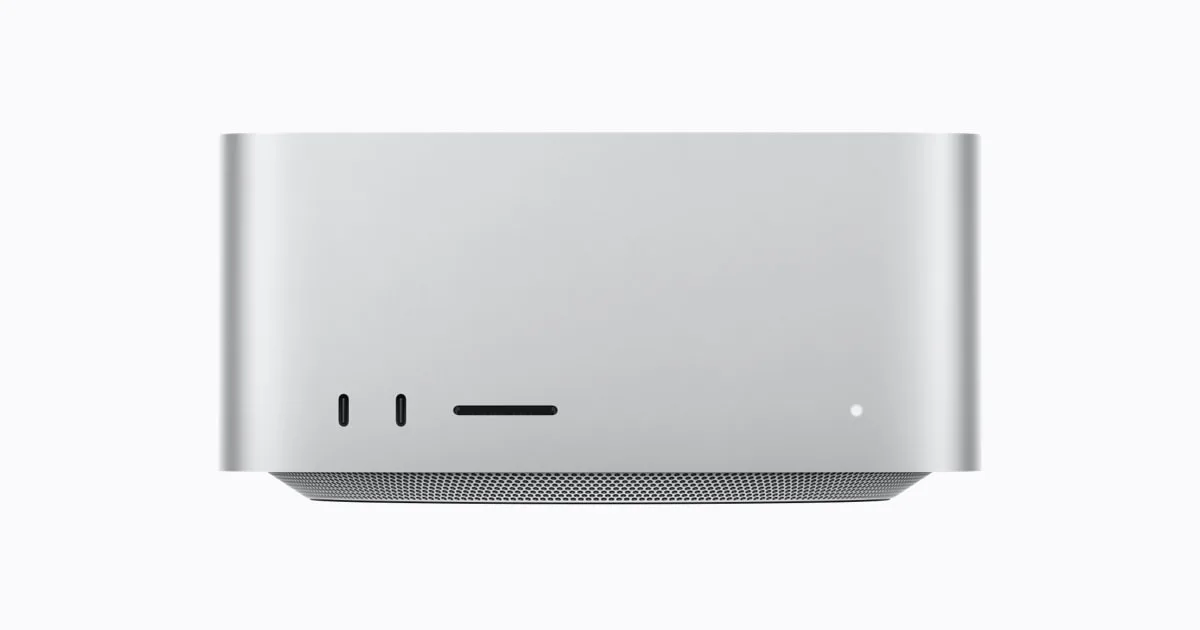
Mac Studio with M5 Max and the all-new M5 Ultra reaches stores on September 22, 2026, and Apple puts its AI performance at up to 4.3x the previous generation, measured in July 2026 against a machine with M3 Ultra. The configuration that decides how large a local model can be, 512GB of unified memory at up to 1.2TB/s, sits in a footnote: it comes in late October. On the software side the new Siri AI ships in beta, in English to start, and will not be available in the EU on iOS, iPadOS or watchOS at launch. Apple Intelligence features that run on server-side models also have daily usage limits, and Apple says wider access to them will be sold for a fee later.

Appleverified

Modelsmedium signal

llama.cpp 0.4.0 adds four model architectures, an Apple RDMA transport, and video flags

The 0.4.0 release landed on September 4, 2026, and it is a numbered version rather than one of the nightly builds. It adds initial support for Qwen3.8-Flash-Next, NVIDIA Nemotron-3-Puzzle-75B-A9B, DSpark on Nemotron 3.5, and nanbeige4.2-3B. Apple RDMA becomes an RPC transport, video arrives as command-line options, and the quantizer gains a memory ceiling. Two server defaults changed, and saved session state carries a new version number.

llama.cppverified

Modelsstrong signal

Memory sets what you can run locally, and price per token sets whether you should

A local model has one hard requirement before speed, quality or license enter the discussion: the weights have to fit in memory. That turns the machine question into arithmetic you can do on paper, and Apple's August 25 desktops give you three price points to do it against — $899 for a 32GB ceiling, $2,499 for 128GB, $5,499 for 512GB. This guide works through what fits where, which runner to use, what each size class is good for, and how many tokens it takes before a machine beats paying by the token.

Apple, OpenRouter, DeepSeekverified

Modelsstrong signal

Apple priced the memory, and memory is what a local model actually costs

The new Mac Studio goes to 512GB of unified memory at $5,499, though that configuration does not arrive until late October; the new Mac mini stops at 32GB and starts at $899. For anyone running models on their own machine, that gap is the whole product line, and Apple is now selling it that way.

Appleverified