Skip to content

Tags

provenance

5 items
Toolsmedium signal

Google opens the SynthID detector to everyone, and it now reads OpenAI, NVIDIA, and Kakao watermarks too

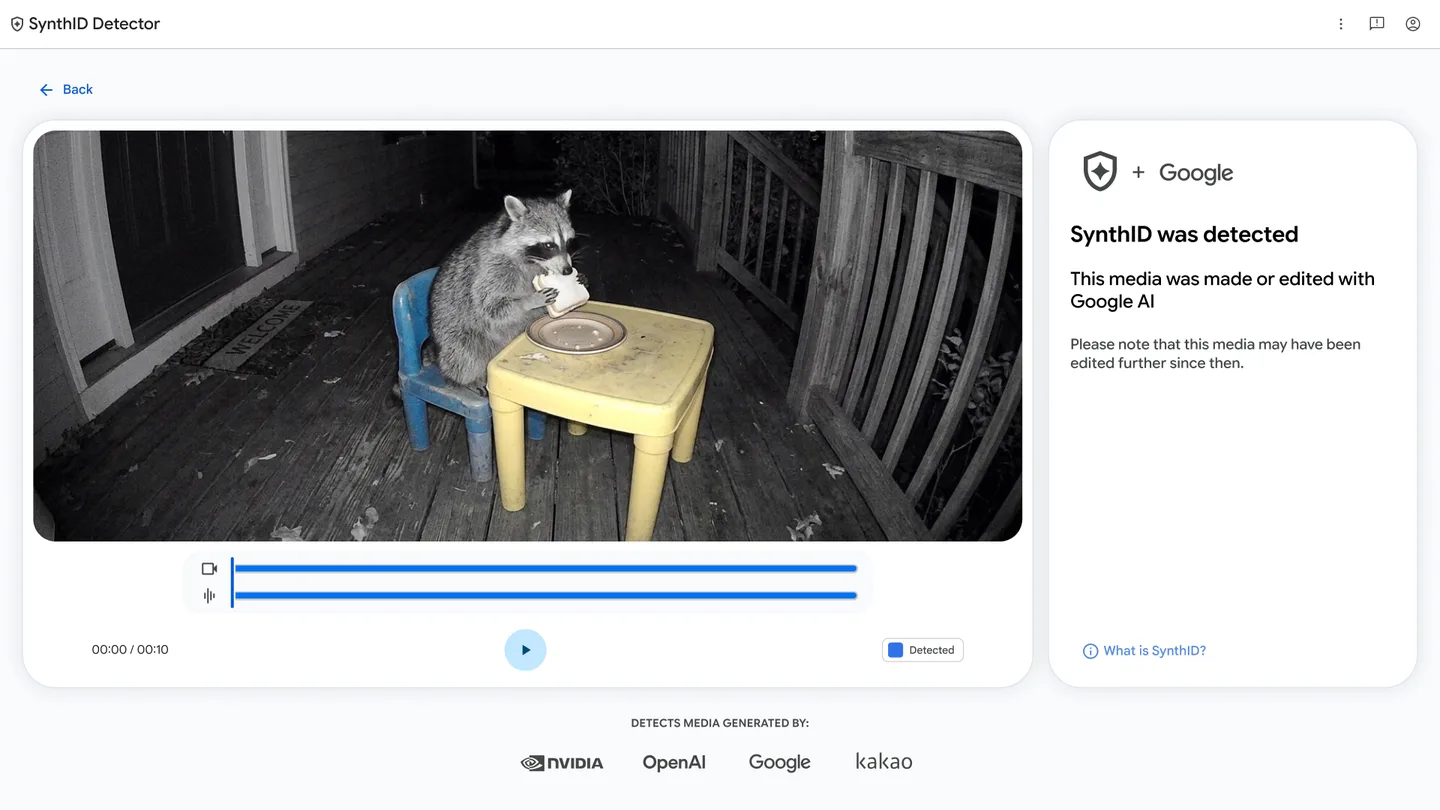
On October 7, 2026, Google DeepMind made its SynthID Detector available to anyone, worldwide and in English, at synthid.com. The tool reports whether an image, video, or audio file carries a SynthID watermark from Google or from its partners OpenAI, NVIDIA, and Kakao, with Apple listed as coming soon. According to Ars Technica, you sign in with a Google, ChatGPT, or Apple account and get roughly 10 checks a day. A negative result does not mean the file is authentic.

Google DeepMindverified
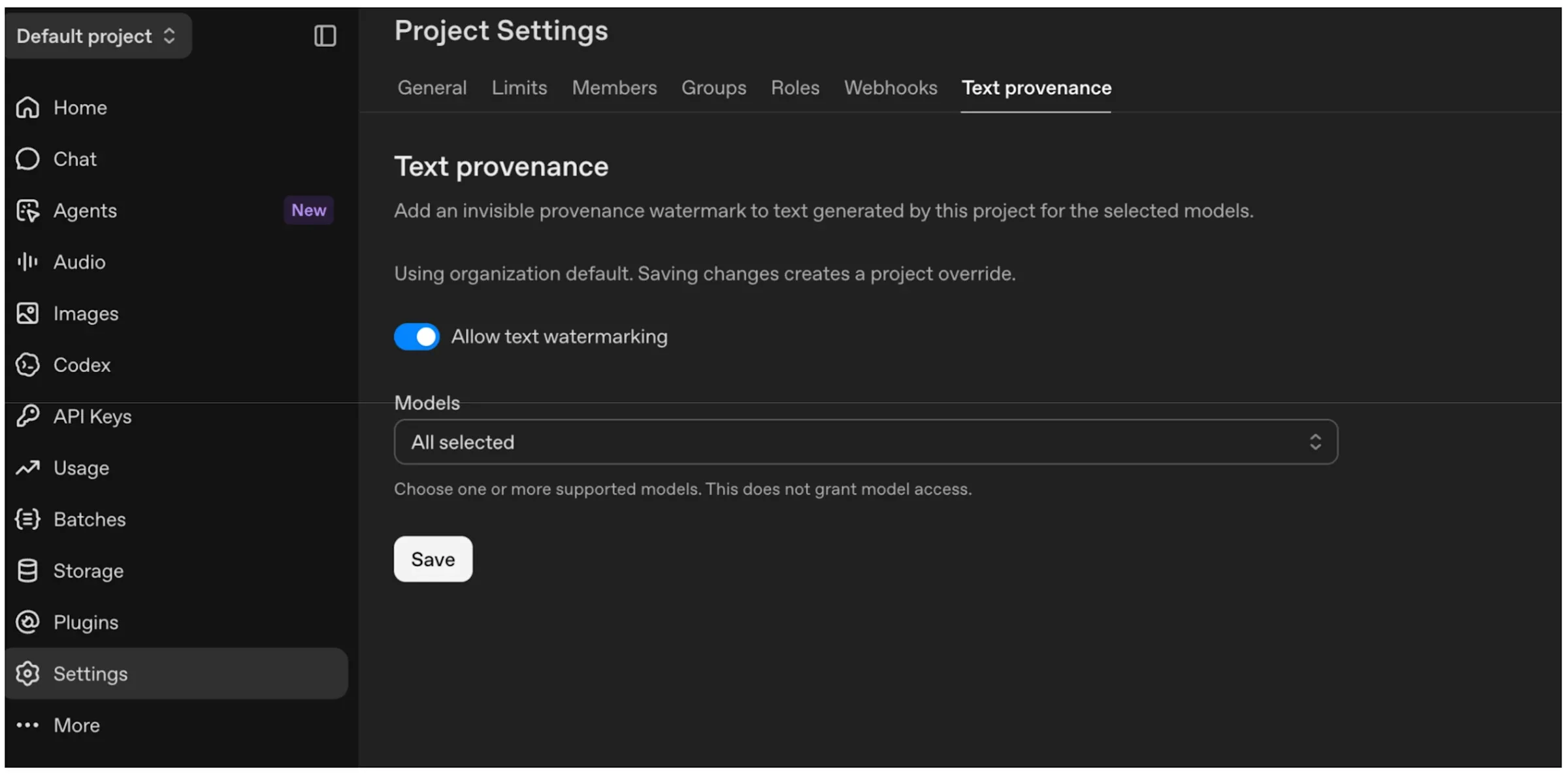
Screenshot of the OpenAI API dashboard, Project Settings, Text provenance tab: the Allow text watermarking switch is on, the Models menu reads All selected, and a Save button sits below.
Modelsstrong signal

OpenAI will watermark ChatGPT and Codex text in the EU, and API customers can opt in

OpenAI published its plan for text watermarking on October 5, 2026, in response to the EU AI Act. Over the coming weeks, eligible ChatGPT and Codex text output in the European Union will carry an invisible watermark called textGrain. In the API, watermarking is available worldwide from the same day for select models, and it stays off unless you turn it on. The detector is not public: OpenAI is limiting it to approved researchers and expert organizations.

OpenAIverified

Industrystrong signal

How to label AI content under Article 50, and which part of it is not your job

Article 50 of the EU AI Act has applied since August 2, 2026, and it binds anyone serving people in the Union, wherever the server is. Most of the panic is about the machine-readable marking requirement, which for a site owner who calls somebody else's API is somebody else's obligation. Here is what is actually yours: a chatbot that says what it is, published text that either carries a name or carries a label, and a deepfake that admits it.

Evropska komisijaverified

Industrymedium signal

Anthropic explains how the watermark in Claude's text works

Anthropic published an official explanation of the mechanism that writes a watermark into text Claude generates. With the new European labeling rules, the subject stops being a technical curiosity and enters compliance territory, because it offers a way to establish the origin of content even when whoever publishes it does not say so.

Anthropicverified