Anthropic's OSS Scanner sends open-source maintainers free vulnerability reports that no human has reviewed
Anthropic launched OSS Scanner on October 8, 2026, an opt-in service that scans eligible open-source projects with its strongest models, including Claude Mythos, at no cost. Each report includes a reproducer, an explanation, and a candidate patch when one exists, but no person checks it before it is sent. Anthropic says it expects more than 90% of findings to be real.

Source
Launching an opt-in vulnerability-finding service for open-source softwareAnthropic News · Original published October 8, 2026
Anthropic opened a free vulnerability-scanning service for open-source projects on October 8, 2026. OSS Scanner runs periodic scans with the company's strongest models and sends the results straight to a project's maintainers. The trade-off is stated openly: reports arrive faster because no human reviews them first, so some of them will be wrong.
What maintainers receive
Each report contains a self-contained reproducer, a proof of concept that shows how the bug can be triggered. It also explains the vulnerability and includes a candidate patch when one is available. Where possible, the explanation includes a bisection that identifies when the bug entered the code. The scans run on Anthropic's strongest models, and the company names Claude Mythos among them.
Because the output is fully model-generated, Anthropic warns that some reports will contain mistakes, such as a wrong severity rating. Maintainers who tested early versions told the company that severity was sometimes inflated, or that the scanner misunderstood a project's threat model.
How accurate the reports are
Anthropic says it expects a true-positive rate above 90%, meaning more than nine in ten reported vulnerabilities should be real. Its own check of an early version came out slightly lower. Penetration testers reviewed 97 critical and high-severity findings across 48 projects, and 85 of them, or 88%, met the bar for Anthropic's coordinated disclosure process.
Of the remaining 12, the company says 11 were real but duplicated known issues or other findings, and only one was a false positive. The wolfSSL project, one of the early users, says all but two of the 74 reports it received were valid and that five became CVEs, entries in the public catalog of known vulnerabilities.
Who can enroll
Enrollment is open to core maintainers of eligible projects, who submit a pull request to Anthropic's oss-scanner repository on GitHub using a standard template. Eligibility follows criteria similar to those of Google's OSS-Fuzz. A project should have a critical impact on infrastructure and user security, and Anthropic decides case by case.
The service is meant for projects with the capacity to keep up with the findings. Projects without that capacity keep receiving human-verified reports through Anthropic's coordinated vulnerability disclosure process. Maintainers can also apply to Claude for OSS for free Claude Max 20x subscriptions.
Why Anthropic is doing this
The scanner grows out of Project Glasswing, Anthropic's program for finding vulnerabilities in critical software. Over the last six months, the company says, it found more than 29,000 candidate vulnerabilities but could manually review only about 6,000. Nearly 5,000 unverified reports have already gone to maintainers who asked for everything Anthropic had found.
OSS Scanner is part of the Anthropic Cyber Mission, announced the same day, which also introduced a Critical Infrastructure Defense Program for the providers that secure power, water, and transport systems. Anthropic says its Defender Advantage Fund keeps OSS Scanner free, but the posts do not give an amount.
„We expect a true-positive rate above 90%“
Sources
Related
Python 3.15 makes UTF-8 the default encoding and adds explicit lazy imports
Python 3.15.0 came out on October 9, 2026. Files opened without an explicit encoding are now read and written as UTF-8 on every system, and a new lazy import statement defers loading a module until it is used. The release also adds frozendict and a sampling profiler.
Python Software Foundationverified

Deno's team joins Cloudflare, and the Deno runtime gets one more year of updates
Ryan Dahl announced on October 9, 2026 that the whole Deno team is moving to Cloudflare. The Deno runtime will get monthly fixes for one more year before development ends, and Deno Deploy will shut down after six months. JSR keeps running.
Denoverified
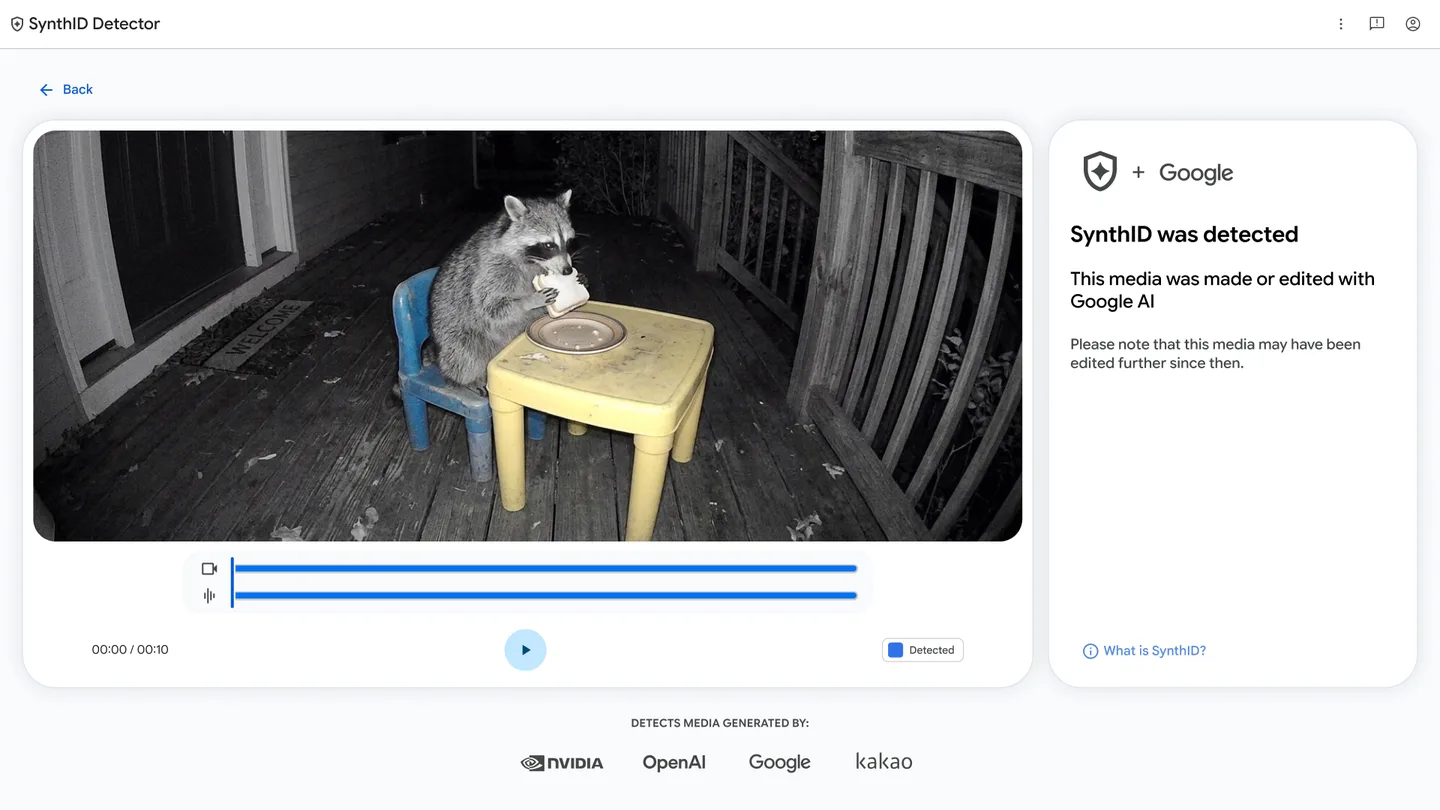
Google opens the SynthID detector to everyone, and it now reads OpenAI, NVIDIA, and Kakao watermarks too
On October 7, 2026, Google DeepMind made its SynthID Detector available to anyone, worldwide and in English, at synthid.com. The tool reports whether an image, video, or audio file carries a SynthID watermark from Google or from its partners OpenAI, NVIDIA, and Kakao, with Apple listed as coming soon. According to Ars Technica, you sign in with a Google, ChatGPT, or Apple account and get roughly 10 checks a day. A negative result does not mean the file is authentic.
Google DeepMindverified