Skip to content

Tags

Anthropic

36 items
CLAUDE CODE2.1.294hooks written as instructions now block what t
Agentsmedium signal

Claude Code 2.1.294 fixes prompt hooks that let through the actions they were written to block

Anthropic released Claude Code 2.1.294 on October 8, 2026. It fixes prompt and agent hooks phrased as instructions, which could allow exactly the actions they were meant to stop. Version 2.1.295 followed the same day with an onFailure setting that makes a crashed or timed-out command or HTTP hook block the action. Releases 2.1.292 and 2.1.293 from earlier in the week closed several permission and sandbox gaps.

Claude Code Releases (GitHub)verified

An archival index card with a typed caption and a black-and-white photograph of workers on a ship's deck handling a buoy and its anchor chain, laid over beige graph paper and a red table of figures.
Toolsmedium signal

Anthropic's OSS Scanner sends open-source maintainers free vulnerability reports that no human has reviewed

Anthropic launched OSS Scanner on October 8, 2026, an opt-in service that scans eligible open-source projects with its strongest models, including Claude Mythos, at no cost. Each report includes a reproducer, an explanation, and a candidate patch when one exists, but no person checks it before it is sent. Anthropic says it expects more than 90% of findings to be real.

Anthropicverified

Industrystrong signal

Anthropic's usage policy will ban sustained abuse of Claude and set rules for Claude-run machines from November 12

Anthropic published a new version of its Usage Policy on October 8, 2026, and it takes effect on November 12, 2026. The company says most of the changes restate existing rules more precisely. Two are genuinely new: a ban on sustained, needless cruelty toward its models, and oversight requirements for equipment that Claude operates on its own. A blanket ban on personalized voter targeting has been removed.

Anthropicverified

Modelsstrong signal

Claude Haiku 5.5 cuts Anthropic's small-model price by 90% for prompts under 100,000 tokens

Anthropic released Claude Haiku 5.5 on October 7, 2026. For prompts up to 100,000 tokens it costs $0.10 per million input tokens and $0.50 per million output tokens, a tenth of what Haiku 4.5 charges; above that line the prices are $0.50 and $2.50. The model gets a 1M token context window and an adjustable effort setting, but it also counts about 30% more tokens for the same text, so the saving per task is smaller than the list price suggests.

Anthropicverified

Agentsmedium signal

Claude Code 2.1.291 fixes a four-day-old bug that could lose the last messages of a session

Version 2.1.291, out on October 6, 2026, closes a regression that shipped in 2.1.288 on October 2, 2026 and could drop the last messages of a session when you quit. It also fixes a regression from 2.1.290, released on October 5, 2026, in cloud sessions. The day before, 2.1.290 had tightened several permission checks, including rules that were skipped after a hook rewrote a tool call. If you are on any version from 2.1.288 to 2.1.290, update.

Claude Code Releases (GitHub)verified

Modelsstrong signal

Anthropic says GLM-5.3 builds working browser exploits and its safeguards come off for about $4,400

Anthropic's Frontier Red Team published its analysis of GLM-5.3, the open-weight model from Zhipu AI, on September 29, 2026. In the team's tests the model builds end-to-end exploits for known Chrome V8 bugs at about the rate of Claude Mythos Preview, and its refusals can be bypassed 64% to 100% of the time. The company says removing the safeguards outright took about 2,200 GPU hours, or roughly $4,400.

Anthropicverified

Modelsstrong signal

Anthropic releases Claude Sonnet 5.5, with input and output tokens at half the Opus 5.5 price

Claude Sonnet 5.5 keeps Sonnet 5's prices: $2 per million input tokens and $10 per million output tokens. That is half of what Opus 5.5 charges, while Anthropic's own benchmarks put the two models within a few points of each other. Code that turns thinking off needs a change before the switch, because the old setting now returns an error.

Anthropicverified

Connectorsmedium signal

Anthropic opens a portal for submitting plugins to the Claude directory

Anthropic opened a submission portal for the Claude directory on September 25, 2026. Developers on paid Claude plans can submit a single MCP connector or a plugin bundle, follow its review, and see usage data once it is live. Existing listings need no changes.

Claude Blogverified

Industrystrong signal

Appeals court upholds the Pentagon's exclusion of Claude from its supply chain

The US Court of Appeals for the D.C. Circuit denied Anthropic's petitions on September 25, 2026, in a 2-1 decision. The exclusion bars contractors from using Anthropic products in their work for the Department of War. A California district court had found a parallel designation unlawful, and the appeals court said that finding does not decide this case.

US Court of Appeals for the D.C. Circuitverified

Modelsstrong signal

Anthropic ships Claude Opus 5.5 and cuts token prices by a fifth

Opus 5.5 charges $4 per million input tokens and $20 per million output tokens, 20% below Opus 5. Cache reads, which dominate the bill for agentic and coding work, fall 60% to $0.20 per million. Anthropic says the model works at the level of Claude Fable 5.1 on most tasks while costing 40% less to run than Opus 5. It also arrives with safeguards that reroute most cybersecurity work to Opus 4.8.

Anthropicverified

Industrymedium signal

Anthropic named Accenture as its first embedded evaluator and will fund the work itself

Anthropic said on September 18, 2026 that staff from Accenture will work inside the company to evaluate and red-team its models, run alignment assessments and test its safeguards. Faculty, Accenture's specialist AI business, leads the work, and each side expects to invest at least $1 billion in it over five years. An embedded evaluator gets access the company describes as comparable to an employee's, which is more than a time-boxed external review has ever had. Anthropic is paying for the review of its own work, and says so plainly.

Anthropicverified

Industrystrong signal

An image upload reached OpenAI's internal code, and Claude Opus 5 wrote the exploit

Three researchers at Hacktron chained a memory bug in libheif with a flaw in OpenAI's single sign-on and ended up inside the company's internal code repository. The way in was a HEIC file uploaded to the public community forum. Opus 4.8 could not build a reliable exploit across several sessions; Opus 5, released the same evening, managed it in three hours. OpenAI paid a $6,500 bounty, and the whole chain took less than 72 hours.

Hacktronverified

Agentsmedium signal

Claude Code 2.1.268 closes several ways a deny rule failed to apply

The release published on September 10, 2026 is mostly a permissions release. Deny and ask rules did not apply to symlinked directories when a path was spelled by its real location, and a deny rule on a file could be stepped over by putting an unparseable command on the same line. Two separate fixes stop secrets from being printed into plugin and MCP output. The same build also repairs third-party endpoints, which had been failing every turn with HTTP 400 since 2.1.265.

Claude Code Releases (GitHub)verified

Industrystrong signal

Kimi and DeepSeek users were quietly talking to Claude, Anthropic says

Anthropic's September 2026 misuse report describes distillation campaigns run out of seven Chinese labs. Two of them did more than harvest answers: Moonshot and DeepSeek forwarded their own customers' requests to Claude and showed Claude's replies as their own. The relayed traffic carried live database credentials, internal documentation and surveillance work, from people who had no idea a third vendor was reading it. Every figure below is Anthropic's, and none of it has been confirmed independently.

Anthropicverified

Agentsmedium signal

Claude Code 2.1.261 changes what Ctrl+W does and stops auto-approving diagram-renderer links

The release that landed on September 4, 2026 is mostly fixes, but four entries change behavior that was already there. The prompt's word-editing keys now match Bash, and the setting that used to select a keybinding style has no effect at all. Auto mode now treats a link that packs your content into a public diagram renderer's URL as an upload to that site, so it is no longer approved without you. Two new settings raise how much command output reaches the model inline, up to 128,000 characters.

Anthropicverified

Industrymedium signal

Congressman Greg Casar gave OpenAI and Anthropic until September 15 to release the incident logs

Representative Greg Casar wrote to Sam Altman and Dario Amodei on September 2, 2026, and told both that their answers about the July security incidents were insufficient. Neither company released the logs his August 10 letter asked for. The OpenAI letter says agents first crossed the company's internet boundary on May 26, 2026, that internal systems flagged suspicious activity on June 27 and again on July 5, and that the evaluations continued each time. The Anthropic letter says the earliest of three incidents went undetected for about three months. Both companies have until September 15, 2026 to answer in full.

Greg Casar, US House of Representativesverified

Agentsstrong signal

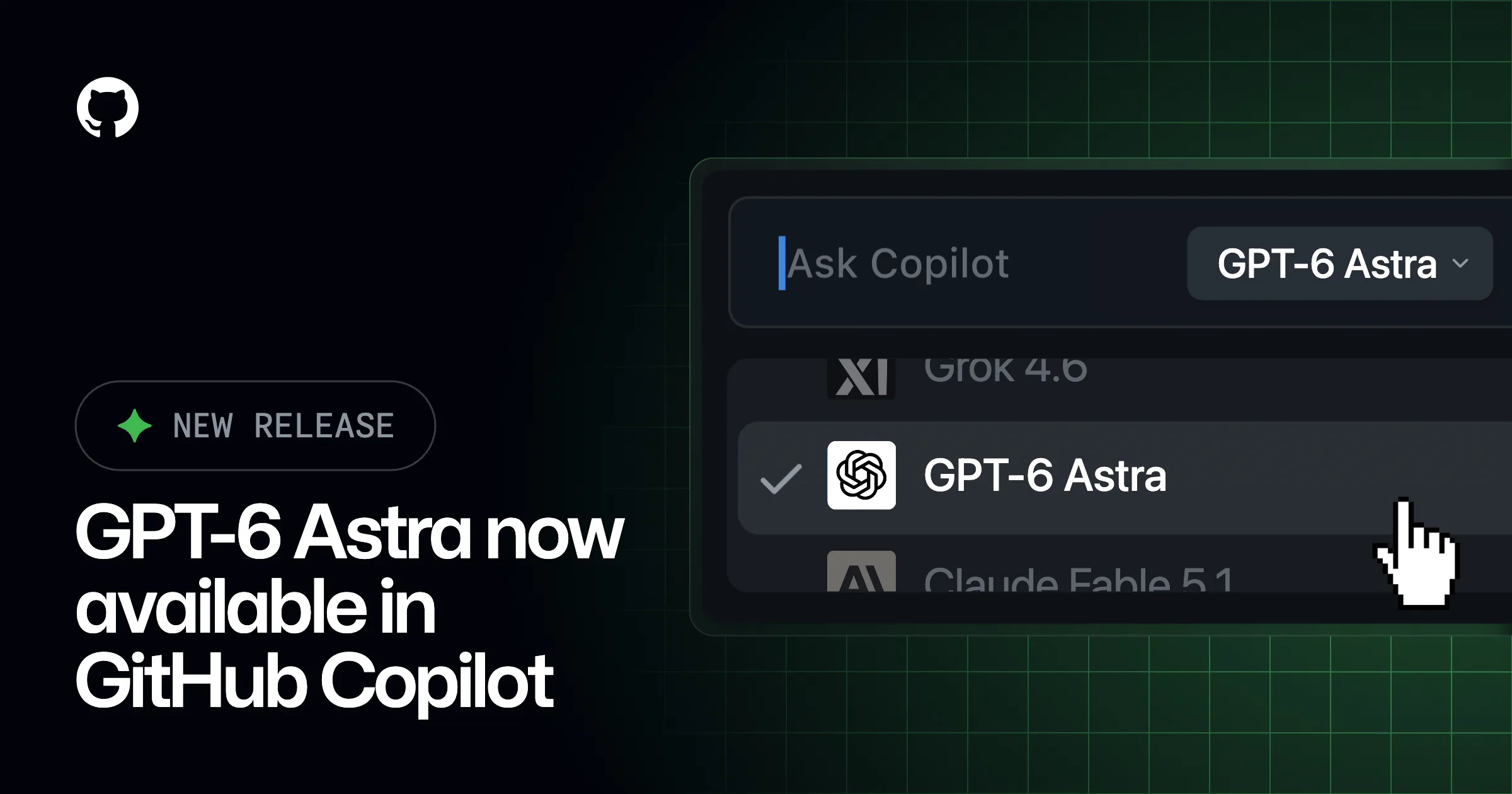
GitHub Copilot switches GPT-6 Astra on by itself and leaves Claude Fable 5.1 off

GPT-6 Astra became generally available in GitHub Copilot on September 4, 2026, for the Pro+, Max, Business, and Enterprise plans. Claude Fable 5.1 reached the same four plans three days earlier. The two arrived with opposite administrator defaults: Astra is enabled automatically under default model enablement, while the Fable 5.1 policy is off until someone turns it on. Fable 5.1 is also the one that retains prompts and outputs, and the zero-retention exemption runs only to the end of the calendar year.

GitHubverified

Agentsmedium signal

Claude Code 2.1.260 fixes four ways a permission rule quietly failed to apply

The release published on September 3, 2026 is mostly about permission rules that were written correctly and then did not do what they said. A path containing parentheses could be dropped as invalid, leaving a folder marked read-only writable. One malformed pattern could break every file edit. A zsh command could hide a command substitution inside a variable assignment and be auto-approved. And a rule with stray text after the closing parenthesis matched nothing at all, silently. If you rely on deny rules, the interesting part of this release is not what Claude Code can now do but what your settings were not doing.

Anthropicverified

Modelsmedium signal

ChatGPT, Claude, Grok, and Gemini all had trouble inside the same two hours on September 3

On September 3, 2026, Anthropic logged elevated errors across Claude Mythos 5.1, Claude Fable 5.1, and Claude Opus 5, OpenAI logged elevated errors across ChatGPT and Codex, Grok showed users an error message, and third-party monitors recorded a likely Gemini API interruption. Four independent providers, one morning. No status page names a shared cause, and Amazon Web Services, Microsoft Azure, and Cloudflare reported nothing major. For anyone whose product calls more than one of these, this is the failure mode that a second provider does not fix.

Ars Technicaverified

Agentsstrong signal

Claude Code 2.1.257 closes several ways a permission rule could be walked around

Anthropic shipped two Claude Code releases on September 1, 2026. Version 2.1.257 adds a containment-escape rule to auto mode and a prompt before the first file read outside the working directories, and it fixes five places where a differently written command slipped past a deny rule. A project settings file can no longer put a session into bypass mode. Version 2.1.258 restores launching on macOS 12, broken since 2.1.255.

Claude Code Releasesverified

Modelsstrong signal

Anthropic moves the monitoring record into the customer's own cloud account

Anthropic announced Enterprise Frontier Safeguards on September 1, 2026. It pairs zero data retention with automated misuse detection by keeping the activity data in the customer's cloud account rather than Anthropic's. The rollout is phased, and eligible customers get zero data retention on Fable 5 and Fable 5.1 until it reaches them. Anthropic charges nothing for it; the cloud provider bills the storage.

Anthropicverified
Modelsstrong signal

Anthropic ships Claude Fable 5.1 and cuts the price of cache reads

Claude Fable 5.1 and Claude Mythos 5.1 are one model at two levels of safeguards, and only the first is generally available. The change that shows up on a bill is the cache read, which drops to $0.25 per million tokens. Anthropic estimates that as roughly 25% off a typical workload and up to about 45% off a heavily agentic one. The model is also allowed to look for software vulnerabilities now, while exploit work stays behind the older restrictions.

Anthropicverified
Modelsstrong signal

Anthropic now blocks an escape attempt before the tool call runs

Two incidents this summer put Claude models on the live internet during security testing. On August 31, 2026 Anthropic published what it changed: a classifier that blocks an escape attempt before the tool call executes, hardened sandboxes, and a list of practices every external evaluator now has to commit to. The company also says roughly 150 product engineers moved to security work during a company-wide push, and that more than 10% of its production training environments were flagged during a month-long freeze.

Anthropicverified
Industrystrong signal

Music publishers ask a court to order an accounting of Anthropic training data

Sony Music Publishing, Warner Chappell and affiliated publishing companies sued Anthropic and two of its founders on August 28, 2026 in the Northern District of California. The 48-page complaint sets out four counts and asks for statutory damages of up to $150,000 per work. The request that reaches furthest is not the money. It asks the court to order an accounting of the training data, the training methods and the known capabilities of Anthropic models.

CourtListenerverified

Modelsmedium signal

Anthropic opens 10,000 Claude seats to scientists, free or $15 a month

Anthropic announced a Claude team plan for scientists on August 27: 10,000 seats worldwide for one year, standard seats free and premium seats with 5x usage limits at $15 per month. The plan is claimed by a principal investigator, who then adds their lab. Separately, the AI for Science program now takes researchers outside biology and grants up to $50,000 in credits per project. Access to models is not uniform, and the exceptions are the part worth reading.

Anthropicverified

Industrystrong signal

The court voided the risk label on Anthropic and enjoined the measures, but rejected the ultra vires claim

Judge Rita Lin struck down the Pentagon's supply chain risk designation on August 27 as First Amendment retaliation and a due process violation, and permanently enjoined it. Read past the headline and the judgment is split: Anthropic lost its ultra vires count outright, and lost against five agencies and against the Executive Office of the President.

US District Court, N.D. Cal.verified

Industrymedium signal

Leading labs, banks and insurers signed a letter saying today's security will not hold

OpenAI, Anthropic, Google, Microsoft, AWS, Cloudflare, Visa and General Motors are among the signatories of an open letter published on August 27, which argues AI-enabled attacks will outpace current defenses within months and sets out what each of four groups should do. Counting the list on the letter gives 118 names on August 27 and 155 on August 29, against the round hundred or the 116 reported elsewhere.

OpenAIverified

Agentsstrong signal

Claude Cowork gets its own browser, deliberately separate from yours

When a task needs a website, a browser opens in the side panel of the desktop app and Claude drives it. Anthropic's design decision is the whole story: it is Claude's browser, not the user's, so it never sees their tabs, bookmarks or passwords. Rolling out to Pro, Max and Team over the week from August 26.

Anthropicverified

Agentsstrong signal

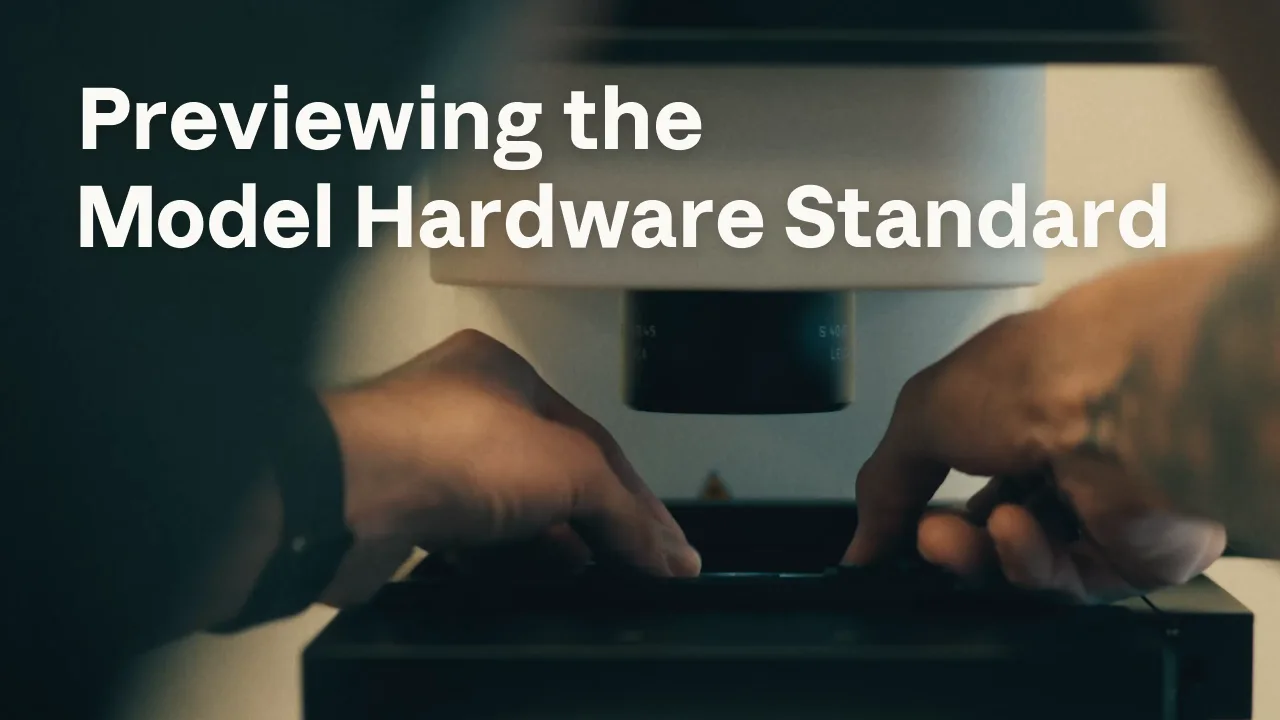
Anthropic previews a standard that lets agents drive laboratory hardware

The Model Hardware Standard gives an agent one driver format for microscopes, liquid handlers and robotic arms, cutting integration work that used to take weeks down to hours or minutes. It is model-agnostic and reachable over the Model Context Protocol, but for now it is open only to selected labs and manufacturers, by application.

Anthropicverified

Agentsmedium signal

Claude's memory is now one memory, shared between chat and Cowork

What Claude learns in a conversation is what it knows in Cowork, from August 25 on web, desktop and mobile. Memories are listed by topic in settings, each one can be edited or deleted, and sensitive categories stay out unless you let them in.

Anthropicverified

Agentsweak signal

Claude Code crashed on startup on glibc 2.44, and 2.1.245 says so by name

The release published at 05:13 UTC on August 25 fixes a startup crash on Linux distributions shipping glibc 2.44 — Arch Linux, CachyOS and Fedora Rawhide are named. If the CLI stopped opening on a rolling-release machine this week, this is why.

Claude Code Releasesverified

Toolsmedium signal

Both SDKs left httpx within eight days, and the plugins had to follow

llm-anthropic 0.27 landed on August 24 and now requires anthropic 1.x, which moved from httpx to httpx2. OpenAI made the same move in its 3.0.0 on August 12, eight days earlier. If you keep both plugins in one environment, they no longer upgrade independently.

Simon Willisonverified

Agentsmedium signal

A proxy that stripped one header was doubling Claude Code's API bill

Version 2.1.239 fixes streaming on Bedrock behind proxies that remove the response Content-Type header. Claude Code silently fell back to re-running every turn without streaming, and each turn was billed twice. The same release makes cost estimates show the 1.1× premium that data-residency workspaces pay.

Anthropicverified

Industrymedium signal

Anthropic explains how the watermark in Claude's text works

Anthropic published an official explanation of the mechanism that writes a watermark into text Claude generates. With the new European labeling rules, the subject stops being a technical curiosity and enters compliance territory, because it offers a way to establish the origin of content even when whoever publishes it does not say so.

Anthropicverified