ChatGPT gets Space, Pages, and shared team tasks on Pro, Business, and Enterprise plans
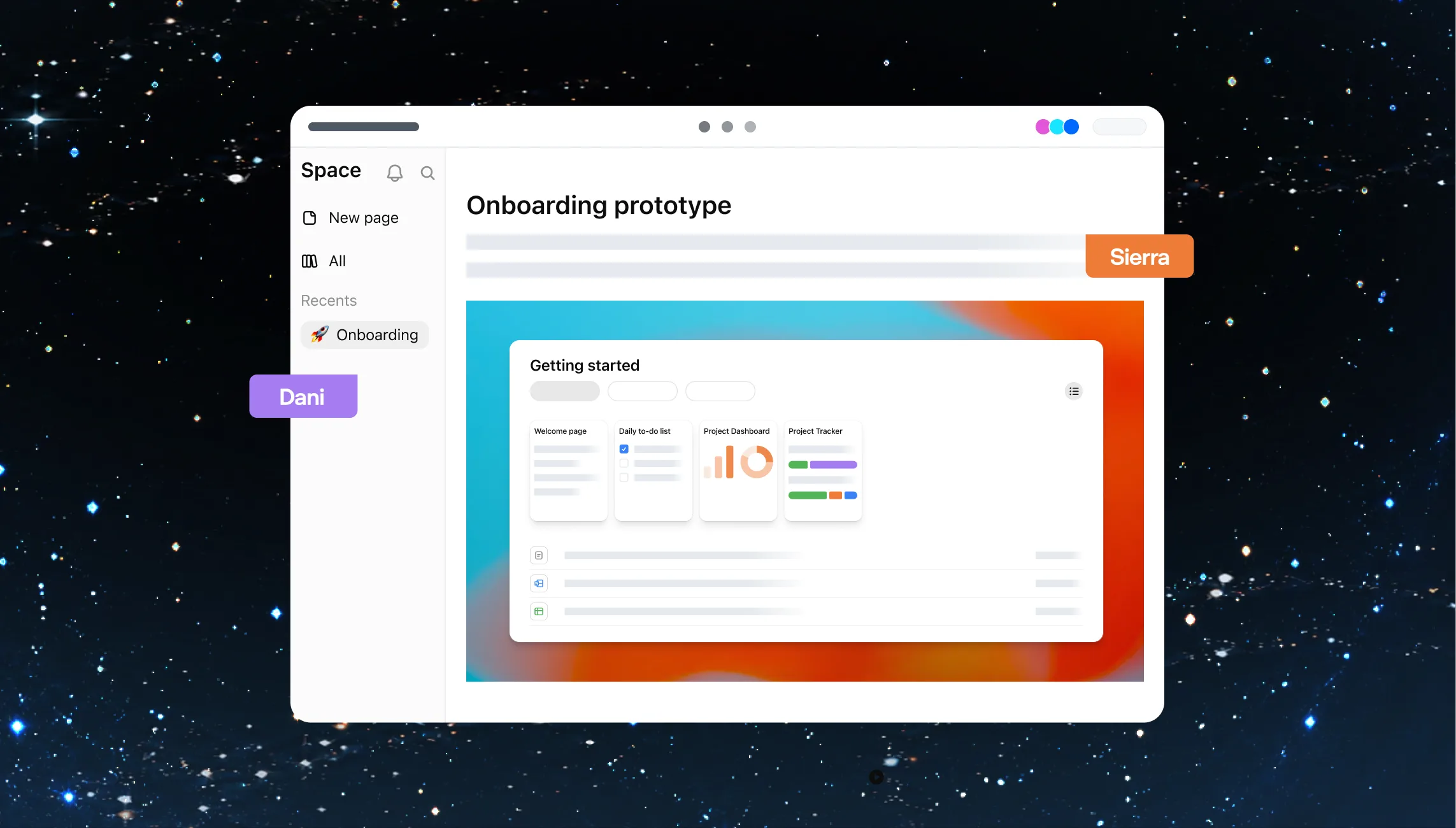
At DevDay on September 29, 2026, OpenAI added a document layer to ChatGPT. Space is a shared workspace for a team, ChatGPT, and the user's dot. Pages is a document type that agents and people edit together. Collaborative slides follow in the coming weeks, with export to PowerPoint and Google Slides. All three are limited to Pro, Business, and Enterprise plans. Business and Enterprise also get teams with scheduled tasks and an @ChatGPT mention in Slack and Microsoft Teams.
Source
Set up and manage teams and Team TasksChatGPT documentation · Original published September 29, 2026
The DevDay recap lists more than 20 announcements. This piece covers the ones that change how a team works inside ChatGPT rather than what a developer can build on it. The pattern across them is one plan boundary: Space, Pages, and slides start at Pro, and everything that involves colleagues starts at Business. Plus subscribers get none of it.
Space and Pages
Space is described as a dedicated place where teammates, ChatGPT, and your dot build on shared knowledge, with ChatGPT keeping it organized according to instructions you give it. It is available on the desktop app and the web for Pro, Business, and Enterprise plans. On mobile you can find, read, and share pages; creating and editing on mobile is listed as coming soon. The product page adds that Space replaces Library, and that sharing a page does not expose your private chats or memory, while anything you or ChatGPT write on the page is visible to everyone with access.
Pages is a new document type built for people and agents editing together. OpenAI's line is that anything you can do in ChatGPT you can do on a page: write, research, generate charts, create images, or visualize information. A page starts inside a conversation and can then be opened to a team for contributions. Same three plans.
In the coming weeks, Pro, Business, and Enterprise users will be able to build a deck from a conversation or a template and edit it with several people and agents at once, with comments. A deck can be presented inside ChatGPT or exported to PowerPoint or Google Slides with formatting intact.
Teams, tasks, and the Slack mention
Business and Enterprise workspaces can group colleagues into a team that shares pages, slides, plugins, and spreadsheets. Recurring work, such as a weekly project update, can be delegated to a team task that runs on a schedule or in response to an event like a new email or Slack message, using connected tools to gather information and act.
The documentation for teams fills in how a task runs. It runs in the cloud with the team's service account and the connections configured for the team, so members do not connect their own accounts. Two admin permissions govern it: one to create teams and one to create and manage team automations. A task does not inherit its creator's personal memories, custom instructions, or chat history, and individual runs cannot carry separate access restrictions, so everyone on the team sees every run.
The same two plans get @ChatGPT in Slack and Microsoft Teams. A mention in a channel, thread, or direct message brings ChatGPT into the conversation, where it can use tools the admin connected or the user's own. Teammates can add context and refine the result in that thread without holding an individual ChatGPT license.
A Meetings plugin takes notes and saves summaries with action items into Space. Audio is deleted once the notes are ready and cannot be replayed, according to OpenAI. It is in beta in the macOS desktop app for Pro and Business users, with Enterprise to follow.
What reaches the free tiers
Only shareable profiles do. A profile shows the Sites and plugins a person has built so others can find and reuse them, and it is available on Free, Go, Plus, Pro, Business, and Enterprise. Skills can also be shared, but only within a workspace.
„Anything you can do in ChatGPT you can do on a page“
Sources
Related
Python 3.15 makes UTF-8 the default encoding and adds explicit lazy imports
Python 3.15.0 came out on October 9, 2026. Files opened without an explicit encoding are now read and written as UTF-8 on every system, and a new lazy import statement defers loading a module until it is used. The release also adds frozendict and a sampling profiler.
Python Software Foundationverified

Deno's team joins Cloudflare, and the Deno runtime gets one more year of updates
Ryan Dahl announced on October 9, 2026 that the whole Deno team is moving to Cloudflare. The Deno runtime will get monthly fixes for one more year before development ends, and Deno Deploy will shut down after six months. JSR keeps running.
Denoverified

Anthropic's OSS Scanner sends open-source maintainers free vulnerability reports that no human has reviewed
Anthropic launched OSS Scanner on October 8, 2026, an opt-in service that scans eligible open-source projects with its strongest models, including Claude Mythos, at no cost. Each report includes a reproducer, an explanation, and a candidate patch when one exists, but no person checks it before it is sent. Anthropic says it expects more than 90% of findings to be real.
Anthropicverified