Cloudflare makes Python a first-class Workers language after a two-year preview
Cloudflare closed the preview on September 21, 2026 and now treats Python as a fully supported language on Workers. Bindings to R2, D1, Queues and Workers AI accept Python objects directly, so the conversion code that used to sit at the JavaScript boundary is gone. Socket system calls are implemented against the Workers connect API, which lets aiomysql and asyncpg reach a database through Hyperdrive. Two standard library modules still do nothing.
Source
Python Workers are now generally availableCloudflare Blog · Original published September 21, 2026
Python has run on Cloudflare Workers for two years, but only as a preview, and the seams showed. Sending a dictionary into a queue meant importing Pyodide's foreign function interface and converting the object into a JavaScript one by hand. On September 21, 2026 Cloudflare declared Python generally available on Workers and moved that conversion into the runtime, where a Python developer no longer sees it.
What changed at the boundary
The Workers runtime is built on V8, and Python runs inside it as a Pyodide interpreter compiled to WebAssembly. Every call from Python into a Cloudflare service therefore crosses a boundary between two object models. Until now that crossing was the developer's problem: a queue send needed to_js with an explicit dict_converter, and the JavaScript environment had to stay in mind while writing Python.
Cloudflare moved the conversion into the runtime and the Python SDK, so a plain dictionary passed to a queue binding now works on its own. The company says the old pattern was a common source of error for both people and coding agents. The same bindings reach R2, D1, Hyperdrive, Durable Objects, Queues, Workflows and Workers AI.
Databases, over sockets that finally exist
Python database libraries call the standard library's socket module, which inside a WebAssembly sandbox resolves to stubs that always fail. Cloudflare implemented those system calls against the Workers connect API, so a library that opens a TCP connection is translated into the runtime's own call without being changed. That is what makes the Hyperdrive binding usable from Python at all.
The same missing layer was why the openai, langchain and mcp packages did not work. They depend on HTTP clients such as requests and httpx, and Cloudflare contributed changes upstream so those clients route their requests through the JavaScript fetch API when they run in WebAssembly.
aiomysqlandasyncpgconnect through a Hyperdrive binding, using the host, port, user, password and database name it supplies.- The
workers.asgiconnector runs FastAPI and any other ASGI application, andworkers.wsgiruns Django, Flask and the rest of the WSGI world. - Cloudflare's documentation now carries a Python example next to nearly every TypeScript one.
A standard for Python on WebAssembly
Packages with extensions written in C, C++ or Rust have to be cross-compiled before they run in a WebAssembly sandbox, and there was no agreed way to do that. Cloudflare's team compiled and published those builds itself, which capped how many packages a Python Worker could import.
The company proposed PEP 783, which defines a platform target called PyEmscripten, and the proposal was accepted after more than a year of discussion. Support for that target was added to cibuildwheel, so a maintainer can publish a WebAssembly build the same way as any other. Cloudflare says the ecosystem is still adopting it.
What still does not work
Two standard library modules import and then do nothing. Cloudflare's documentation lists multiprocessing and threading as present but non-functional because of the WebAssembly virtual machine. Several others are removed outright, among them fcntl, termios and venv, and pty and tty fail to import because they depend on a module that is gone.
This suggests the real limit is shape rather than scale. Code that fans work out across threads has to be rewritten around what the platform offers, while code that waits on the network fits unchanged. Cloudflare says performance and memory work comes next, without naming a figure for either.
„Python is now a first-class, fully supported language on the Cloudflare Developer Platform.“
Sources
Once a week, in your inbox
The whole week's news, gathered into one email. No ads, no passing your address on, one-click unsubscribe.
The address is used only for this roundup. It is not sold and not passed to anyone.
Related
GitHub will bill organizations for Copilot code review by default starting December 30
GitHub said on November 25, 2026, that Copilot code review for licensed members will be billed to the organization that owns the repository whenever no billing choice has been saved. The change applies to Copilot Business and Copilot Enterprise. Administrators who want to keep the current arrangement have to select Member before December 30, 2026.
GitHub Changelogverified
OpenClaw 2026.11.10 turns on Deep Research by default and lets users take over the agent's browser
OpenClaw's new release includes Deep Research, which looks through several sources and returns a report with quotes and gaps marked. It is on by default and uses the models the user has already set up. A second addition lets a user take over a browser tab during a sign-in, although the agent can still capture the page. The optional Knowledge plugin stores memory in local Markdown files.
OpenClawverified
AWS WAF will bill each protected resource from February 2027 and drop its fees for rules
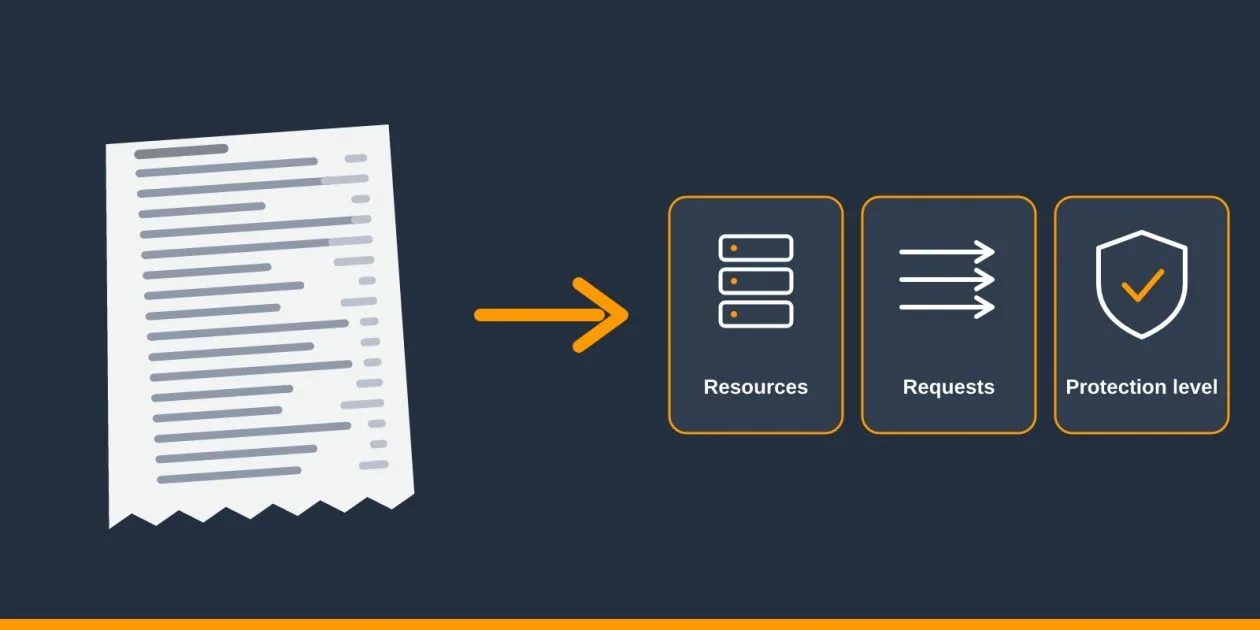
Amazon is changing how it charges for AWS WAF, the firewall that filters traffic to web applications. Rules and rule sets become free, while every protected resource gets an hourly fee. Sites with many rules on a few resources stand to pay less, and companies that cover many resources with one rule set can pay several times more.
AWSverified