AWS WAF will bill each protected resource from February 2027 and drop its fees for rules
Amazon is changing how it charges for AWS WAF, the firewall that filters traffic to web applications. Rules and rule sets become free, while every protected resource gets an hourly fee. Sites with many rules on a few resources stand to pay less, and companies that cover many resources with one rule set can pay several times more.
Source
Introducing AWS WAF simplified pricingAWS Security Blog · Original published November 23, 2026
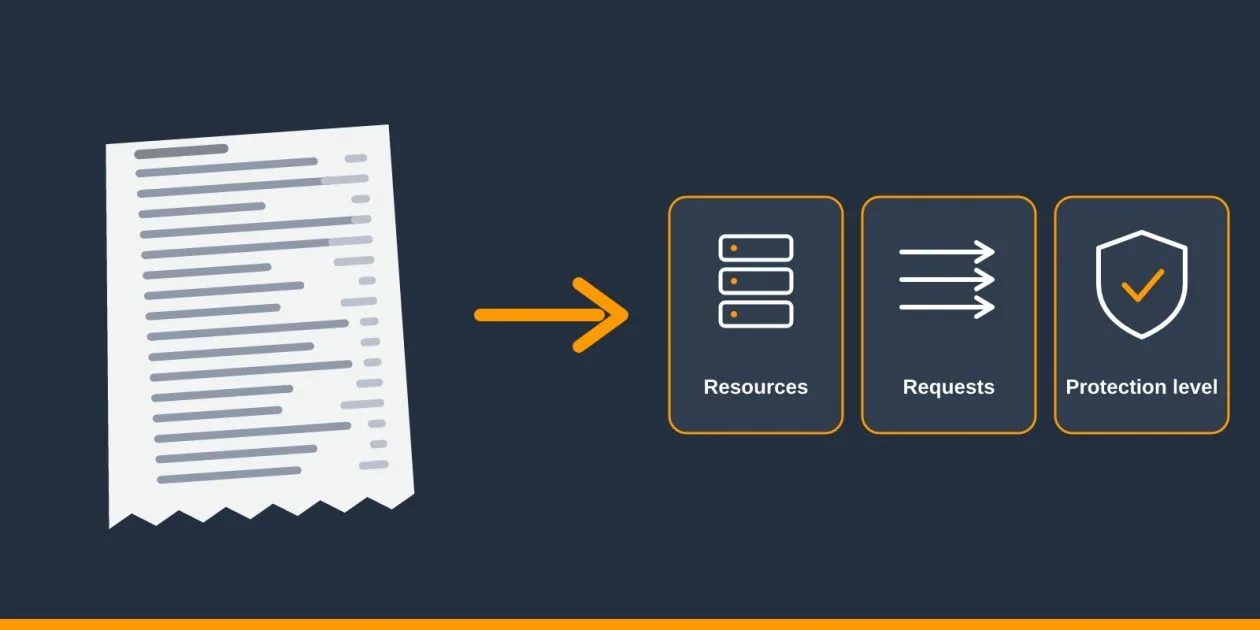
AWS announced a new price list for AWS WAF on November 23, 2026. Existing customers move to it on February 1, 2027, and do not need to act now. AWS WAF is a web application firewall, a service that inspects requests before they reach a site or an API. The bill will follow three things: the resources it protects, the requests it inspects, and the share of those requests sent through advanced protections.
Today each web ACL, meaning a set of rules attached to an application, costs $5 a month, and each rule costs $1. Both fees disappear. In their place, every protected resource, such as a CloudFront distribution, a load balancer, or an API Gateway API stage, costs $0.01 an hour, about $7.30 a month. The base price per request stays at $0.60 per million.
The fees for basic bot control, for CAPTCHA and Challenge actions, and for inspecting larger request bodies also go away. Each web ACL will include 2,500 capacity units, up from 1,500. AWS uses those units to measure how much processing the rules need, and going past the old allowance raises the price of every request today.
Advanced protections, such as targeted bot control and fraud control, add $5 per million to the requests they evaluate, for a total of $5.60. That surcharge applies once per request, however many of them run. It replaces monthly subscriptions and separate rates, including fraud control rates that currently start at $1,000 per million. The old list also gave Bot Control a monthly allowance of free requests, and the new one shows none.
Who pays less and who pays more
AWS gives the example of one load balancer with 19 custom rules and 10 million requests a month, which will cost $13.30. By our calculation, the same setup costs $30 at current rates. The saving comes from the web ACL and rule fees, less the new fee for the resource.
The opposite happens when one web ACL covers many resources. For 40 resources and 150 million requests, AWS calculates $382 a month under the new model. If those resources share one web ACL with 10 rules, our calculation puts the current bill at $105. The resource fee alone accounts for $292 of the new one.
A request that passes two web ACLs, for example one on CloudFront and another on the load balancer behind it, is billed twice. AWS says that protecting traffic at CloudFront can cost less than protecting many downstream resources one by one.
Exceptions and an open question
Nothing changes for Shield Advanced subscribers or for CloudFront flat-rate plans, and private pricing agreements run until they expire. The free CloudFront plan, meant for applications with fewer than 1 million requests a month, includes AWS WAF at no charge.
AWS's pages disagree about new customers. The blog post and the announcement say the new pricing is available now, but the pricing page says all usage through January 31, 2027, is billed at current rates.
The company also released AI Security, a rule group for endpoints that serve language models, MCP servers, and agents that talk to each other over the A2A protocol. It is billed as an advanced protection and works in 7 regions, three of them in the US. If content inspection is turned on, Amazon Bedrock charges for those checks separately.
„Adding or changing rules no longer changes your rate.“
Sources
Once a week, in your inbox
The whole week's news, gathered into one email. No ads, no passing your address on, one-click unsubscribe.
The address is used only for this roundup. It is not sold and not passed to anyone.
Related
GitHub will bill organizations for Copilot code review by default starting December 30
GitHub said on November 25, 2026, that Copilot code review for licensed members will be billed to the organization that owns the repository whenever no billing choice has been saved. The change applies to Copilot Business and Copilot Enterprise. Administrators who want to keep the current arrangement have to select Member before December 30, 2026.
GitHub Changelogverified
OpenClaw 2026.11.10 turns on Deep Research by default and lets users take over the agent's browser
OpenClaw's new release includes Deep Research, which looks through several sources and returns a report with quotes and gaps marked. It is on by default and uses the models the user has already set up. A second addition lets a user take over a browser tab during a sign-in, although the agent can still capture the page. The optional Knowledge plugin stores memory in local Markdown files.
OpenClawverified
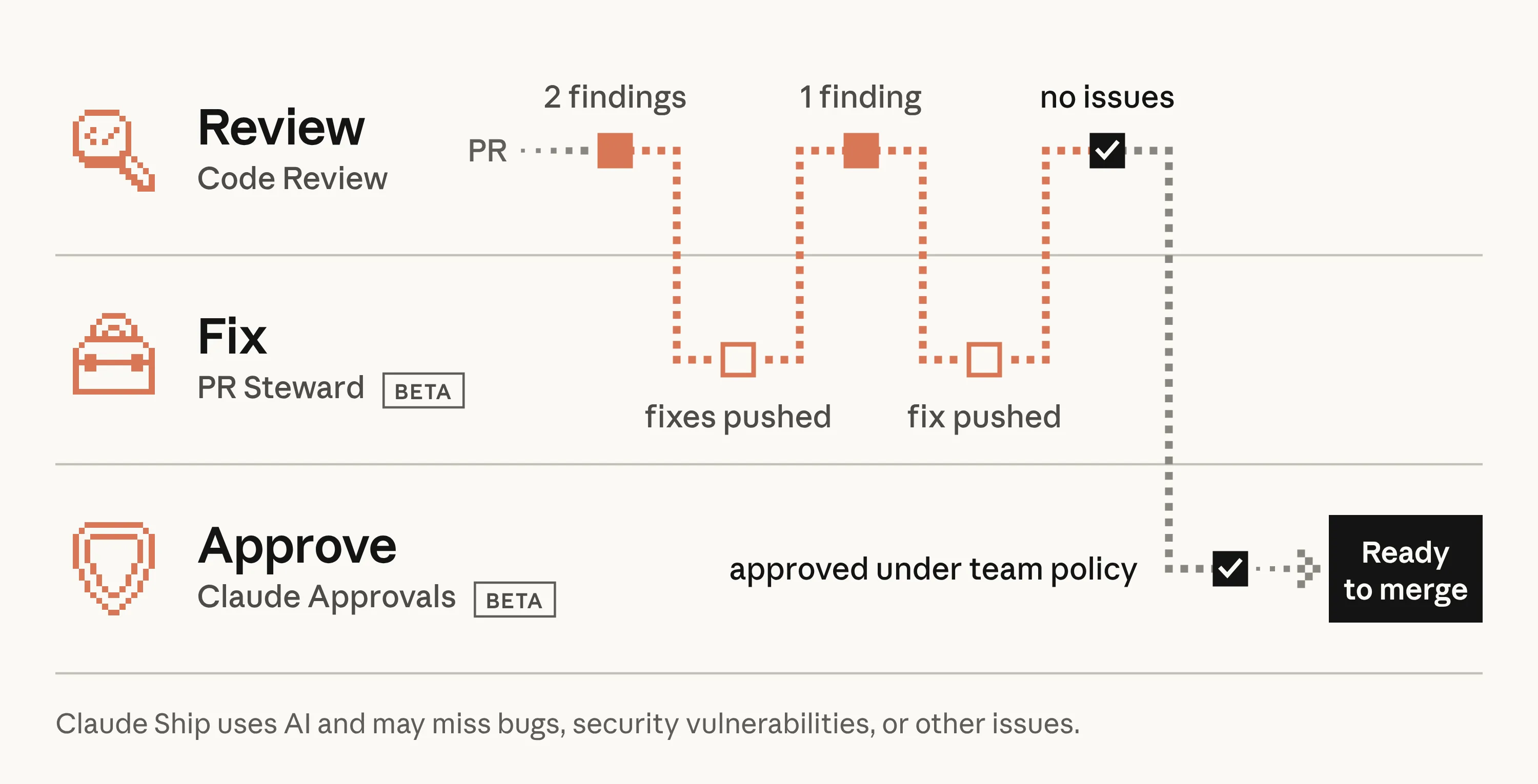
Claude Ship can approve GitHub pull requests on its own where a team's policy allows it
Anthropic's new set of agents reviews code changes on GitHub, fixes them, and can approve them without waiting for a person. A team decides how far that goes by writing a policy file. Usage is billed by tokens on top of the plan, and the documentation lists several setups in which a change merges with no human review.
Anthropicverified