Black Forest Labs releases FLUX 3 Image Klein, an open-weights image model that runs on 8 GB graphics cards
Black Forest Labs published the weights of FLUX 3 Image Klein on October 15, 2026. The 5.6-billion-parameter model generates and edits images, and its INT8 build runs on GeForce RTX cards with as little as 8 GB of video memory. Use is free for individuals and for companies with less than $5 million in annual revenue.
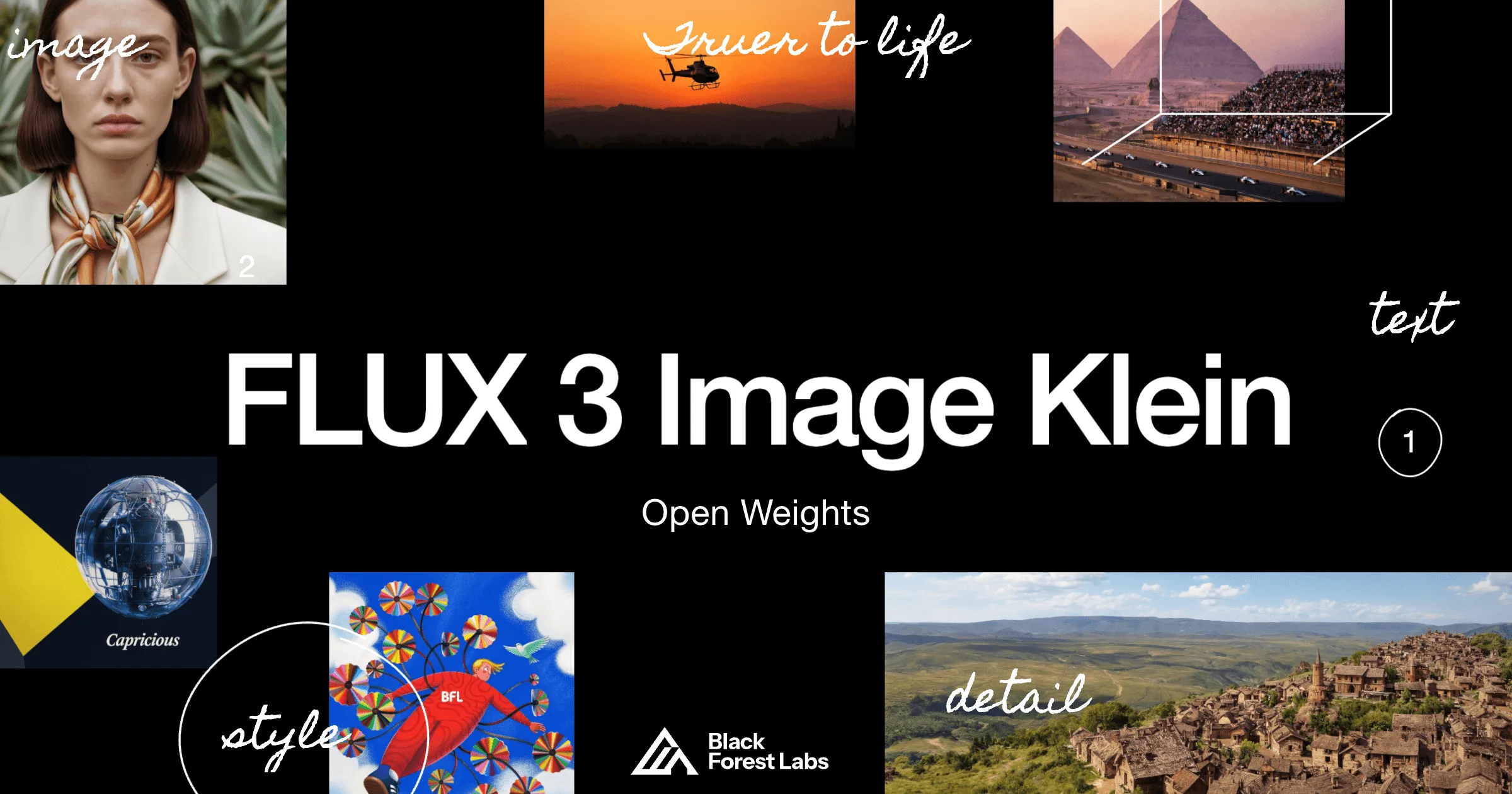
Black Forest Labs (BFL), the lab behind the FLUX image models, released FLUX 3 Image Klein as open weights on October 15, 2026, so anyone can download it and run it on their own hardware. The model has 5.6 billion parameters and does three jobs: it generates images from text, edits existing images, and combines up to 10 reference images into a new one. BFL says it shares key features with the full FLUX 3 Image model, including native 4K output and bounding boxes that set where an element goes or limit an edit to one area.
What hardware it needs
The model's size is what makes local use realistic. BFL lists the generator weights at 11.2 GB in BF16 precision and 5.6 GB in FP8, and the text encoders that read the prompt come on top of that. Quantized builds store each weight in fewer bits, so they need less memory. With the INT8 build, the model runs on NVIDIA GeForce RTX cards with as little as 8 GB of video memory, through ComfyUI or Diffusers.
The release comes in two versions. The base model is meant for further training, and Diffusers and Ostris's AI Toolkit support training LoRA adapters on it from day one. LoRA adapters are small sets of extra weights that teach a model a style or subject without retraining all of it. The step-distilled model is trained to finish an image in 16 steps instead of 50, which shortens the wait. In NVIDIA's measurements, the distilled INT8 build produces a one-megapixel image in about 4 seconds on an RTX 5090 and in under 9 seconds on an RTX 4070.
Who can use it for free
The weights are published under the FLUX Kommunity License. It allows free commercial use for individuals and for companies with annual revenue under $5 million, as well as research and non-commercial use. Larger organizations need a self-hosted license from BFL or have to go through its API. In the API, the distilled model is called flux-3-image-klein, and pricing starts at $0.009 per 1K image.
How it compares, by BFL's own measure
BFL says that in its internal evaluations the model ranks first among open-weights models in text-to-image, multi-reference generation, and image editing. The company also places it above two closed models, Ideogram V4.5 and FLUX.2 [pro]. Against the earlier FLUX.2 [klein] 9B, BFL reports a gain of 91 on the Elo scale in text-to-image and 70 in editing, with 38% fewer parameters. Elo is a rating derived from head-to-head comparisons of two models' outputs.
These results come from the publisher, and no independent benchmark had appeared by October 16, 2026. The comparison also counts only the image generator, as each publisher reports it: 7 billion parameters for Qwen-Image 2.1 and 12.9 billion for Krea 2.
„Fewer parameters make it practical to run locally and cheaper to adapt“
Related
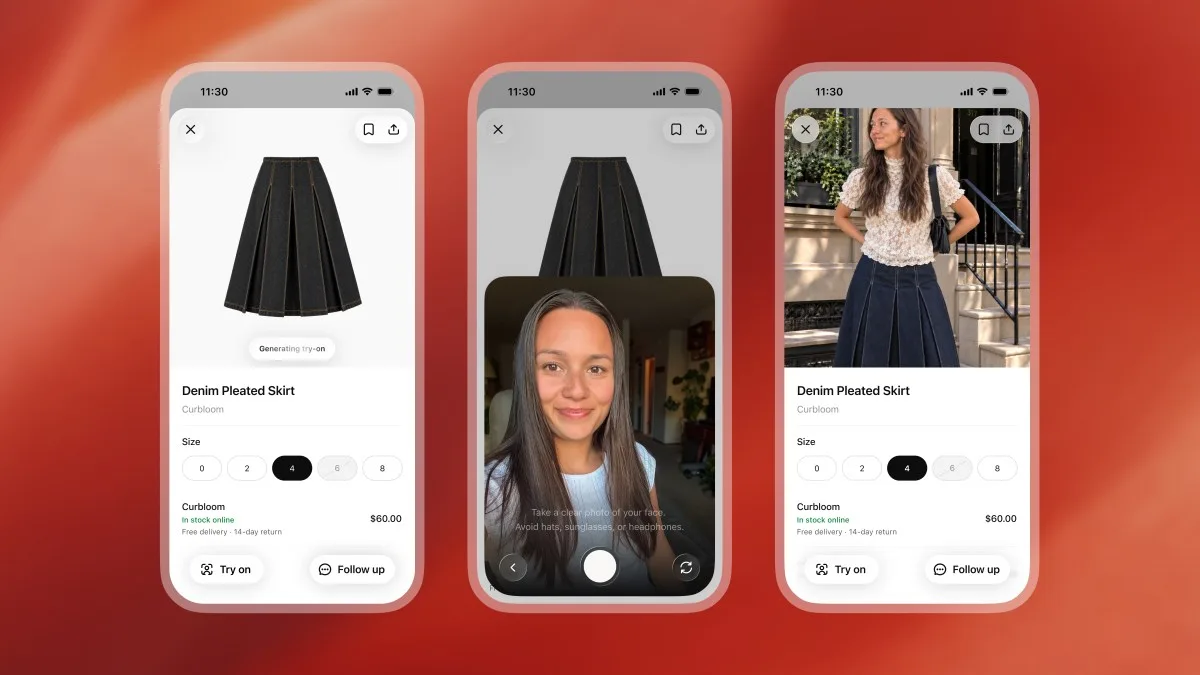
ChatGPT adds virtual try-on for clothes and keeps your reference photo for later
OpenAI added two shopping features to ChatGPT on October 1, 2026. A Try on button on listings for clothes and accessories generates an image of the item on you from a selfie. The selfie is saved as a reference photo for future try-ons until you change or delete it in settings. A second feature, Favorites, saves products to your ChatGPT Library.
OpenAIverified
Gemini 3.8 Live can now answer as a talking video avatar, and Google bills the video only while it speaks
Google made Gemini 3.8 Live with Live Avatar generally available in Gemini Enterprise on September 24, 2026, with US and EU endpoints. The model replies through a lip-synced video character while it listens, watches a camera or a shared screen, and calls tools in the background. Avatar video costs $1 per million tokens at 6,192 tokens for each second of speech. By our arithmetic, that comes to about $0.37 per spoken minute before audio, input, and context charges.
Googleverified

Google put its Nano Banana image editor into Docs and Slides and named it Google Pics
Google Pics is a standalone image creation and editing tool built on the Nano Banana model, and the same controls are being wired into Workspace apps. The integration begins with Docs and Slides on September 1, 2026, and reaches Drive in the coming weeks. Access arrives with a Google AI Pro or Ultra subscription and with most Workspace business plans, rolling out over the coming weeks. Google publishes no quota, no separate price, and no list of supported languages.
Googleverified