Skip to content

Tags

Open weights

22 items
LLAMA.CPP B115567.63 GBBonsai 2 27B without the fork
Machines & local modelsmedium signal

llama.cpp now runs PrismML's ternary Bonsai 2 27B without the company's fork

Build b11556 adds the weight rotation step that Bonsai 2 27B was missing in stock llama.cpp. The 7.63 GB Q2_0 file now gives correct output there, while PrismML's smaller PQ2_0 and PTQ1_0 packs still require the company's own build.

llama.cppverified
Modelsmedium signal

Mistral Large 4 opens a 1-trillion-parameter preview API at $1.36 per million input tokens

Mistral launched a public preview of Mistral Large 4 on October 6, 2026. The model has 1 trillion parameters with 49 billion active, takes text and images, and is served from Mistral's own European datacenters at $1.36 per million input tokens and $4.18 per million output tokens. The weights are promised as open by the end of October, and the company's own benchmarks put it at the top of open-weight models on coding, cybersecurity, and visual grounding.

Mistral AIverified

The EmbeddingGemma 2 wordmark in white and blue on a dark blue surface of tilted glass panels.
Modelsmedium signal

EmbeddingGemma 2 embeds text, images, audio, and video in one 740M-parameter open model

Google DeepMind released EmbeddingGemma 2 on October 6, 2026, under Apache 2.0. The 740 million parameter model maps text, code, images, video, and audio into one embedding space and is built to run on a phone. It keeps the multilingual text quality of the first version, raises the MTEB Code score by almost ten points, and is already supported by llama.cpp, Ollama, MLX, vLLM, and transformers.js.

Google DeepMindverified

Modelsmedium signal

Bedrock adds GLM 5.3 for approved customers and ships Nova 2.5 Sonic for voice agents

Two model additions landed on Bedrock on the same day. Z.ai's GLM 5.3 arrives with a 1 million token context and a listed price of $1.68 per million input tokens, but only for customers AWS approves. Nova 2.5 Sonic is the new speech-to-speech model, in four regions, at the same price as its predecessor, with no published benchmark. The open source Strands framework made its voice agents generally available alongside it.

AWSverified

Machines & local modelsmedium signal

llama.cpp 0.6.0 adds GLM-5.3-Flash support and a server API for decision models

The llama.cpp project released version 0.6.0 on October 5, 2026. It adds support for GLM-5.3-Flash, a model for text and images with 320 billion parameters, and a new server endpoint for decision models. Two changes to speculative decoding come with measurements from their authors, one on Nvidia's DGX Spark and one on Apple GPUs. The release also changes the C API and raises the version of the saved session format, so programs built on the library need a check before you upgrade.

llama.cppverified

Modelsmedium signal

Microsoft's ThinkingBox shows no model passes half of 507 agent tasks 20 times in a row

Microsoft's Copilot Studio team published results from its ThinkingBox benchmark on the Hugging Face blog on October 3, 2026. The benchmark runs 507 business workflows 20 times per model and grades the database state an agent leaves behind, not its final message. Microsoft reports that Claude Opus 5.5 leads single-attempt accuracy at 67.16%, yet it passes only 241 tasks on all 20 attempts. According to the authors, roughly four in five failures come from tool handling rather than reasoning.

Microsoft, Hugging Faceverified

Modelsweak signal

Ai2 releases AstaBrief, an open-weights model that writes cited research reports

Ai2 released the weights and training data for AstaBrief on October 2, 2026. The model takes a research question plus retrieved excerpts from the literature and writes a report with citations. Ai2 measures it at 51.1 seconds per report in its Asta platform, against 178.5 seconds for the Claude-powered mode beside it. The license is Apache 2.0, and Ai2 says its evaluation predates the current frontier models.

Ai2verified

Modelsmedium signal

Amazon's Strands Labs releases Decider 2B, an open decision model that runs locally

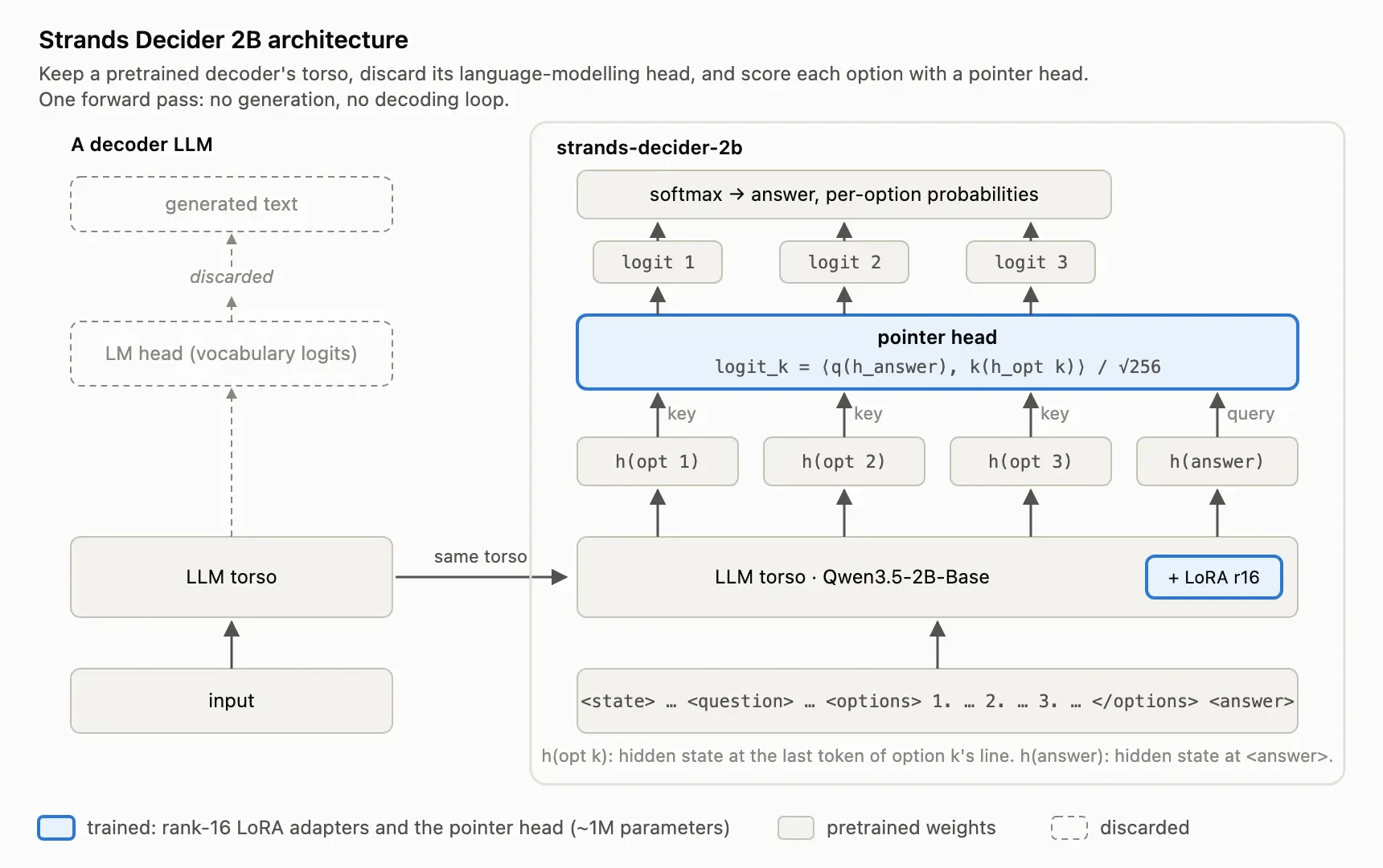
Strands Labs, the experimental arm of the Strands Agents project, released Strands Decider 2B on October 1, 2026. The model does not write text: it picks one of the options you give it, answers yes or no, or scores on a scale, and it attaches a confidence value to each answer. The team reports a median of 115 ms per decision on Nvidia's RTX 3090. Code, weights, training data, and scripts are public under Apache-2.0. If you build agents, this gives you a cheap local step for routing, tool checks, and guardrails.

Strands Agentsverified

Modelsmedium signal

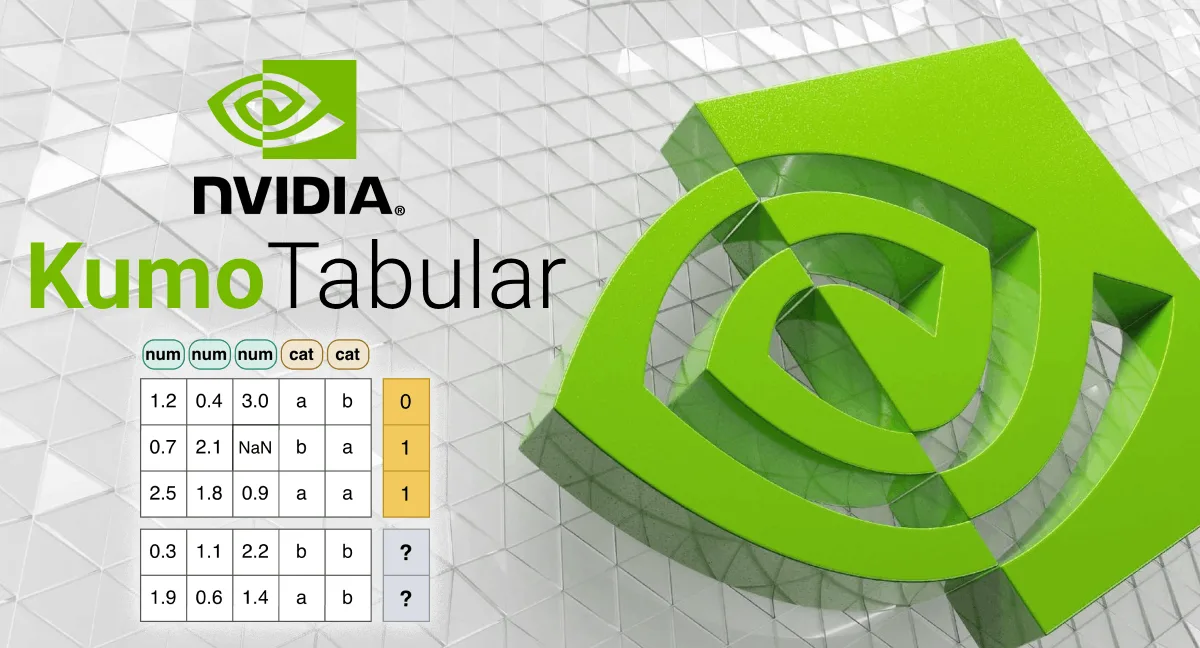
NVIDIA releases Kumo Tabular, an open model that predicts table rows without training and tops four benchmarks

Kumo Tabular reads a table of labeled rows and returns predictions for new rows in a single forward pass, with no training, no tuning, and no feature engineering. NVIDIA published it on September 29, 2026 in three sizes from 28 million to 215 million parameters, under the OpenMDW-1.1 license that allows commercial use. By NVIDIA's own measurement it ranks first on TabArena, BeyondArena, TALENT, and ScoringBench. It handles numeric and categorical columns only, and it needs a CUDA GPU.

Hugging Face Blogverified

Modelsstrong signal

Anthropic says GLM-5.3 builds working browser exploits and its safeguards come off for about $4,400

Anthropic's Frontier Red Team published its analysis of GLM-5.3, the open-weight model from Zhipu AI, on September 29, 2026. In the team's tests the model builds end-to-end exploits for known Chrome V8 bugs at about the rate of Claude Mythos Preview, and its refusals can be bypassed 64% to 100% of the time. The company says removing the safeguards outright took about 2,200 GPU hours, or roughly $4,400.

Anthropicverified

Agentsmedium signal

Google's Antigravity SDK can now run agents offline on a local Gemma 4 model

Google added local model support to the Antigravity SDK on September 23, 2026. The first supported setup is Gemma 4 26B A4B running through LiteRT, and Google recommends more than 24 GB of video or unified memory. The SDK can also talk to local servers such as Ollama, LM Studio, and vLLM.

Google Developers Blogverified

Machines & local modelsmedium signal

llama.cpp 0.5.0 adds the HRM-Text architecture and lets its server listen on several addresses

The llama.cpp project released version 0.5.0 on September 23, 2026. It adds support for HRM-Text, the architecture behind DFM Mimir 1B, and conversion for MiMo-V2.6. The server can now listen on several addresses at once, and router mode no longer passes the API key file to the model processes it starts.

llama.cppverified

Machines & local modelsmedium signal

Transformers now loads llama.cpp GGUF quants on Apple Silicon

A GGUF checkpoint can be passed straight to from_pretrained and run with its weights still packed, using ggml's Metal kernels through the kernels library. The target is a single interactive conversation on an Apple Silicon Mac, and the packed path covers the Qwen3.5 dense and mixture-of-experts architectures plus compatible Qwen3.8 checkpoints. Hugging Face says the result comes close to llama.cpp on the three checkpoints it measured, while noting the two measurements were not taken under identical conditions. It still recommends llama.cpp when efficient local inference is the priority.

Hugging Faceverified

Modelsmedium signal

Amazon Bedrock added Kimi K3, and its agent runtime now starts in about two seconds

Two Bedrock announcements landed on September 18, 2026. Kimi K3, which Moonshot AI describes as the first open model with 2.8 trillion parameters, is generally available, and it is the first open-weight model on Bedrock that supports explicit prompt caching. The runtime agents run inside was replaced at the same time: AWS measured a P75 cold start of 1.9 to 2.0 seconds for container images from 200 MB to 2 GB, against 5.4 to 30 seconds on the previous version. Memory is now released during a session instead of being held at the peak.

Amazon Web Servicesverified

Machines & local modelsmedium signal

llama.cpp 0.4.0 adds four model architectures, an Apple RDMA transport, and video flags

The 0.4.0 release landed on September 4, 2026, and it is a numbered version rather than one of the nightly builds. It adds initial support for Qwen3.8-Flash-Next, NVIDIA Nemotron-3-Puzzle-75B-A9B, DSpark on Nemotron 3.5, and nanbeige4.2-3B. Apple RDMA becomes an RPC transport, video arrives as command-line options, and the quantizer gains a memory ceiling. Two server defaults changed, and saved session state carries a new version number.

llama.cppverified

Modelsmedium signal

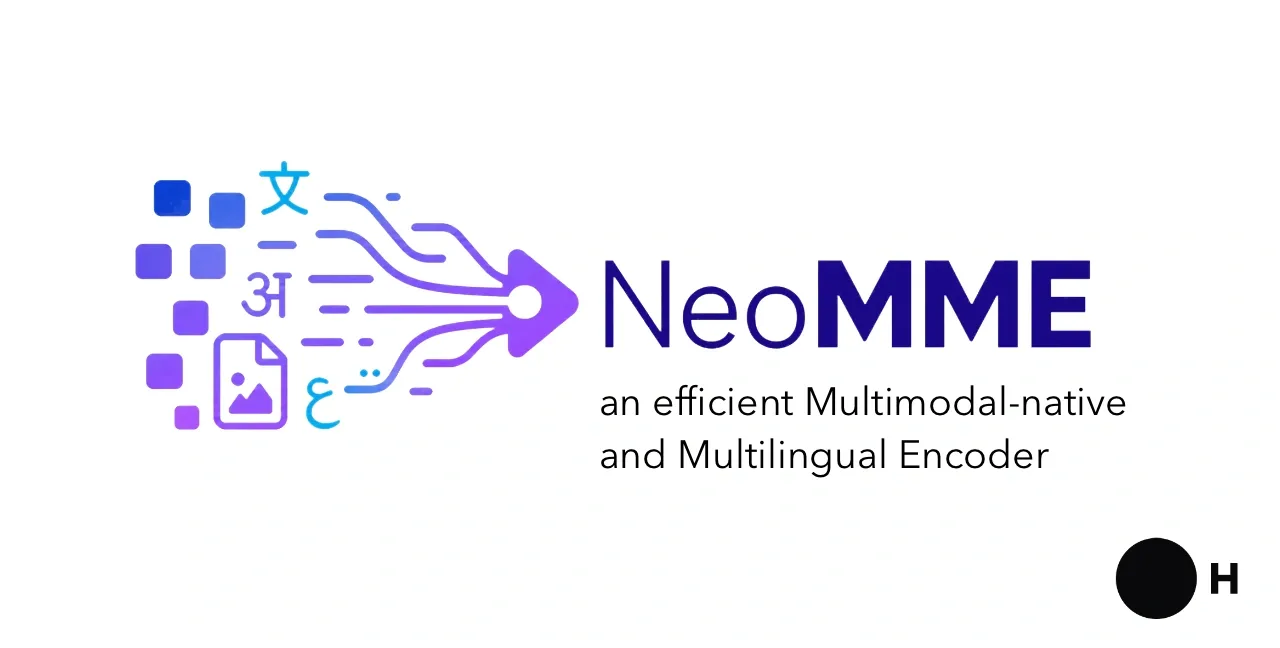
NeoMME's 260M encoder lands within 0.002 of a 3.75B model on ViDoRe v3

H company published NeoMME on September 3, 2026: a pair of multimodal encoders, at 260M and 800M parameters, released under Apache 2.0 and loadable through Hugging Face Transformers. On the ViDoRe v3 document retrieval benchmark the small one scores 0.523 nDCG@10, which is 0.002 behind ColQwen2.5 at roughly 14 times its parameter count. It also encodes about 51 pages per second on a single NVIDIA L40S, and the index it produces can be compressed from about 1.5 MB per page to 6 kB while keeping more than 95% of retrieval quality.

Hugging Faceverified

Industrystrong signal

NVIDIA is buying Hugging Face for $12,930,300,000 and says its compute will not be required

Jensen Huang announced the agreement on September 3, 2026. The platform holds more than 3 million models, 500,000 datasets and 1 million applications, and more than 18 million developers and 200,000 companies use it. NVIDIA says Hugging Face stays open to the whole ecosystem and that NVIDIA compute will not be required to build on or deploy through it. The post names no closing date and no regulatory conditions, so what you have today is an agreement rather than a completed sale.

NVIDIAverified

Modelsstrong signal

Tencent opened a 770B model under Apache 2.0, and the weights alone are 1.56TB

Hy4 preview is a mixture-of-experts model with 770B total parameters, 49B of them activated per token, a 1M-token context and an Apache 2.0 license. The weights are 1.56TB across 131 safetensors files, or 0.81TB in the FP8 build, which puts it in the class of models you rent rather than run. The license is the unusual part: a frontier-scale open-weights release with no field-of-use restriction attached.

Tencent Hyverified

Modelsmedium signal

Qwen opened a 125B model with 6B active, and the quantized file is what decides if you can run it

Qwen3.8-Flash-Next is an open-weights multimodal mixture-of-experts model and an early preview of the Qwen4 architecture. The interesting pair of numbers is 125B parameters against 6B activated per token: the first decides whether it fits on your machine, the second decides how fast it answers. Simon Willison has it running on a DGX Spark from quantized files of 72.5GB and 78.9GB, which is the honest hardware requirement.

Qwenverified