FLUX Upscale prices video by the megapixel-second, and charges only for what comes out
Black Forest Labs released FLUX Upscale on August 20 as a standalone tool and endpoint that regenerates video up to 4K. It runs in two modes: Precise at $0.07 per megapixel-second and Creative at $0.10. The billing detail matters more than either rate, because the charge is calculated on the output alone, so the upscale factor you pick is what sets the bill.

A clip generated at HD is not finished. Broadcast, campaign and cinema formats want more pixels, and a general-purpose upscaler tends to smear faces and leave a grid over water and grass. Black Forest Labs released FLUX Upscale on August 20 to do that step in the same place the video was made.
Two modes, and the difference is not only speed
Precise runs four steps at $0.07 per megapixel-second. Creative runs eight at $0.10 and pushes repair and detail further, but the lab states plainly that it can change or replace identity, so reference consistency drops. That is an unusually direct warning to put next to your own more expensive option.
- upscale_factor accepts 1.5x, 2x and 3x, which from an HD input lands at roughly 1080p, 2K and 4K.
- Input can start as low as 480p.
- The model reads FLUX 3 output natively, which is where the fixes for smudged faces and gridded textures come from.
What the input may be
A clip may run to at most 20 seconds, weigh at most 50MB and measure at most 2560 by 1440 pixels. Anything longer or larger is rejected before processing: it is not trimmed, it is not downscaled, and nothing is charged for it.
The output frame is capped at about 14.4 megapixels, so a source above that ceiling is upscaled by less than you asked for. The smallest factor, 1.5x, lifts a full 2K source to 4K; the endpoint upscales toward 4K but does not accept 4K on input.
The charge follows the output
The pricing page states that charges are based on output only, and that input resolution, upscale factor and optional prompts are not billed separately. Read that the other way around and it is the whole cost model: the resolution you ask for is the resolution you pay for, and nothing else moves the number.
Work it through on a 10-second clip at 4K. A megapixel in this price list is 1,048,576 pixels, 1024 by 1024, the same definition the image prices use, so a 3840 by 2160 frame carries 7.91 megapixels rather than 8.29. Ten seconds at 4K is therefore 79.10 megapixel-seconds, which comes to $5.54 on Precise and $7.91 on Creative. The documentation quotes $0.55 per second at 4K on Precise and $0.79 on Creative, and that matches. Frame rate does not enter the bill: the same clip at the same length and the same resolution costs the same at 24 and at 60 frames per second.
Where it sits
FLUX Upscale is reachable through the BFL API and the playground, with the terms on the pricing page under video tools. For anyone already generating with FLUX 3, it removes the step where finished footage leaves for a separate upscaler and comes back with different faces.
Sources
Corrections
An earlier version said a 10-second 4K clip costs $5.81 on Precise and $8.29 on Creative, and that the arithmetic holds at 24 frames per second. After checking the publisher's documentation the arithmetic has been corrected. A megapixel in this price list is 1,048,576 pixels, so a 4K frame carries 7.91 megapixels: ten seconds at 4K is 79.10 megapixel-seconds, which is $5.54 on Precise and $7.91 on Creative. Frame rate does not enter the bill, because the charge is the megapixels in an output frame multiplied by the duration of the output. The input limits, which had been left out, have been added.
Related
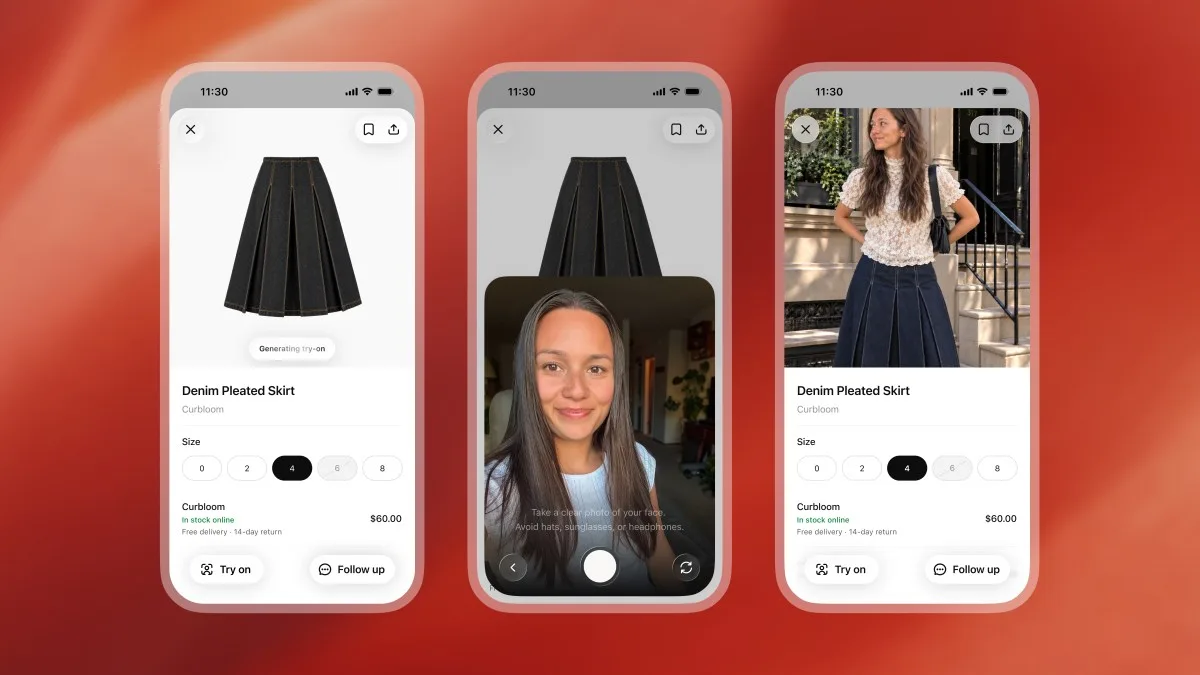
ChatGPT adds virtual try-on for clothes and keeps your reference photo for later
OpenAI added two shopping features to ChatGPT on October 1, 2026. A Try on button on listings for clothes and accessories generates an image of the item on you from a selfie. The selfie is saved as a reference photo for future try-ons until you change or delete it in settings. A second feature, Favorites, saves products to your ChatGPT Library.
OpenAIverified
Gemini 3.8 Live can now answer as a talking video avatar, and Google bills the video only while it speaks
Google made Gemini 3.8 Live with Live Avatar generally available in Gemini Enterprise on September 24, 2026, with US and EU endpoints. The model replies through a lip-synced video character while it listens, watches a camera or a shared screen, and calls tools in the background. Avatar video costs $1 per million tokens at 6,192 tokens for each second of speech. By our arithmetic, that comes to about $0.37 per spoken minute before audio, input, and context charges.
Googleverified

Google put its Nano Banana image editor into Docs and Slides and named it Google Pics
Google Pics is a standalone image creation and editing tool built on the Nano Banana model, and the same controls are being wired into Workspace apps. The integration begins with Docs and Slides on September 1, 2026, and reaches Drive in the coming weeks. Access arrives with a Google AI Pro or Ultra subscription and with most Workspace business plans, rolling out over the coming weeks. Google publishes no quota, no separate price, and no list of supported languages.
Googleverified