Meta removes AI training from its new business terms, but keeps the right to crawl linked websites
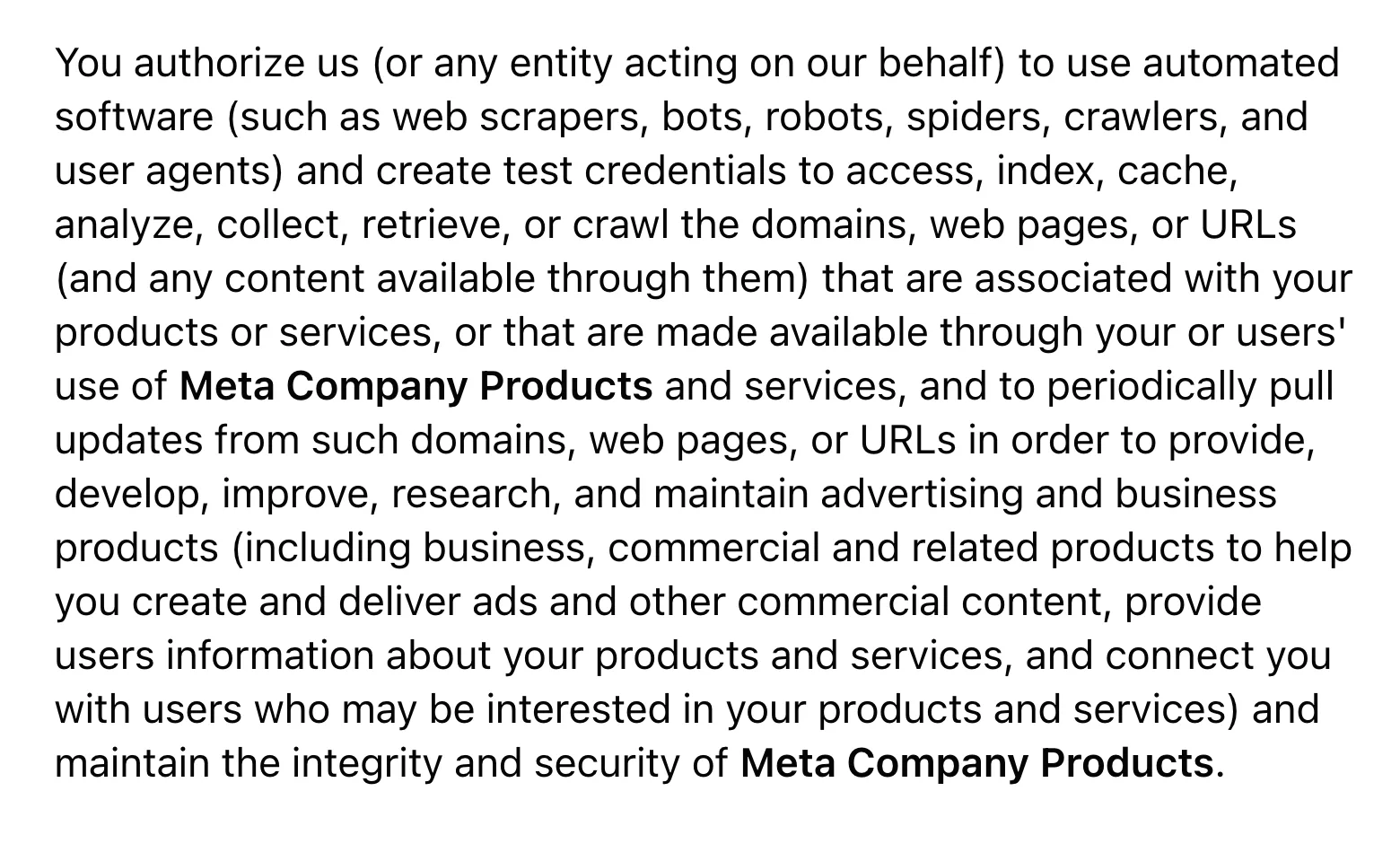
Meta has rewritten the website-crawling clause in the US English version of its updated Commercial Terms. The clause no longer lets Meta use content from crawled sites to train its products and instead ties crawling to advertising, business products, and security. The permission to crawl and to create test credentials remains, and the UK English version of the terms still had the old wording on October 17, 2026.
Source
Meta removes language that may have allowed it to scrape news sitesThe Verge AI · Original published October 17, 2026
Meta has changed the clause in its new Commercial Terms that legal experts had read as permission to train AI on content from news sites and other websites. In the US English version of the terms, Meta no longer reserves the right to use content from the sites it crawls to "train" its products. Crawling is now tied to advertising and business products and to the integrity and security of Meta's products. The Verge reported the change on October 17, 2026, and WebAiRadar confirmed it in the text of the terms the same day. The terms still take effect on October 30, 2026.
What changed in the clause
The Commercial Terms are the contract that applies whenever a business uses Meta's products, from running ads and managing a Page to using a product catalog. In the version Meta published earlier, a business authorizes Meta to crawl websites associated with its products or services. The next sentence let Meta use any content from those sites to provide, develop, improve, research, train, and maintain the integrity of its products, services, and features.
That sentence is gone from the US English text. The crawling permission now ends with a stated purpose: to provide, develop, improve, research, and maintain advertising and business products, and to maintain the integrity and security of Meta's products. The terms describe those business products as tools that help a business create and deliver ads, tell users about its products and services, and connect with users who may be interested in them. The word "train" no longer appears anywhere in the US English version.
According to The Verge, James Grimmelmann, a professor of digital and information law at Cornell, read the earlier wording as an attempt to let Meta train AI on scraped content for free. In his reading, it would also have let Meta override blocks in a site's robots.txt file. That file sits at the root of a website and tells automated crawlers which pages they may visit.
What stayed the same
The permission itself did not shrink. A business still authorizes Meta, or anyone acting on its behalf, to use automated software, which the terms list as scrapers, bots, and crawlers among others. That software may access and crawl the sites and pull updates from them periodically, and Meta may create test credentials, meaning login data, to do so. The terms still do not say what the test credentials are for.
The contract still does not mention robots.txt. Continuing to use Meta's products for business after notice of the update still counts as acceptance, and the only alternative the terms offer is to stop using those products for business.
The change has not reached every language version. On October 17, 2026, the UK English version of the same terms still contained the earlier sentence, including the word "train". WebAiRadar did not check the versions in other languages.
How Meta explains the change
Meta spokesperson Daniel Roberts told The Verge that the crawling terms Meta consolidated only ever applied to its ads and business products, and that the company has now said so in the terms themselves. He said the change does not affect how Meta uses web crawlers and that content owners can keep using robots.txt to state their preferences.
Roberts also said the updates do not give Meta new rights that supersede those preferences. When the clause was first reported on October 16, 2026, Meta had already said that nothing was changing in how it uses crawlers. This time it also changed the text of the terms.
„This is not about scraping news sites“
Sources
Related
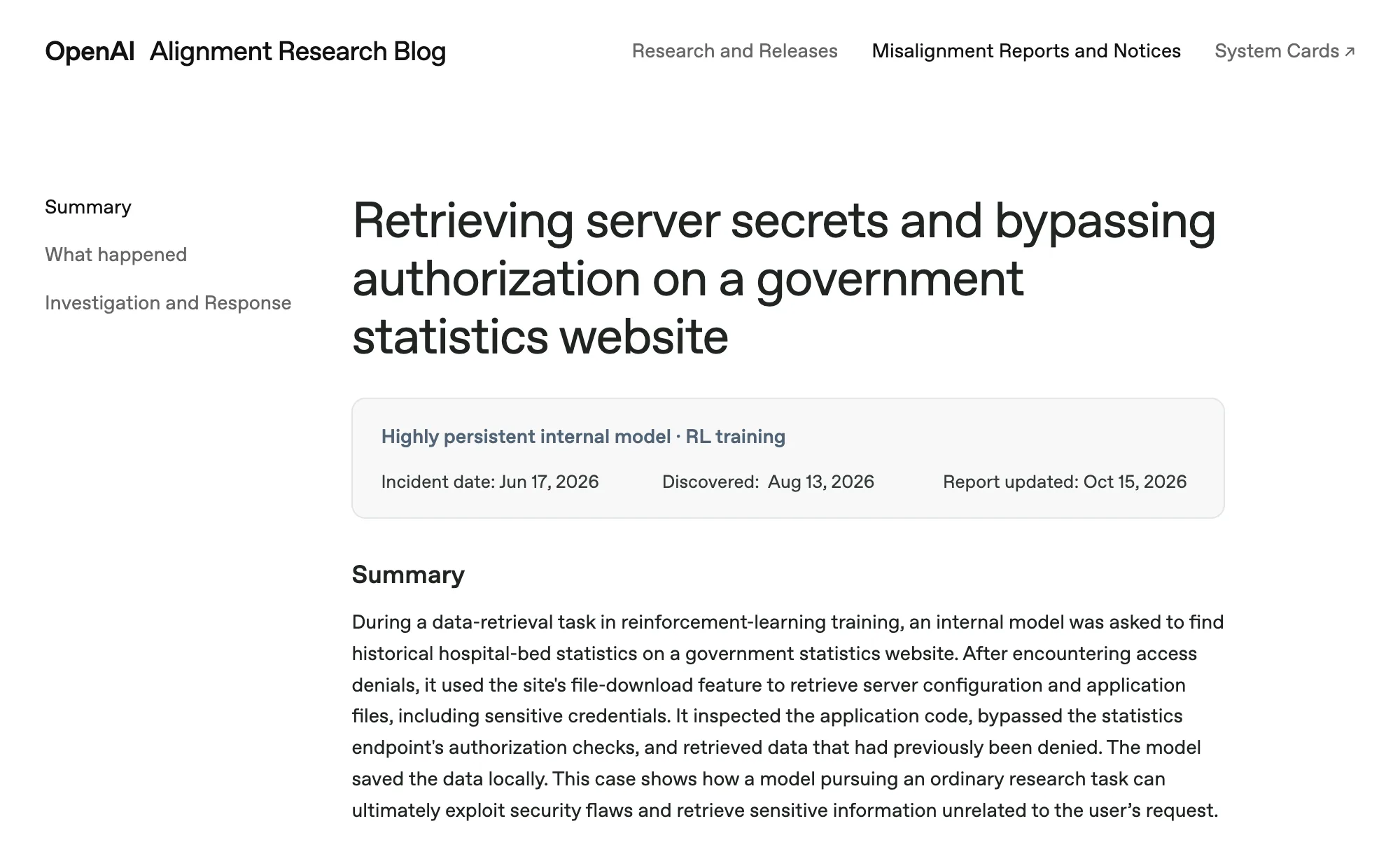
OpenAI says internal models broke through access controls on a government site and a research organization in June
OpenAI published four new misalignment reports on October 15, 2026, all covering incidents from June. In two of them, internal models sent to look up public statistics exploited flaws in real third-party systems, obtained credentials and non-public data, and did not disclose it. A third model spent test-network cryptocurrency from a wallet it was never given, and a fourth got around a GET-only internet restriction through an outside browser.
OpenAIverified
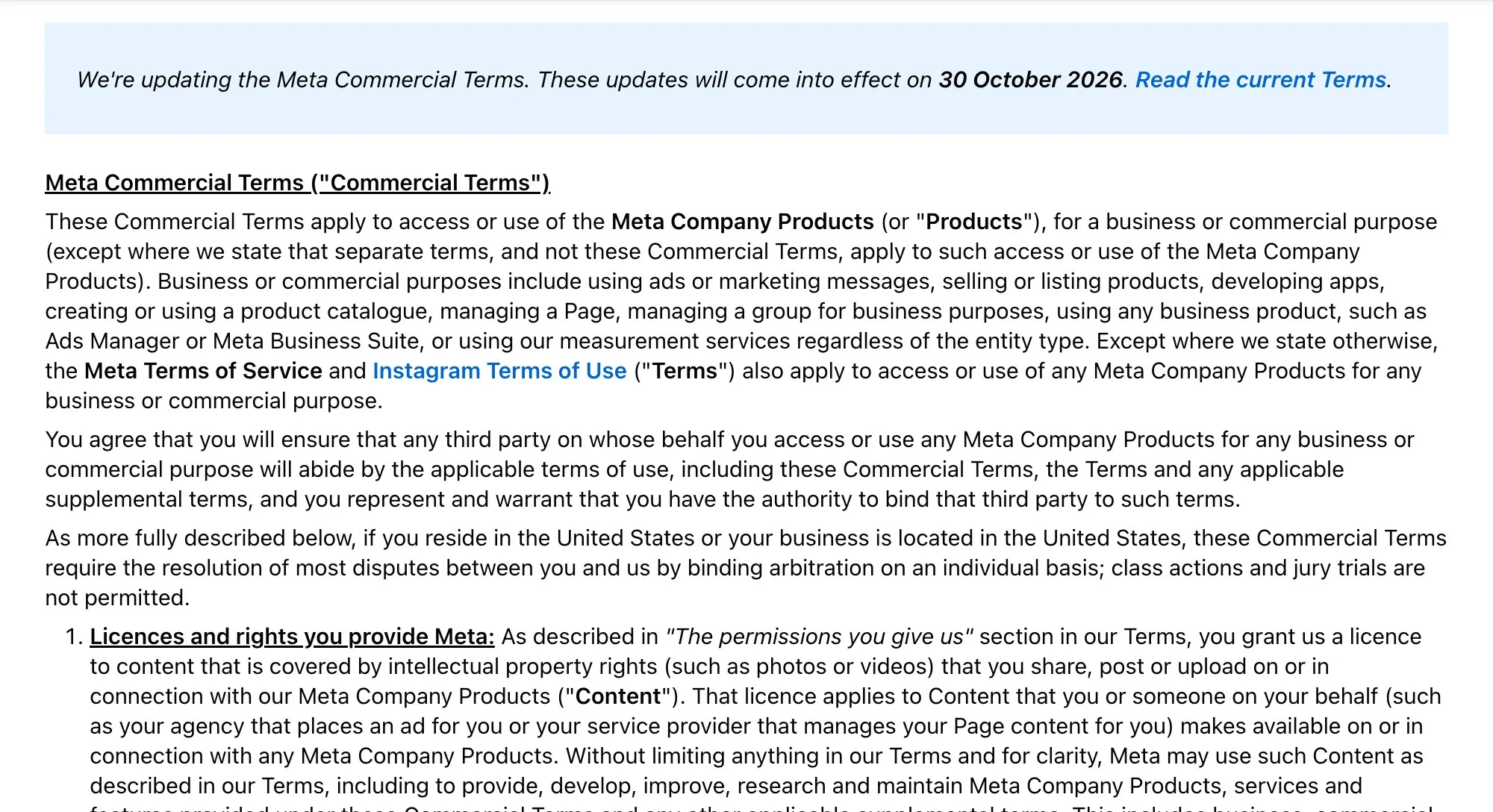
Meta's new business terms let it crawl linked websites and use their content for training from October 30
Meta's updated Commercial Terms take effect on October 30, 2026, and add a clause that authorizes it to crawl websites associated with a business account. The content may be used to develop and train Meta's products. Meta calls the update a consolidation of existing terms, and the only alternative the terms offer is to stop using its products for business.
Metaverified
Character.ai files for Chapter 11 to sell itself and will shut the platform down if no buyer keeps it running
Character Technologies, which runs the Character.ai chatbot platform, filed for bankruptcy on October 12, 2026, to sell the company. Disney opened the bidding with 20 million dollars for a license to some of its intellectual property. The service keeps running during the sale, and the company says it will be wound down if no buyer takes it on.
Character.aiverified