Skip to content

Tags

publishing

9 items
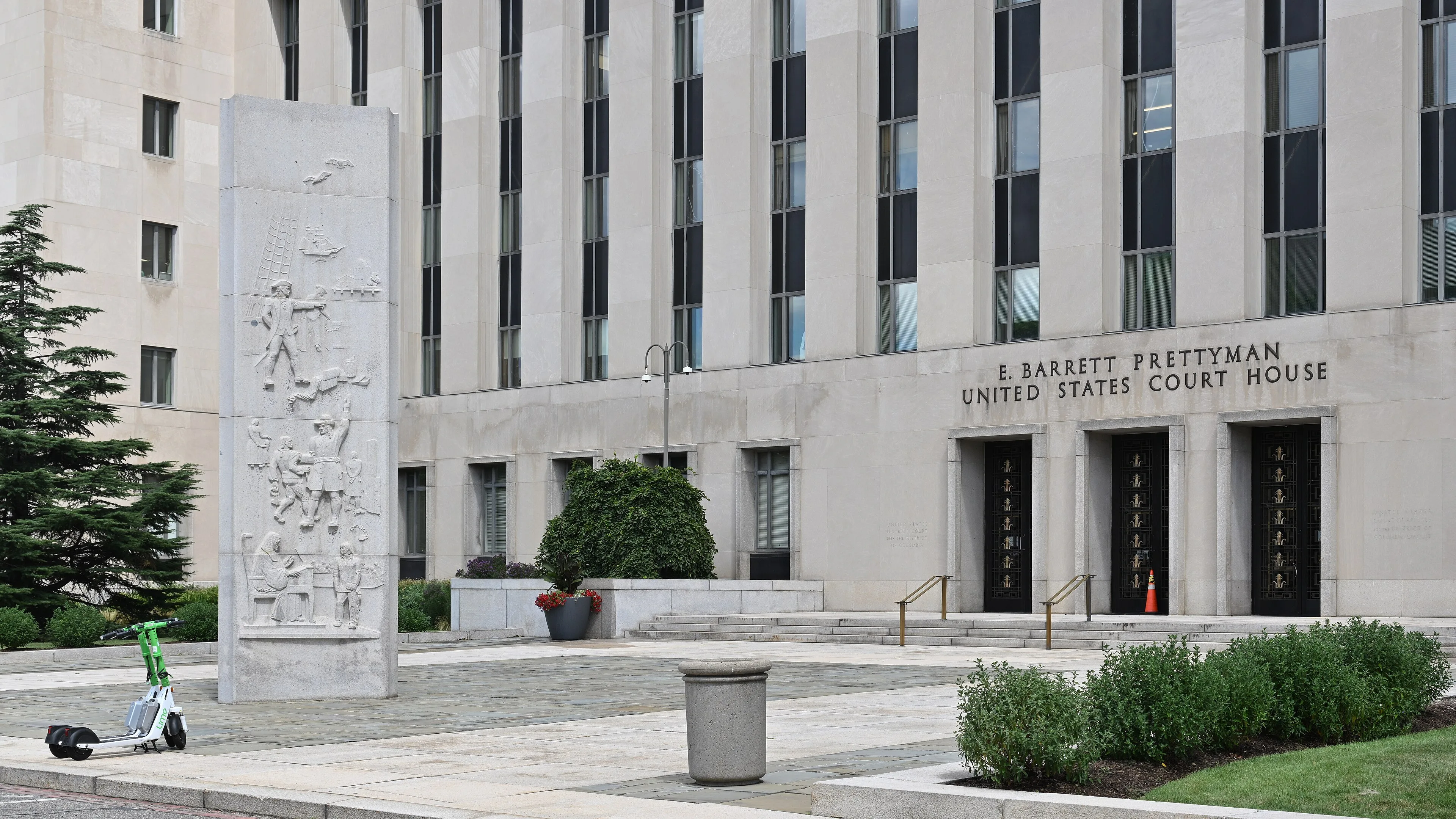
The front of the E. Barrett Prettyman United States Court House in Washington, the seat of the US District Court for the District of Columbia: a pale stone facade with the building's name above three dark doors, and a carved stone relief panel standing on the plaza.
Industrymedium signal

Federal judge dismisses Chegg and Penske antitrust suits over Google's AI Overviews

Judge Amit P. Mehta granted Google's motions to dismiss two antitrust suits brought by Chegg and Penske Media Corporation on September 30, 2026. The publishers argued that Google forces sites to hand over content for snippets, AI training, and AI Overviews as the price of appearing in search. The court held that the complaints did not plausibly plead an agreement, separate products, antitrust standing, or a defined market. If you run a site that depends on Google traffic, the ruling leaves your options where they were: let Google crawl, or leave its index.

US District Court for the District of Columbiaverified
Toolsmedium signal

A new npm token can submit a release but cannot publish one

GitHub added a permission to npm granular access tokens on September 18, 2026: read and write, stage only. A workflow holding one submits a version to a staging area, and the registry refuses a direct publish from it even when the token is set to bypass two-factor authentication. Releasing the staged version takes a maintainer and a second factor. The deadline behind this is already set, because direct publishing through bypass-2FA tokens is due to disappear in January 2027.

GitHub Changelogverified

Industrymedium signal

The Seattle Times and Newsday ask a court to destroy the models trained on their journalism

Two American newspapers filed a copyright complaint against OpenAI and Microsoft in Manhattan federal court on September 4, 2026. The filing runs to 38 pages and seven counts. Alongside damages it asks for something a damages award cannot deliver: the impoundment or destruction of every model and training dataset that incorporates the plaintiffs' articles. Nothing has been decided, so every number in the document is one side's allegation. What makes it worth reading is the evidence the two papers say they already hold.

CourtListenerverified

Industrystrong signal

Microsoft's summary judgment brief puts numbers on how rarely Copilot repeats news text

Microsoft moved for summary judgment on September 4, 2026 in the consolidated copyright case brought by The New York Times, the Daily News and the Center for Investigative Reporting. Part of its fair use argument rests on 8.2 million Copilot chat logs handed over in discovery. The plaintiffs' own expert found a 16-word match in 59,545 of those conversations, which Microsoft's expert reports as 0.73% of the sample. The brief also restates something a site owner can act on today: two meta tags that keep a page out of Copilot's web grounding.

CourtListenerverified

Industrystrong signal

The United States told a federal court that training a language model on copyrighted text is fair use

The Department of Justice filed a 20-page Statement of Interest on September 1, 2026 in the consolidated OpenAI copyright litigation in the Southern District of New York. It asks the court to reject the argument that training large language models on copyrighted texts infringes copyright, and says the fourth fair-use factor, the effect on the market, heavily favors fair use. Its most concrete argument is economic: a licensing requirement would leave only the largest technology companies able to pay. A footnote then states that the government takes no position on whether such a licensing regime would be workable at all.

CourtListenerverified

Industrystrong signal

Music publishers ask a court to order an accounting of Anthropic training data

Sony Music Publishing, Warner Chappell and affiliated publishing companies sued Anthropic and two of its founders on August 28, 2026 in the Northern District of California. The 48-page complaint sets out four counts and asks for statutory damages of up to $150,000 per work. The request that reaches furthest is not the money. It asks the court to order an accounting of the training data, the training methods and the known capabilities of Anthropic models.

CourtListenerverified

Industrystrong signal

How to label AI content under Article 50, and which part of it is not your job

Article 50 of the EU AI Act has applied since August 2, 2026, and it binds anyone serving people in the Union, wherever the server is. Most of the panic is about the machine-readable marking requirement, which for a site owner who calls somebody else's API is somebody else's obligation. Here is what is actually yours: a chatbot that says what it is, published text that either carries a name or carries a label, and a deepfake that admits it.

Evropska komisijaverified

Industrymedium signal

Google gives sites a button readers use to name them a preferred source

On August 20, Google published a button a publisher places on its own page, which a reader clicks once to add that site to their preferred sources in Search. The consequence is that the site's pages appear more prominently in Top Stories, in AI Overviews, and in AI Mode. Google says users have chosen more than 600,000 different sources so far. Two reader-side changes arrived with it: tuning topics in the Discover feed through a three-dot menu, and a customizable audio briefing in Google News for Android.

Googleverified