Skip to content

Tags

Quantization

6 items
LLAMA.CPP B115567.63 GBBonsai 2 27B without the fork
Machines & local modelsmedium signal

llama.cpp now runs PrismML's ternary Bonsai 2 27B without the company's fork

Build b11556 adds the weight rotation step that Bonsai 2 27B was missing in stock llama.cpp. The 7.63 GB Q2_0 file now gives correct output there, while PrismML's smaller PQ2_0 and PTQ1_0 packs still require the company's own build.

llama.cppverified
Machines & local modelsmedium signal

Transformers now loads llama.cpp GGUF quants on Apple Silicon

A GGUF checkpoint can be passed straight to from_pretrained and run with its weights still packed, using ggml's Metal kernels through the kernels library. The target is a single interactive conversation on an Apple Silicon Mac, and the packed path covers the Qwen3.5 dense and mixture-of-experts architectures plus compatible Qwen3.8 checkpoints. Hugging Face says the result comes close to llama.cpp on the three checkpoints it measured, while noting the two measurements were not taken under identical conditions. It still recommends llama.cpp when efficient local inference is the priority.

Hugging Faceverified

LLAMA.CPP0.4.0four architectures, one new transport
Machines & local modelsmedium signal

llama.cpp 0.4.0 adds four model architectures, an Apple RDMA transport, and video flags

The 0.4.0 release landed on September 4, 2026, and it is a numbered version rather than one of the nightly builds. It adds initial support for Qwen3.8-Flash-Next, NVIDIA Nemotron-3-Puzzle-75B-A9B, DSpark on Nemotron 3.5, and nanbeige4.2-3B. Apple RDMA becomes an RPC transport, video arrives as command-line options, and the quantizer gains a memory ceiling. Two server defaults changed, and saved session state carries a new version number.

llama.cppverified

Machines & local modelsstrong signal

Memory sets what you can run locally, and price per token sets whether you should

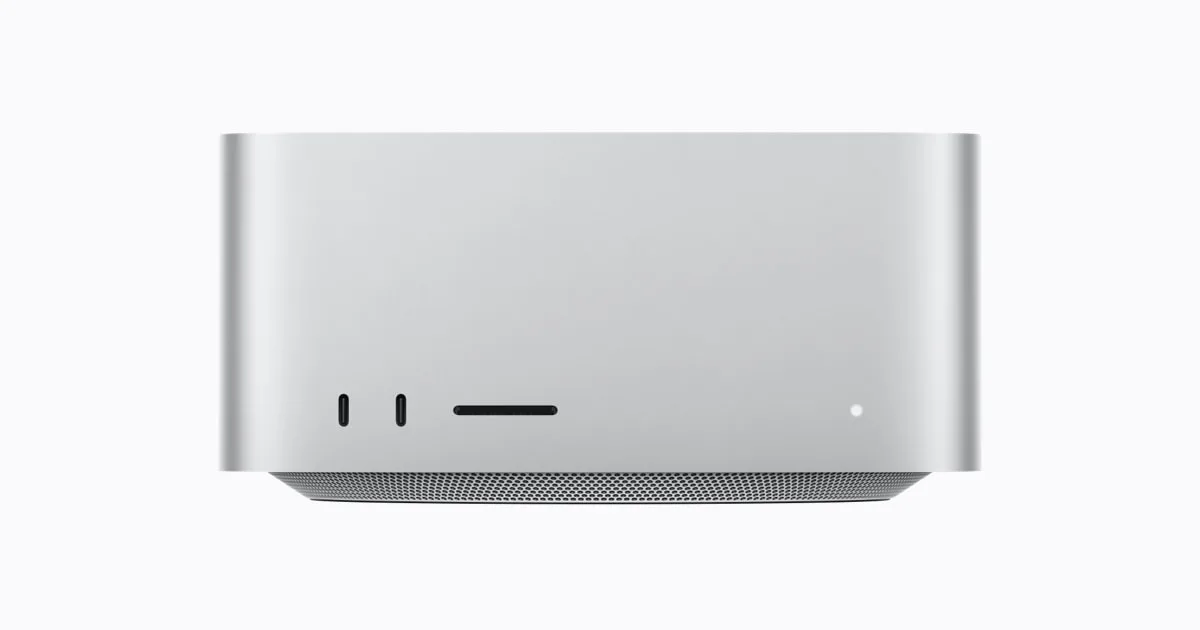
A local model has one hard requirement before speed, quality or license enter the discussion: the weights have to fit in memory. That turns the machine question into arithmetic you can do on paper, and Apple's August 25 desktops give you three price points to do it against — $899 for a 32GB ceiling, $2,499 for 128GB, $5,499 for 512GB. This guide works through what fits where, which runner to use, what each size class is good for, and how many tokens it takes before a machine beats paying by the token.

Apple, OpenRouter, DeepSeekverified

Modelsmedium signal

Qwen opened a 125B model with 6B active, and the quantized file is what decides if you can run it

Qwen3.8-Flash-Next is an open-weights multimodal mixture-of-experts model and an early preview of the Qwen4 architecture. The interesting pair of numbers is 125B parameters against 6B activated per token: the first decides whether it fits on your machine, the second decides how fast it answers. Simon Willison has it running on a DGX Spark from quantized files of 72.5GB and 78.9GB, which is the honest hardware requirement.

Qwenverified