Skip to content

Tags

Release notes

60 items

Page 2 of 2.

Codingmedium signal

Claude Code 2.1.261 changes what Ctrl+W does and stops auto-approving diagram-renderer links

The release that landed on September 4, 2026 is mostly fixes, but four entries change behavior that was already there. The prompt's word-editing keys now match Bash, and the setting that used to select a keybinding style has no effect at all. Auto mode now treats a link that packs your content into a public diagram renderer's URL as an upload to that site, so it is no longer approved without you. Two new settings raise how much command output reaches the model inline, up to 128,000 characters.

Anthropicverified
Modelsmedium signal

llama.cpp 0.4.0 adds four model architectures, an Apple RDMA transport, and video flags

The 0.4.0 release landed on September 4, 2026, and it is a numbered version rather than one of the nightly builds. It adds initial support for Qwen3.8-Flash-Next, NVIDIA Nemotron-3-Puzzle-75B-A9B, DSpark on Nemotron 3.5, and nanbeige4.2-3B. Apple RDMA becomes an RPC transport, video arrives as command-line options, and the quantizer gains a memory ceiling. Two server defaults changed, and saved session state carries a new version number.

llama.cppverified

Codingmedium signal

OpenClaw 2026.9.1 rolls back a failed update and adds a host blocklist to its SSRF policy

The September release of the open personal assistant reworks the part that breaks machines. The update command now restores the previous npm candidate when the Doctor run that follows the upgrade fails, and it keeps configuration and secret references through that failure. The same release gives the SSRF policy an explicit list of hostnames to refuse, stops systemd unit backups from carrying Gateway tokens, and draws Mermaid blocks as diagrams inside the chat. One group has to act: anyone on 2026.8.2 without a service manager should run the update once with restarts disabled.

OpenClawverified

Codingmedium signal

GitHub retires four Copilot models on October 2 and starts charging for seats up front on October 1

Three GitHub changelog entries landed on September 3, 2026, and together they change which models you can pick, what a new seat costs before anyone types anything, and whether you can sign up at all. Gemini 3.5 Flash, Gemini 3.6 Flash, Kimi K2.7 Code, and Claude Opus 4.7 go away on October 2, 2026, across every Copilot surface. Gemini 3.8 Flash arrives in its place on Pro, Pro+, Max, Business, and Enterprise. Signups for Business and Enterprise reopen for card and PayPal customers, but every assigned seat is now billed before the person using it gets access.

GitHubverified

Codingmedium signal

Copilot in VS Code now reports token usage per model and installs portable agent plugins

GitHub published its monthly roundup for Copilot in Visual Studio Code on August 31, 2026, covering releases 1.132 through 1.135. Most of the change is in the Agents window: chats line up side by side, one session opens from more than one window, and plugins written to the Agent Plugins 1.0 standard install outside VS Code as well. The response footer also starts reporting how many tokens each model spent in a turn.

GitHubverified

Codingstrong signal

OpenClaw 2026.8.1 turns memory on by default and drops the bundled OpenProse plugin

The August release of the agent runtime enables three behaviors on its own: recall of earlier private conversations, background memory consolidation, and automatic application of skills its own scanner has approved. It also removes the bundled OpenProse plugin and the /prose command, and moves model routes named codex over to openai. Plugin authors face an SDK import gate on September 1, 2026.

OpenClawverified

Codingmedium signal

Copilot in Visual Studio gets org-wide agents and a thinking-effort dial

GitHub's August update for Copilot in Visual Studio 2026 lets organization and enterprise owners publish custom agents that every repository in the organization can use. Supported models now expose Low, Medium and High thinking effort, so reasoning depth becomes a choice rather than a default. The Git agent will review uncommitted changes before you open a pull request, on GitHub and Azure DevOps alike. All of it lands on every Copilot plan, including the free one.

GitHubverified

Codingmedium signal

GitHub sets three Copilot dates: seats paid upfront, one chat policy, longer retention

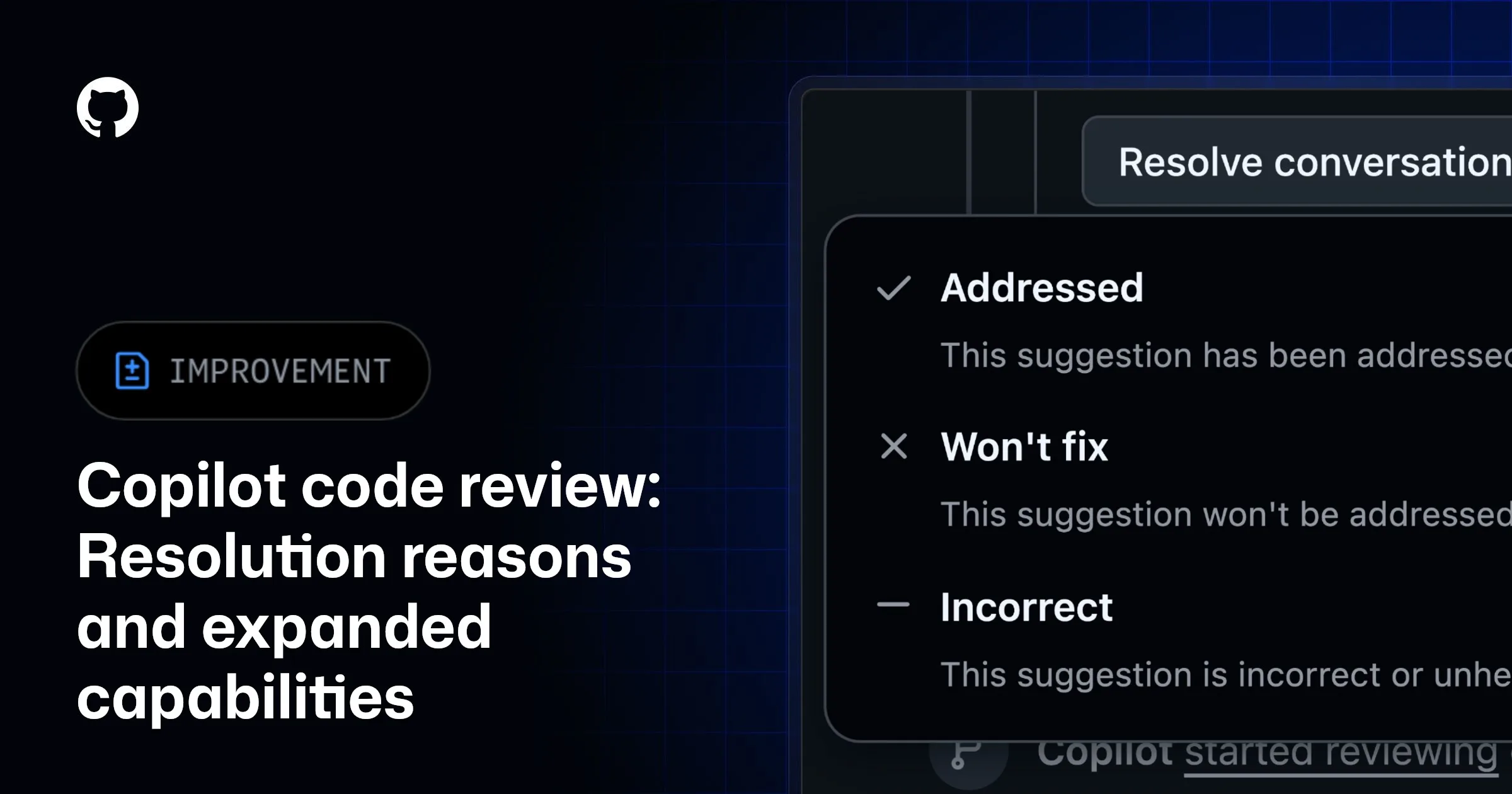
One changelog entry on August 28 carries three separate changes. From September 1, new Copilot Business and Enterprise seats bought by card or PayPal must be paid for before anyone can use them, and existing card customers move to upfront charges on October 1. No earlier than September 28, chat on github.com, chat in GitHub Mobile and the cloud agent become one experience under one policy that is on by default, and chat data then stays for the life of the account instead of 28 days. On the same date, the default effort level for Copilot code review moves from Lite to Balanced.

GitHubverified

Codingmedium signal

Claude Code 2.1.251 closes six ways a project could widen its own permissions

Anthropic published the release on August 28. Six of its fixes share one shape: something declared inside the working directory — a symlink, a plugin entry, a workflow script, a settings file — reached past the boundary the session had approved. Several changes now stop managed or project settings from weakening the sandbox or injecting credential headers without an explicit approval. The same release adds hooks that fire around a model switch and a per-session prompt-cache line in the cost command.

Anthropicverified

Codingweak signal

Cursor Cloud Agents no longer need a repository before they can start

Until now a cloud agent needed a connected GitHub account before it could do anything. From August 27 it can be prompted straight away, with Cursor creating an Origin repository in the background and offering to save the work once the build stands.

Cursorverified

Codingmedium signal

Claude Code 2.1.248 adds a restricted mode and stops leaking credential leftovers

One flag now strips the tools that run code, keeps file access inside the working directory, refuses bypassPermissions and ignores every settings file. The same release stops cloud reviews from uploading tfvars files and editor backups of private keys. Version 2.1.250 followed hours later with fixes only.

Anthropicverified

Web & searchmedium signal

Safari Technology Preview 251 adds corner-shape, and the first way to feature-detect an at-rule

Twelve new CSS features and eleven JavaScript ones landed in the preview build on August 26. The one that changes how you write CSS is not the rounded-corner property everyone will notice, but at-rule() inside supports, which lets a stylesheet ask whether an at-rule exists before relying on it. Until now there was no way to do that. This is a preview build, so nothing here is shippable, and none of it moves Baseline.

WebKitverified

Codingmedium signal

Thirteen of twenty-four fixes in Gemini CLI 0.57 were filed by an agent

The stable release landed on August 25 with twenty-four entries. Thirteen of them are labeled SSR Agent — issue fixes written by automation and merged under one account, including two that touch how subagents behave.

Googleverified

Codingweak signal

Claude Code crashed on startup on glibc 2.44, and 2.1.245 says so by name

The release published at 05:13 UTC on August 25 fixes a startup crash on Linux distributions shipping glibc 2.44 — Arch Linux, CachyOS and Fedora Rawhide are named. If the CLI stopped opening on a rolling-release machine this week, this is why.

Claude Code Releasesverified

Codingmedium signal

A proxy that stripped one header was doubling Claude Code's API bill

Version 2.1.239 fixes streaming on Bedrock behind proxies that remove the response Content-Type header. Claude Code silently fell back to re-running every turn without streaming, and each turn was billed twice. The same release makes cost estimates show the 1.1× premium that data-residency workspaces pay.

Anthropicverified

Codingmedium signal

llm 0.33 takes the pin out and moves to httpx2

Version 0.32.1 held fresh installs together by pinning the OpenAI Python package below 3.0.0. That was a holding action, and 0.33 does the actual repair: it upgrades to the OpenAI library 3.x and switches its HTTP client from httpx to httpx2. The release also carries changes you will notice in daily use, including a --key option on the embedding commands and server-side tool results that finally show up in llm logs.

Simon Willisonverified

Codingweak signal

A fresh install of llm broke because the OpenAI library stopped using httpx

Version 0.32.1 pins the OpenAI Python package below 3.0.0 so that new installations work again. Nothing in llm changed to cause the break: it imported httpx while relying on the OpenAI package to bring it along, and when that package dropped httpx the dependency simply stopped arriving. It is a small release with a lesson that outlives it.

Simon Willisonverified

Codingweak signal

Claude Code 2.1.238 stops memory growth in long sessions

The August 20 release fixes what got in the way during long stretches of work rather than adding features. Tool results returned by subagents are now freed as soon as they leave the recent-view window, so memory in long interactive sessions stops growing without a ceiling. The release also fixes custom output styles sliding back to the default tone mid-session, along with a run of stalls in Remote Control. A new keybindingFlavor setting restores Bash behavior, where Ctrl+W deletes back to the previous space, and claude mcp list no longer starts disabled servers just to check their status.

Anthropicverified

Codingweak signal

Claude Code 2.1.235 to 2.1.237: Concise style, ANTHROPIC_DEFAULT_MODEL, and spell checking

Three releases in three days change several things about daily work. Version 2.1.237 introduces a built-in Concise output style, in which Claude leads with the result and skips the preamble and the recap, and fixes prompt caching for sessions that go through a proxy gateway or a custom base URL. Version 2.1.236 adds the ANTHROPIC_DEFAULT_MODEL environment variable, which sets the model new sessions start on, and a notify_when_idle option that asks another session to report when it frees up. Version 2.1.235 introduces optional spell checking through aspell, hunspell, or ispell, and reduces memory and processor use for sessions running in the cloud.

Anthropicverified