OpenClaw 2026.8.1 turns memory on by default and drops the bundled OpenProse plugin
The August release of the agent runtime enables three behaviors on its own: recall of earlier private conversations, background memory consolidation, and automatic application of skills its own scanner has approved. It also removes the bundled OpenProse plugin and the /prose command, and moves model routes named codex over to openai. Plugin authors face an SDK import gate on September 1, 2026.
OpenClaw published version 2026.8.1 on August 31, 2026. For anyone already running it, the change that matters most is not a new feature but a changed default. Three things that used to be switched on by hand now happen on their own: the agent recalls earlier private conversations, consolidates memory in the background, and applies new skills that its own scanner has cleared.
Three defaults changed, and all three touch memory
Personal conversation recall comes first. On personal installs with no direct-message isolation configured, and with Active Memory enabled, the agent now pulls bounded context out of earlier private conversations with the same agent. Groups and channels stay excluded, and an explicit control switches recall off.
The second is what the release notes call grounded dreaming: model-backed memory consolidation that runs in the background, is enabled by default, and promotes provenance-qualified material into long-term memory. It keeps a Dream Diary and ships with an explicit disable control. The third is automatic self-learning, which captures reusable lessons and applies scanner-approved skills without a prompt. Skill changes a person wrote still wait for approval.
- Recall of private conversations is on by default on personal installs, and leaves groups and channels alone.
- Background memory consolidation is on by default and writes a Dream Diary.
- Scanner-approved skills apply themselves, while changes a person authored still wait for approval.
- On macOS, Peekaboo and Allow Computer Control stay on by default, subject to operating system permissions.
Two migrations break setups that worked yesterday
The bundled OpenProse plugin and the /prose command are gone. Source files with the .prose extension are kept, but the configuration that pointed at the plugin is now stale, so the release asks operators to run openclaw doctor --fix and to follow the upstream migration to the Agent Skill format.
The second migration rewrites model references. Shipped codex/* and openai-codex/* routes, provider configuration, stored sessions, and automation routes all move to openai/*, again through openclaw doctor --fix. Conflicts are reported to an operator instead of being resolved silently. Separately, authors of external plugins have a deadline of September 1, 2026. On that date several SDK import paths move into narrower namespaces, though nothing is removed in this release.
A credential the model never sees
The release adds private credential requests. An agent can ask for a secret value through a masked prompt, and that value enters neither the conversation transcript nor the model context. An opt-in proxy limits the destinations a protected secret may be substituted into.
For teams this is backed by a shared credential store in SQLite, where secret values are write-only and protected outbound traffic is bound to declared hosts. Recurring approvals follow the same shape: an operator approves one exact operation, can inspect or revoke it later, and a changed job or operation requires fresh approval.
„let your agent request a credential through a masked prompt“
Related
OpenClaw 2026.9.2 turns Swarm on by default and makes sessions visible to other agents
The open personal assistant shipped 2026.9.2 on September 5, 2026, and two of its lines describe defaults rather than features. Swarm, which runs several sub-agents at once, is now on unless it is switched off, and session tools now show every session instead of only the calling agent's. The same release makes GPT-6 Astra selectable, applies most settings changes without restarting the Gateway, and moves plugin icons into the package. Plugin authors get a date: the deprecated prompt-context aliases become eligible for removal on or after September 8, 2026.
OpenClawverified
Claude Code 2.1.261 changes what Ctrl+W does and stops auto-approving diagram-renderer links
The release that landed on September 4, 2026 is mostly fixes, but four entries change behavior that was already there. The prompt's word-editing keys now match Bash, and the setting that used to select a keybinding style has no effect at all. Auto mode now treats a link that packs your content into a public diagram renderer's URL as an upload to that site, so it is no longer approved without you. Two new settings raise how much command output reaches the model inline, up to 128,000 characters.
Anthropicverified
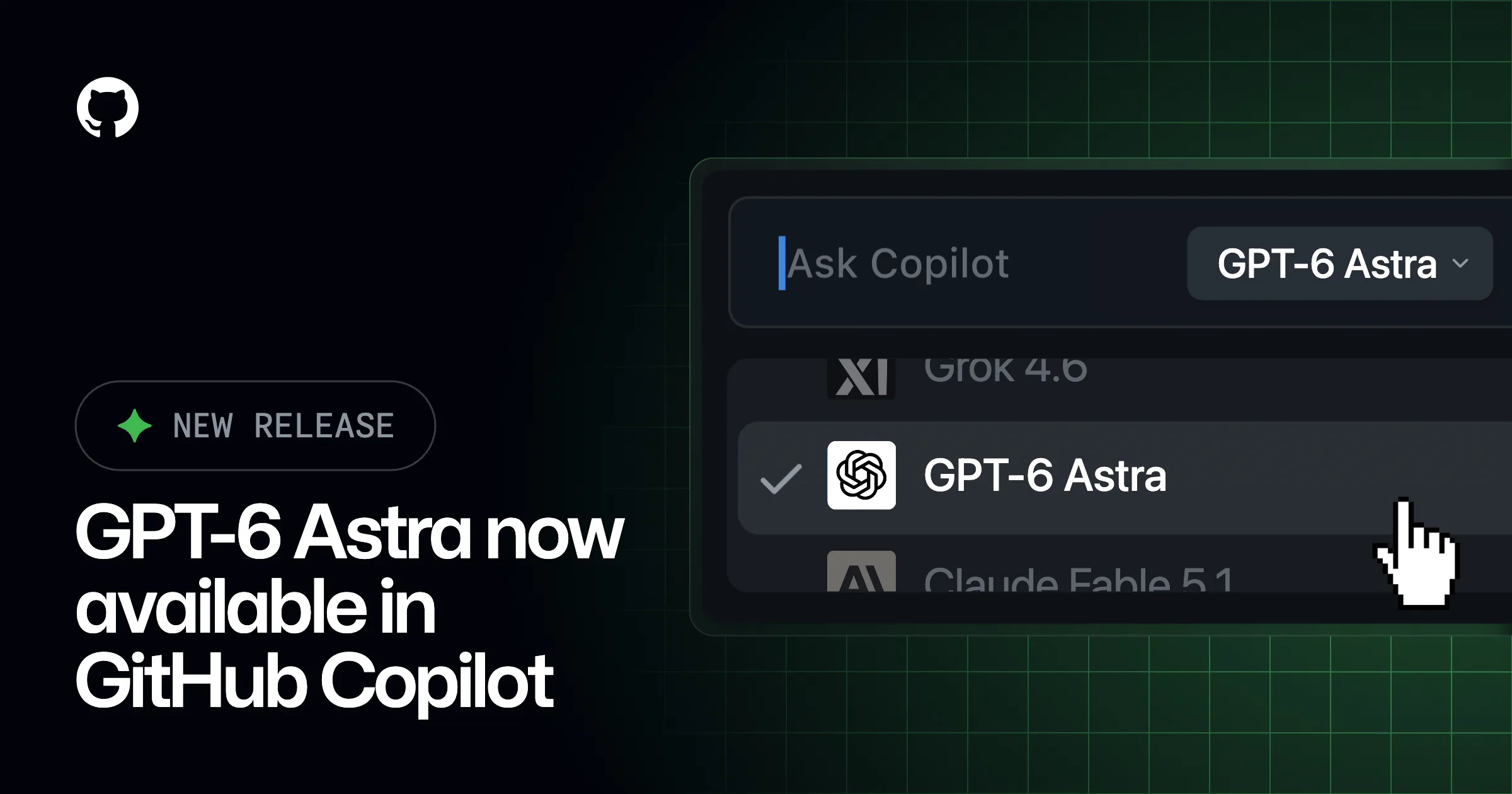
GitHub Copilot switches GPT-6 Astra on by itself and leaves Claude Fable 5.1 off
GPT-6 Astra became generally available in GitHub Copilot on September 4, 2026, for the Pro+, Max, Business, and Enterprise plans. Claude Fable 5.1 reached the same four plans three days earlier. The two arrived with opposite administrator defaults: Astra is enabled automatically under default model enablement, while the Fable 5.1 policy is off until someone turns it on. Fable 5.1 is also the one that retains prompts and outputs, and the zero-retention exemption runs only to the end of the calendar year.
GitHubverified