Skip to content

Anthropic

Claude

104 items

Page 3 of 3.

Brands
Codingstrong signal

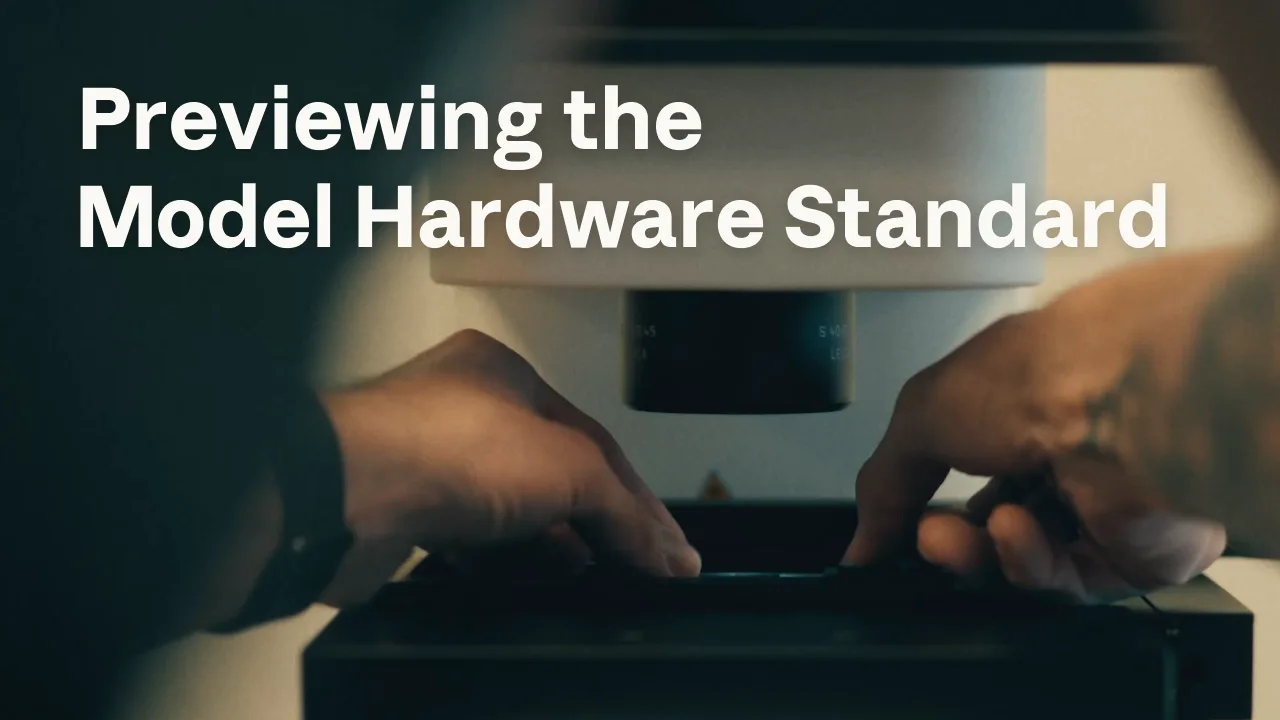
Anthropic previews a standard that lets agents drive laboratory hardware

The Model Hardware Standard gives an agent one driver format for microscopes, liquid handlers and robotic arms, cutting integration work that used to take weeks down to hours or minutes. It is model-agnostic and reachable over the Model Context Protocol, but for now it is open only to selected labs and manufacturers, by application.

Anthropicverified
Assistants & appsstrong signal

Claude in Chrome is generally available, and it now clicks without asking first

Claude in Chrome has left the pilot and is available on every paid Claude plan. The change that matters is not availability but autonomy: Claude now approves safe actions itself, using the same mechanism as Claude Code, instead of stopping for every click. Anthropic published the prompt injection numbers behind that decision, and the one worth reading is the baseline: before extra safeguards, attacks that reached Opus 5 succeeded 3.8% of the time.

Anthropicverified

Codingweak signal

Claude Code now warns about the permission rule that looks narrow and is not

Version 2.1.246 adds a startup warning for Bash allow rules that put a wildcard before the subcommand, such as Bash(git * main). It also puts auto mode's classifier rules into the permissions screen where they can be read and edited.

Anthropicverified

Assistants & appsmedium signal

Claude's memory is now one memory, shared between chat and Cowork

What Claude learns in a conversation is what it knows in Cowork, from August 25 on web, desktop and mobile. Memories are listed by topic in settings, each one can be edited or deleted, and sensitive categories stay out unless you let them in.

Anthropicverified

Codingweak signal

Claude Code crashed on startup on glibc 2.44, and 2.1.245 says so by name

The release published at 05:13 UTC on August 25 fixes a startup crash on Linux distributions shipping glibc 2.44 — Arch Linux, CachyOS and Fedora Rawhide are named. If the CLI stopped opening on a rolling-release machine this week, this is why.

Claude Code Releasesverified

Codingmedium signal

Both SDKs left httpx within eight days, and the plugins had to follow

llm-anthropic 0.27 landed on August 24 and now requires anthropic 1.x, which moved from httpx to httpx2. OpenAI made the same move in its 3.0.0 on August 12, eight days earlier. If you keep both plugins in one environment, they no longer upgrade independently.

Simon Willisonverified

Codingmedium signal

A proxy that stripped one header was doubling Claude Code's API bill

Version 2.1.239 fixes streaming on Bedrock behind proxies that remove the response Content-Type header. Claude Code silently fell back to re-running every turn without streaming, and each turn was billed twice. The same release makes cost estimates show the 1.1× premium that data-residency workspaces pay.

Anthropicverified

Modelsstrong signal

GPT-5.6 Sol drops to $4 and $20, and overtakes Claude Opus 5 on cost

OpenAI cut Sol's API price on August 21: input from $5 to $4, output from $30 to $20, cached input from $0.50 to $0.40. On a standard task the model goes from more expensive than Claude Opus 5 to cheaper than it. The cut is promotional and runs at least through November 21.

OpenAIverified

Modelsstrong signal

Nvidia's harness takes Claude Opus 5 from about 30% to a perfect ARC-AGI-3 score

Nvidia published a run in which AVO, its agent architecture, scores 100.00 RHAE on ARC-AGI-3 and clears all 183 levels across 25 environments. The same model evaluated on its own scores about 30%. In the same post Nvidia writes that the comparison is not a controlled ablation, and that sentence did not survive into the coverage.

NVIDIAverified

Assistants & appsstrong signal

Gemini Spark vs Claude's browser toolset: whose account, whose risk

Both drive a web browser, both stop before the step that cannot be undone, and their lists of stopping points are nearly the same. The difference is what each assumes about the session it runs in: one is built on the accounts you are already signed into, the other tells you to give it a browser with no credentials in it. That single assumption decides which of the two belongs anywhere near your work.

Google, Anthropicverified

Modelsstrong signal

Best cheap models for high-volume work, priced per thousand calls

Six models, one task, one number: what a thousand calls cost when each sends 4,000 tokens in and gets 800 back. The cheapest row is $1.76 and the most expensive is $16.00, a nine-fold spread rather than the hundred-fold spread the category implies. Two things move the ranking more than the headline price does, and one of them has a date on it.

Anthropic, Google, OpenAIverified

Modelsstrong signal

Claude Sonnet 5, read from what Anthropic publishes

Two disclosures first: this is a reading of the vendor's own evaluations rather than our test, and it is written by a model that vendor built. With both stated, the published numbers still contain three things worth noticing before you pick this model.

Anthropicverified

Codingstrong signal

Claude Code vs Cursor: same $20, different shape

Both start at $20 a month, both speak MCP, both run skills and hooks, both reach CI. The difference is not the feature list. It is whether the agent lives inside an editor you adopt or inside the terminal you already have.

Anthropic, Cursorverified

Modelsstrong signal

Claude Opus 5 vs GPT-5.6 Sol: which is cheaper depends on a threshold OpenAI does not publish

Sol's price cut on August 21 put it below Opus 5 on both short-context columns — $4 against $5 on input, $20 against $25 on output. Its long-context column went the other way and still costs more. Opus 5's price sits between Sol's two columns, so the cheaper model depends on which column your request lands in, and OpenAI does not say where the boundary is.

Anthropic, OpenAIverified

Modelsstrong signal

Cut your model bill by 89% without changing what you ship

Four levers, all published, none of them clever: cache the fixed part of your prompt, batch what can wait, drop a tier where the task allows it, and stop paying multipliers you did not ask for. Worked all the way through on one real workload.

Anthropic, OpenAIverified

Codingmedium signal

Claude gets a separate toolset for driving a browser

August 19 brought two changes to how Claude operates someone else's screen. The computer use tool moved to general availability as computer_toolset_20260801, with no beta header, actions grouped into a single turn, and zoom enabled from the start. Alongside it came browser_toolset_20260801, a separate set of 31 tools that works inside a browser you run yourself rather than across the whole desktop. The important difference is that this set reads the page accessibility tree and returns element references, so a click targets a reference such as ref_2 instead of a point in pixels — and that survives a layout shift.

Anthropicverified

Codingweak signal

Claude Code 2.1.238 stops memory growth in long sessions

The August 20 release fixes what got in the way during long stretches of work rather than adding features. Tool results returned by subagents are now freed as soon as they leave the recent-view window, so memory in long interactive sessions stops growing without a ceiling. The release also fixes custom output styles sliding back to the default tone mid-session, along with a run of stalls in Remote Control. A new keybindingFlavor setting restores Bash behavior, where Ctrl+W deletes back to the previous space, and claude mcp list no longer starts disabled servers just to check their status.

Anthropicverified

Codingweak signal

Workbench becomes Playground, and the old tool is gone

Since August 18, Workbench in the Claude console is called Playground and has been rebuilt from the ground up. The new tool supports every Messages API parameter and ships with templates that show how code execution and web search work. For every run it displays the complete request exactly as the SDK sends it, along with the raw API response, which makes it a way to learn the API rather than only a place to try prompts. The old Workbench shut down on August 17, saved prompts and evaluations do not carry over, and the experimental prompt tools APIs for generating and improving prompts were withdrawn with it.

Anthropicverified

Codingstrong signal

Files, Agent Skills, and the Admin API leave beta

On August 19, Anthropic moved a large part of the Claude platform from beta to general availability. The Files API no longer requires a beta header and gains file expiry through expires_in_seconds, pagination, and filtering by identifier, alongside a terabyte of storage per organization and a limit of 500 requests per minute. Agent Skills and the accompanying Skills API also became generally available, so skills now load through the Messages API without a single beta header. Managed Agents gain allow and block lists of domains for search and content fetching, and the session viewer in the console was redesigned with a timeline minimap and an Inspector panel. Anyone building an agent over client content gets three critical parts of the API that stop being a moving target.

Anthropicverified

Codingmedium signal

Claude Code sessions can now message each other

Two open sessions can talk: Claude finds the others with ListAgents and sends a message through SendMessage, either because you asked or on its own when a change in one session affects the work in another. Only text Claude writes crosses over — never conversation history, never files. Since version 2.1.232 you can also address a session directly by typing @ followed by its name. The feature runs on macOS and Linux and needs version 2.1.224 or later, and /list-agents shows what is available. It pays off most when you keep the frontend and backend of the same project in separate sessions.

Anthropicverified

Codingmedium signal

Auto mode becomes the default permission mode

Since August 14, auto mode is the default permission mode for new sessions on the Pro, Max, and Team plans. Instead of interrupting at every action, a classifier in the background lets safe actions through and stops risky ones. If you set a default mode yourself, it stays in force until you accept a one-time offer to switch, and a mode an organization mandates does not change automatically. One detail matters for your quota: the classifier calls auto mode makes do not count against usage limits, except on Enterprise plans and on accounts running through the Claude API, Bedrock, Google Cloud's agent platform or Foundry, where they consume tokens.

Anthropicverified

Codingweak signal

Claude Code 2.1.235 to 2.1.237: Concise style, ANTHROPIC_DEFAULT_MODEL, and spell checking

Three releases in three days change several things about daily work. Version 2.1.237 introduces a built-in Concise output style, in which Claude leads with the result and skips the preamble and the recap, and fixes prompt caching for sessions that go through a proxy gateway or a custom base URL. Version 2.1.236 adds the ANTHROPIC_DEFAULT_MODEL environment variable, which sets the model new sessions start on, and a notify_when_idle option that asks another session to report when it frees up. Version 2.1.235 introduces optional spell checking through aspell, hunspell, or ispell, and reduces memory and processor use for sessions running in the cloud.

Anthropicverified

Modelsstrong signal

Claude Opus 5: choosing how much effort to spend, at unchanged prices

The new flagship in the Opus line lets you set how much effort it spends on a task, across three levels: low, medium, and high. That is direct control over the trade-off between cost and quality. Pricing stayed where it was with 4.8, at five dollars per million input tokens and twenty-five per million output tokens, while scores on a large share of tasks sit close to Fable. Opus 5 became the default on the Max plan and the strongest model available on Pro, and it is called in the API as claude-opus-5.

Anthropicverified

Business & policymedium signal

Anthropic explains how the watermark in Claude's text works

Anthropic published an official explanation of the mechanism that writes a watermark into text Claude generates. With the new European labeling rules, the subject stops being a technical curiosity and enters compliance territory, because it offers a way to establish the origin of content even when whoever publishes it does not say so.

Anthropicverified