Anthropic will retire Claude Opus 4.5 on January 22, 2027, and points developers to Opus 5.5
Requests to Claude Opus 4.5 will fail from January 22, 2027, on the platforms Anthropic runs, including when the model is set in Claude Code. Opus 5.5 is cheaper per token but needs code changes. On the same day Anthropic opened a beta that lets eligible organizations use its most capable models without Anthropic keeping their prompts.
Anthropic notified developers on November 23, 2026, that it is retiring Claude Opus 4.5. The model keeps working until January 22, 2027, and requests to it fail after that. The recommended replacement is Claude Opus 5.5. The retirement covers both model IDs, claude-opus-4-5-20251101 and the undated claude-opus-4-5.
What to change before January
The date applies to the Claude API, Claude Platform on AWS, the Anthropic-managed version of Claude on Google Cloud, and Microsoft Foundry. Amazon Bedrock and Google-managed Claude on Google Cloud set their own schedules. Claude Code uses the Claude API unless you configured another platform, so the date applies there too, and you should check subagent definitions as well as your default model.
Changing the model ID is not enough. On Opus 5.5 a fixed thinking budget, set with budget_tokens, returns a 400 error and has to become adaptive thinking, where the model decides how much to reason. Starting the assistant's reply for it, known as prefill, also returns a 400 error. The migration guide tells you to remove temperature, top_p, and top_k from requests. To find the code that still calls the old model, export the usage report in the Claude Console, which breaks usage down by API key and model.
The price comparison depends on the tokenizer
Opus 4.5 costs $5 per million input tokens and $25 per million output tokens. Opus 5.5 costs $4 and $20, which is 20% less on both sides. The newer model splits text into tokens differently, though. Anthropic's guide says the same text can use from about the same number of tokens to roughly 35% more. By our calculation, a text at the upper end of that range would cost about 8% more on Opus 5.5 despite the lower rate.
A zero-retention beta for the top models
Anthropic also opened Enterprise Frontier Safeguards (EFS) in beta on November 23. Claude Fable 5.2, Claude Mythos 5.2, and their earlier versions normally require 30-day retention of prompts and responses. On the Claude API, Anthropic holds that data. Under EFS, encrypted copies go to a storage bucket in the customer's own cloud account instead, and Anthropic keeps none.
Automated monitoring still runs, but Anthropic employees do not review flagged cases. The customer's own team does. Anthropic does not charge for EFS, while the cloud provider bills for storage. Only eligible organizations get access, EFS is limited to internal use for now, and it does not support the Batch API or Claude Managed Agents.
„Requests to retired models fail.“
Sources
Once a week, in your inbox
The whole week's news, gathered into one email. No ads, no passing your address on, one-click unsubscribe.
The address is used only for this roundup. It is not sold and not passed to anyone.
Related
OpenAI opens healthcare model configurations to API organizations at base-model token prices
OpenAI has added four healthcare configurations of its models to the API. They combine healthcare-specific instructions with search over a dedicated index of medical sources. Token prices match the base models, but OpenAI calls the pricing promotional and search is billed separately. Access alone does not permit processing protected health information.
OpenAIverified
llama.cpp can now quantize a model to a file size you set and choose the bit mix itself
Build b12669 adds an option to llama-quantize that takes a target file size and decides how many bits each part of the model gets. The author reports matching or beating the standard presets in 93% of tests. A second contributor found an improvement on several models and a clear loss on one.
llama.cppverified
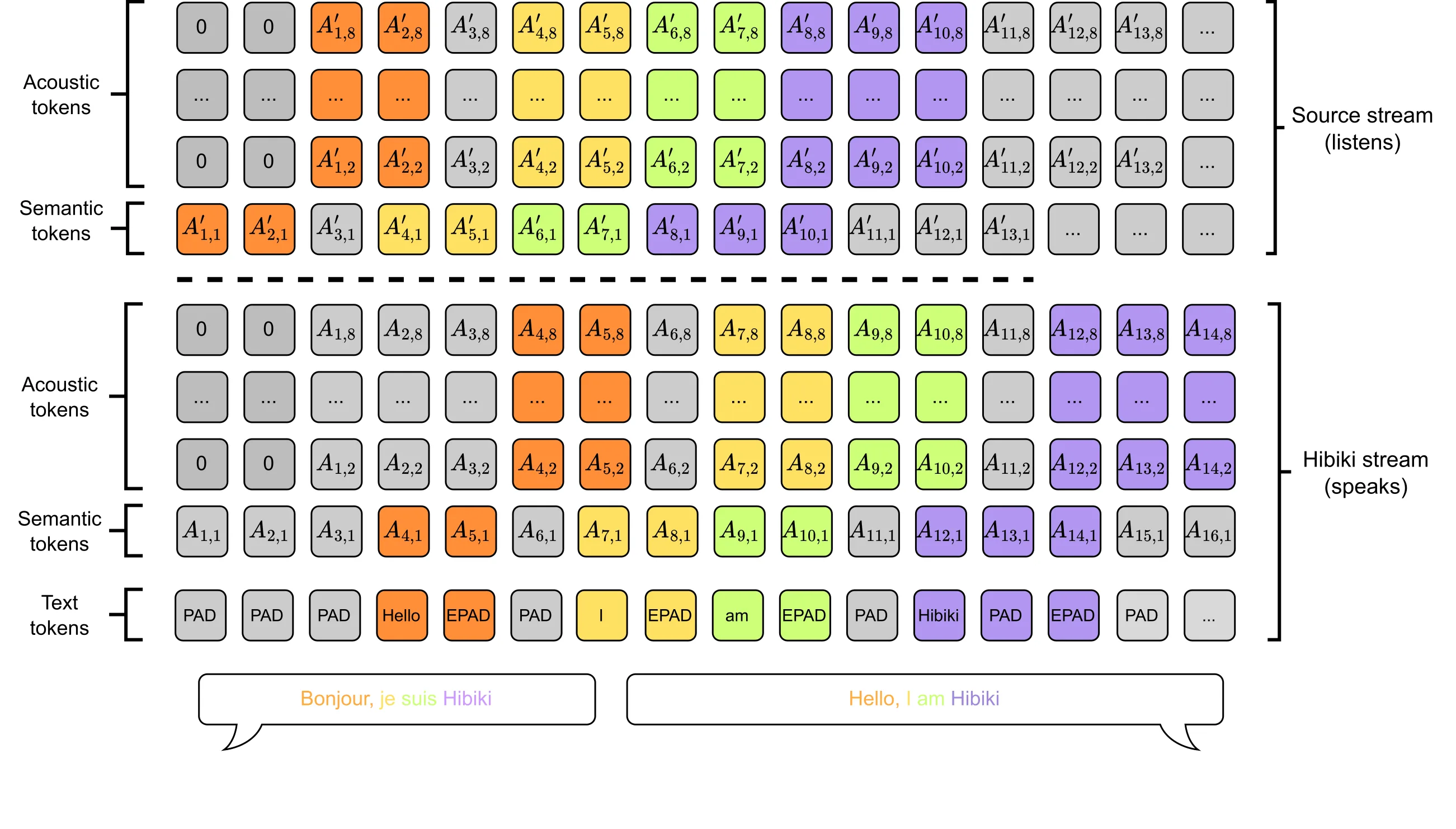
llama.cpp can now run Hibiki, a model that translates spoken French into spoken English in real time
llama.cpp build b12619 adds Kyutai's Hibiki, a speech translation model that listens and speaks at the same time. It runs only through the realtime WebSocket endpoint of llama-server, which gains a full-duplex mode for it. The model translates only from French to English, and its original checkpoint has to be converted first.
llama.cppverified