OpenAI opens healthcare model configurations to API organizations at base-model token prices
OpenAI has added four healthcare configurations of its models to the API. They combine healthcare-specific instructions with search over a dedicated index of medical sources. Token prices match the base models, but OpenAI calls the pricing promotional and search is billed separately. Access alone does not permit processing protected health information.
Source
Healthcare model configurations in the OpenAI APIOpenAI News · Original published November 24, 2026
Developers can now use OpenAI models configured for healthcare through the Responses API, the company's interface for building applications. OpenAI announced the configuration in a post dated November 16, 2026, and the API changelog lists it on November 24, 2026. It comes in four versions, based on GPT-6.2 Astra, GPT-6.2 Sol, GPT-6 Astra, and GPT-6.1 Sol. API organizations do not need a ChatGPT for Healthcare or ChatGPT Enterprise workspace to use them.
In OpenAI's description, a configuration pairs an existing model with instructions written for healthcare and with clinical search. The search covers a dedicated index of medical sources, and it works only when the web search tool is enabled in the request. Developers select a configuration by its model ID, such as gpt-6.2-astra-healthcare.
OpenAI describes applications that answer clinical questions, compare findings across studies, and summarize medical evidence with citations. The company says answers and sources should be reviewed before anyone relies on them, and that the configurations do not replace professional medical judgment.
What it costs
Standard prices per million tokens for short context are the same as for the base models. GPT-6.2 Astra for healthcare costs $8 for input and $40 for output, and GPT-6.2 Sol costs $2 and $10. OpenAI's pricing page calls the pricing promotional and says it applies at least through December 31, 2026.
The medical index adds a separate cost, because web search is billed at $10 per 1,000 calls, plus the retrieved content at the model's token rate.
Patient data and OpenAI's own results
Access to a configuration does not by itself authorize the use of protected health information. Before processing such data, an organization must have a Business Associate Agreement with OpenAI, a contract required by the US law HIPAA, and must meet the requirements for account and tool settings. The help article does not mention European data protection rules.
OpenAI says GPT-6.2 Astra with the healthcare configuration ranked first among the systems it evaluated on HealthBench Professional, a set of 525 tasks written by physicians. Its length-adjusted score was 74.4%, which the company reports as 6.3 percentage points ahead of Claude Fable 5.2 with web search. In a separate comparison by OpenAI on the same test, a response cost $1.37, compared with $2.90 for Claude Fable 5.2. The announcement cites no independent measurement.
The changelog, the help article, and the pricing page do not give limits for the new model IDs. The documentation pages for gpt-6.2-astra-healthcare and gpt-6.2-sol-healthcare were not available when checked on November 25, 2026.
„These configurations do not replace professional medical judgment.“
Sources
Once a week, in your inbox
The whole week's news, gathered into one email. No ads, no passing your address on, one-click unsubscribe.
The address is used only for this roundup. It is not sold and not passed to anyone.
Related
llama.cpp can now quantize a model to a file size you set and choose the bit mix itself
Build b12669 adds an option to llama-quantize that takes a target file size and decides how many bits each part of the model gets. The author reports matching or beating the standard presets in 93% of tests. A second contributor found an improvement on several models and a clear loss on one.
llama.cppverified
Anthropic will retire Claude Opus 4.5 on January 22, 2027, and points developers to Opus 5.5
Requests to Claude Opus 4.5 will fail from January 22, 2027, on the platforms Anthropic runs, including when the model is set in Claude Code. Opus 5.5 is cheaper per token but needs code changes. On the same day Anthropic opened a beta that lets eligible organizations use its most capable models without Anthropic keeping their prompts.
Anthropicverified
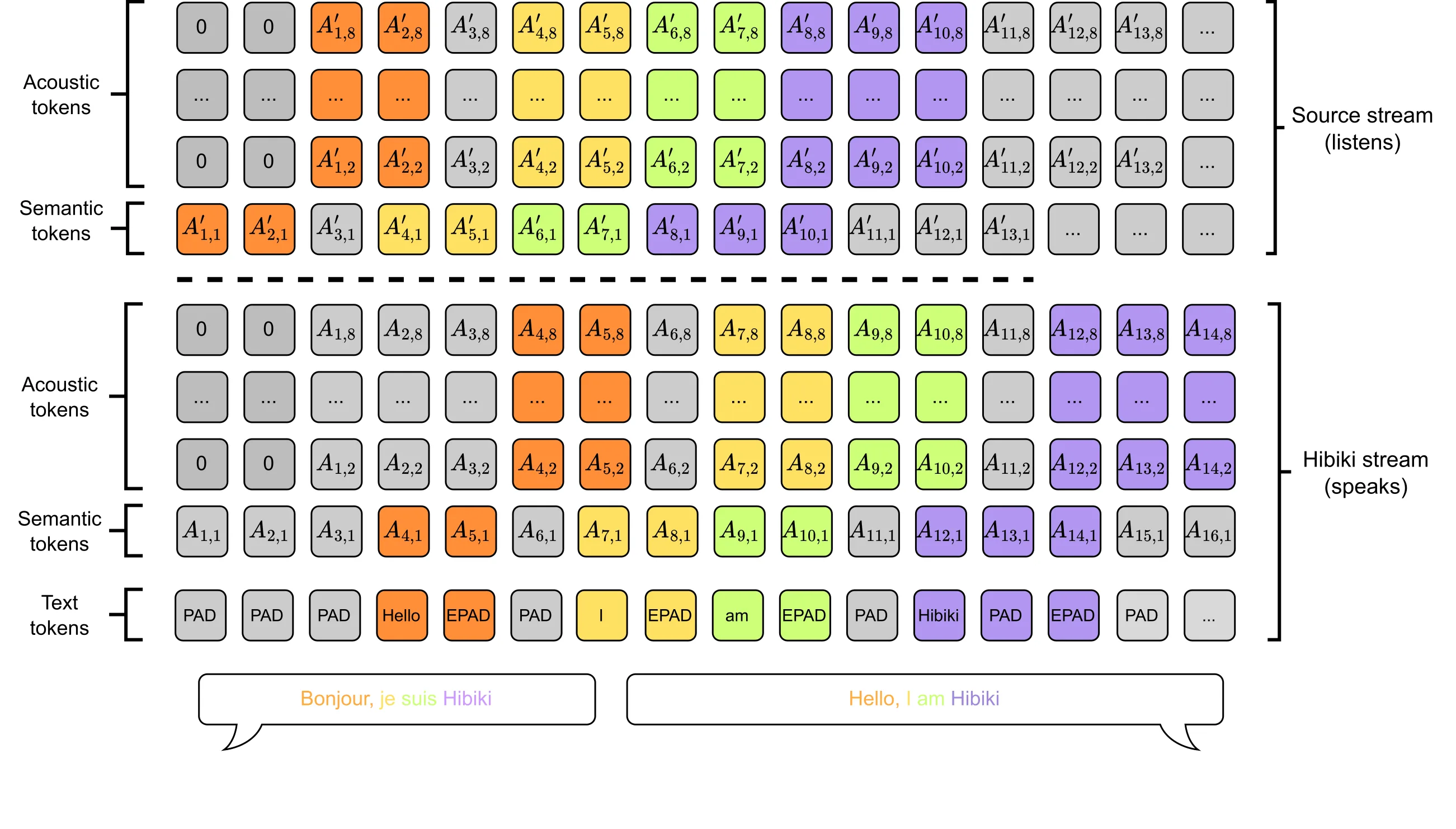
llama.cpp can now run Hibiki, a model that translates spoken French into spoken English in real time
llama.cpp build b12619 adds Kyutai's Hibiki, a speech translation model that listens and speaks at the same time. It runs only through the realtime WebSocket endpoint of llama-server, which gains a full-duplex mode for it. The model translates only from French to English, and its original checkpoint has to be converted first.
llama.cppverified