AWS Agent Registry is generally available and answers as an MCP server
AWS took Agent Registry out of preview on August 31, 2026. It is a private catalog of the agents, tools, skills, MCP servers, and custom resources an organization already runs, with search, approval, and audit trails on top. General availability adds provisioning as code, cross-account sharing, and automatic detection of agents running on AgentCore. The registry is also exposed as an MCP server, so an assistant in an editor can query it during a task.
Source
AWS Agent Registry for centralized agent discovery and governance is now generally availableAWS What's New — Machine Learning · Original published August 31, 2026
Agent Registry left preview on August 31, 2026 and is now open to every AWS customer. The service keeps a private catalog of the agents, tools, skills, MCP servers, and custom resources an organization already runs, and puts search and an approval step in front of it. This is not another agent framework. It answers a question that gets expensive as a company grows: does this thing already exist somewhere inside it?
What general availability adds
The preview already had manual and URL-based record creation, approval workflows, semantic and keyword search, and audit trails in AWS CloudTrail. General availability adds the parts an organization needs before it can treat a registry as infrastructure rather than a side project.
The most consequential of them is automatic detection. A registry picks up agents running on AgentCore runtime and on AgentCore gateways across an entire organization, so records stay current without anyone writing them by hand. A catalog nobody updates is a catalog nobody trusts, and hand-written entries go stale first.
- Registries and records can be provisioned as code with AWS CloudFormation, Terraform, and the AWS CDK.
- Tags on registries and records support organization, cost allocation, and access control.
- AWS Resource Access Manager shares registries across accounts and backs organization-wide registries.
- Agents on AgentCore runtime and AgentCore gateways are detected automatically across the organization.
- Amazon Quick can discover custom connectors from the registry on its Connectors page.
The registry answers as an MCP server
Records can be reached from the AWS Agent Registry console, the AWS CLI, and the AWS SDK, and also from Amazon Bedrock AgentCore, Amazon Quick, and the Kiro IDE. The console pairs semantic search with keyword search and a browse view for walking through registries and records.
The detail that matters most to anyone building agents is the one easiest to miss. The registry is exposed as an MCP server, so an assistant in an editor can query it directly. Discovery becomes something an agent does in the middle of a task, rather than something a person does in a browser tab beforehand.
Where it runs, and what the note leaves out
Agent Registry is available in five AWS Regions: US East (N. Virginia), US West (Oregon), Europe (Ireland), Asia Pacific (Tokyo), and Asia Pacific (Sydney). An organization outside those Regions has to weigh whether a central catalog is worth the cross-Region hop.
The announcement says nothing about price. There is no pricing line, no free tier, and no statement that the service comes with AgentCore, so the cost of running a registry is not something this page answers. Anyone budgeting for it has to open the pricing page rather than the launch note.
„The registry is also exposed as an MCP server.“
Related

The same SSRF bug turned up in MCP servers at Google, JPMorgan, and two governments
An independent researcher reported one class of server-side request forgery to five organizations that share no code, and all five confirmed and fixed it. Google's MCP Toolbox for Databases carried a high-severity CVE until version 1.5.0. Five US federal servers are still open. If you run an MCP server with any tool that fetches a web address, the four checks at the end apply to you.
Ars Technicaverified

Meta open-sources Muse Gadgets, which lets its Muse agent run shell commands on a Raspberry Pi
Meta published the Muse Gadgets repository on October 2, 2026, under the Apache 2.0 license. It contains firmware for ESP32 boards and a Linux device SDK that turns a Raspberry Pi into a device its Muse agent can operate. On Linux, Muse runs shell commands with the permissions of the account you install it for, including sudo if that account has it. Meta's documentation says pairing has no manufacturer verification and cannot prevent an active man-in-the-middle attack.
Metaverified
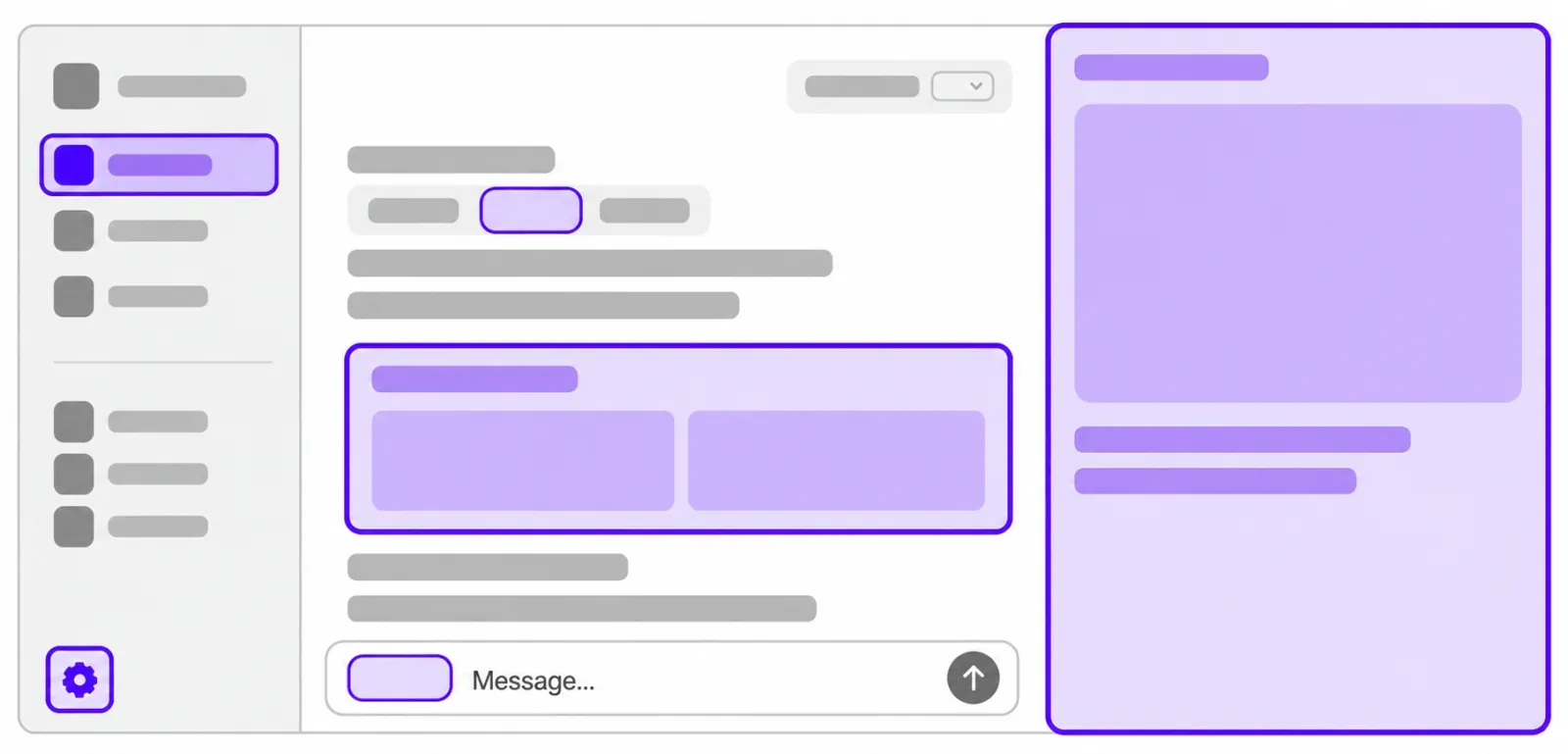
ChatGPT plugins can now run as sidebar apps and react to events from connected tools
OpenAI opened the interface layer it uses for its own ChatGPT features to outside developers. A plugin can now claim a place in the sidebar, open a panel beside a conversation, and act as the viewer for its own file types. A separate MCP Events integration lets a plugin start an automation when something happens in a connected app, which requires MCP 2.0 and webhook delivery. Sign in with ChatGPT lets a Plus or Pro allowance be spent in 16 partner tools.
OpenAIverified