GitHub is retiring six Copilot models and has rebuilt the code review overview
Six models stop working across every Copilot surface on October 19, 2026, and each one has a named replacement. On Enterprise and Business the replacement enables itself unless an administrator has turned it off, so the remaining work sits in configuration that names a model in writing. Separately, Copilot code review reached general availability. Its overview comment now separates open findings from resolved ones and from issues it missed on an earlier pass, and every finding carries a title.
Source
Upcoming deprecation of selected GitHub Copilot models in mid-OctoberGitHub Changelog: Copilot · Original published September 18, 2026
GitHub published two changes to Copilot on September 18, 2026. The first sets a deadline: six models are being deprecated on October 19, 2026, with a replacement named for each. The second is already live: Copilot code review reached general availability, with a rebuilt overview comment, a title on every finding, and a generated commit message for batched suggestions.
What stops working, and what takes its place
The removal covers every Copilot experience at once, which GitHub lists as chat, inline edits, ask and agent modes, and code completions. Nothing has to be cleaned up afterward, because GitHub states that no action is required to remove the models once they are deprecated.
Under default model enablement, the suggested alternatives switch on by themselves for Copilot Enterprise and Copilot Business customers, unless an administrator has turned off the global default or disabled that particular model. Where the global default is off, access to a replacement is granted through its model policy in Copilot settings, and it then appears in the chat model selector.
The mapping itself is short and explicit.
- Gemini 3.7 Flash is replaced by Gemini 3.8 Flash.
- GPT-5.5 is replaced by GPT-5.6 Sol.
- GPT-5.4 is replaced by GPT-5.6 Sol as well.
- GPT-5.4 mini and GPT-5 mini are both replaced by GPT-5.6 Luna.
- Grok 4.5 is replaced by Grok 4.6.
What has to change before the date
Someone who picks a model from a menu loses nothing, because the menu changes along with the deprecation. The cost lands wherever a model is named in writing: a workflow file, a script that reaches Copilot through an integration, a shared configuration that pins one model so a whole team gets the same answers. GitHub's instruction is to update those before the date.
This suggests the real exposure is not the choice of model but the places where that choice was written down and then forgotten. GitHub does not put it that way, and enterprise customers with questions are pointed at their account team.
The code review overview was rebuilt
Copilot code review now sorts its findings into three labeled groups inside the overview comment. Open holds issues that have not been addressed, marked as new when a fresh commit introduced them. Resolved since last review holds issues Copilot has verified as fixed. Previously missed holds issues it did not raise before and found on a later pass, printed in full because they appear nowhere else on the pull request. Each finding shows its severity and links to the matching inline comment.
Every review comment now carries a short title describing the finding, and those titles are what the overview lists. Auto-resolution changed twice over: a reply asking to keep an issue open is honored, and a comment Copilot closes on its own now records a reason, either Won't Fix or Incorrect. The overview preserves that record as further commits arrive, alongside the earlier pull request and per-file summaries.
Committing a complete batch of eligible suggestions now produces a generated commit title and an optional description drawn from the selected changes, and a batch may include comments that did not come from Copilot. GitHub says these updates are generally available.
What actually changes in the review
Two of the four changes are about the record rather than the finding. Previously missed exists because a reviewer that runs again over the same code can surface something it walked past the first time, and until now that arrived as an ordinary comment with nothing to mark it as late. One possible reading is that the goal was less to find more and more to make the second pass legible. The resolution reason works the same way: Won't Fix and Incorrect are two different verdicts on the same closed comment, and they used to look identical in the thread.
„Please update your workflows and integrations to use the supported models before this date.“
Sources
Related
OpenClaw 2026.9.5 reloads plugins without stopping the Gateway and shares conversations read-only
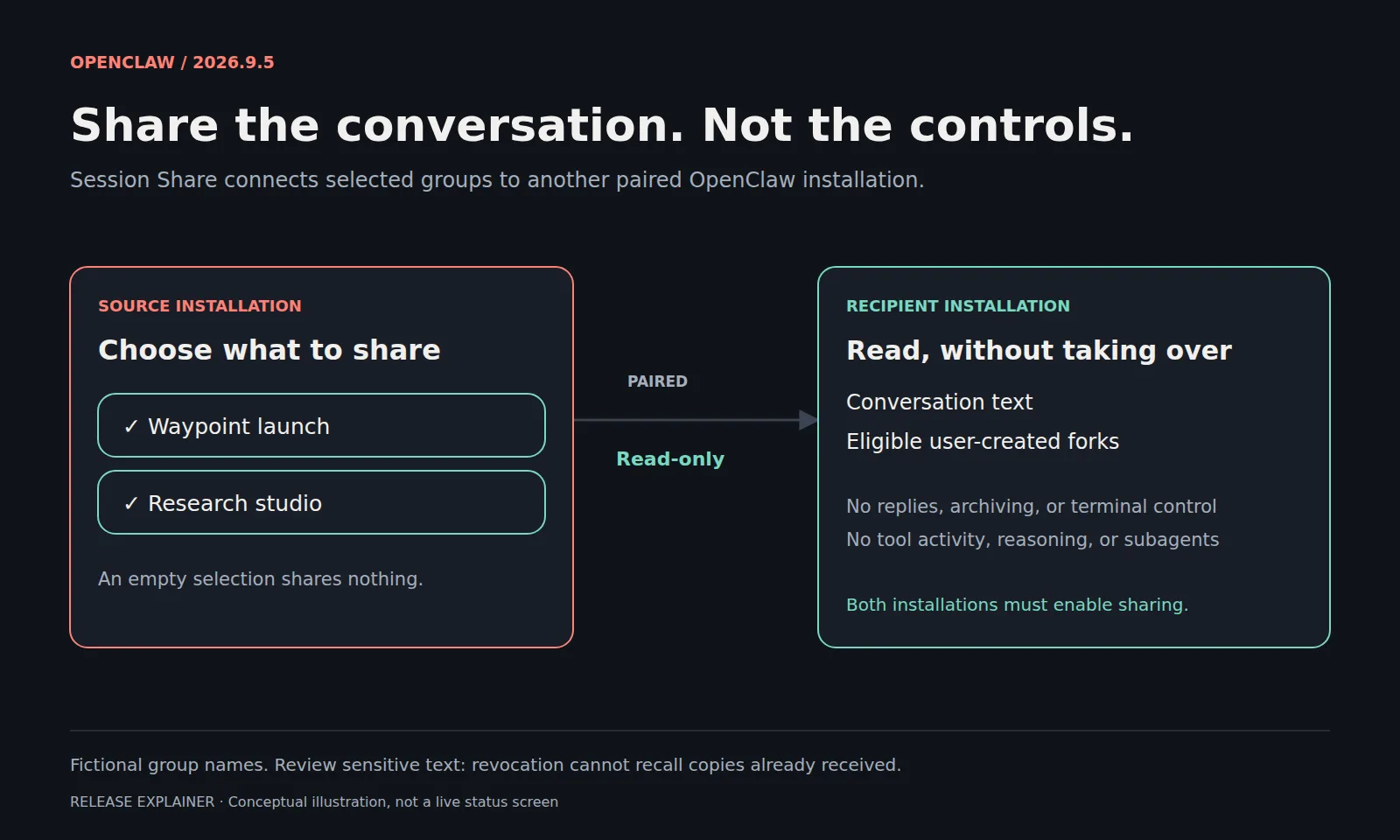
Installing, reloading, updating, or removing a plugin no longer takes the whole installation offline. Session Share hands a chosen group of conversations to a teammate on another paired installation as text they can read but not continue. Updates now validate the next version against a private copy of the setup while the current Gateway keeps running. The conversation database changes in this release even with archiving switched off, so a verified backup before upgrading is the only way back.
OpenClawverified
Claude Code 2.1.278 moved auto mode's safety checks to the server, where they are not billed
In auto mode a classifier inspects shell commands and network requests before they run, and those checks were separate model requests charged as token usage. From this version Claude Code asks the server to perform them inside the session's own requests, and does not charge for them when the server answers. The default covers Enterprise plans, Claude API accounts, and the AWS, Bedrock, Agent Platform, and Foundry paths, subject to each platform's rollout. Where the server's checks cannot reach a session, the earlier billing returns and a one-time notice says so.
Claude Codeverified
Meta's Muse reached the Mac, where the agent acts inside your own files and apps
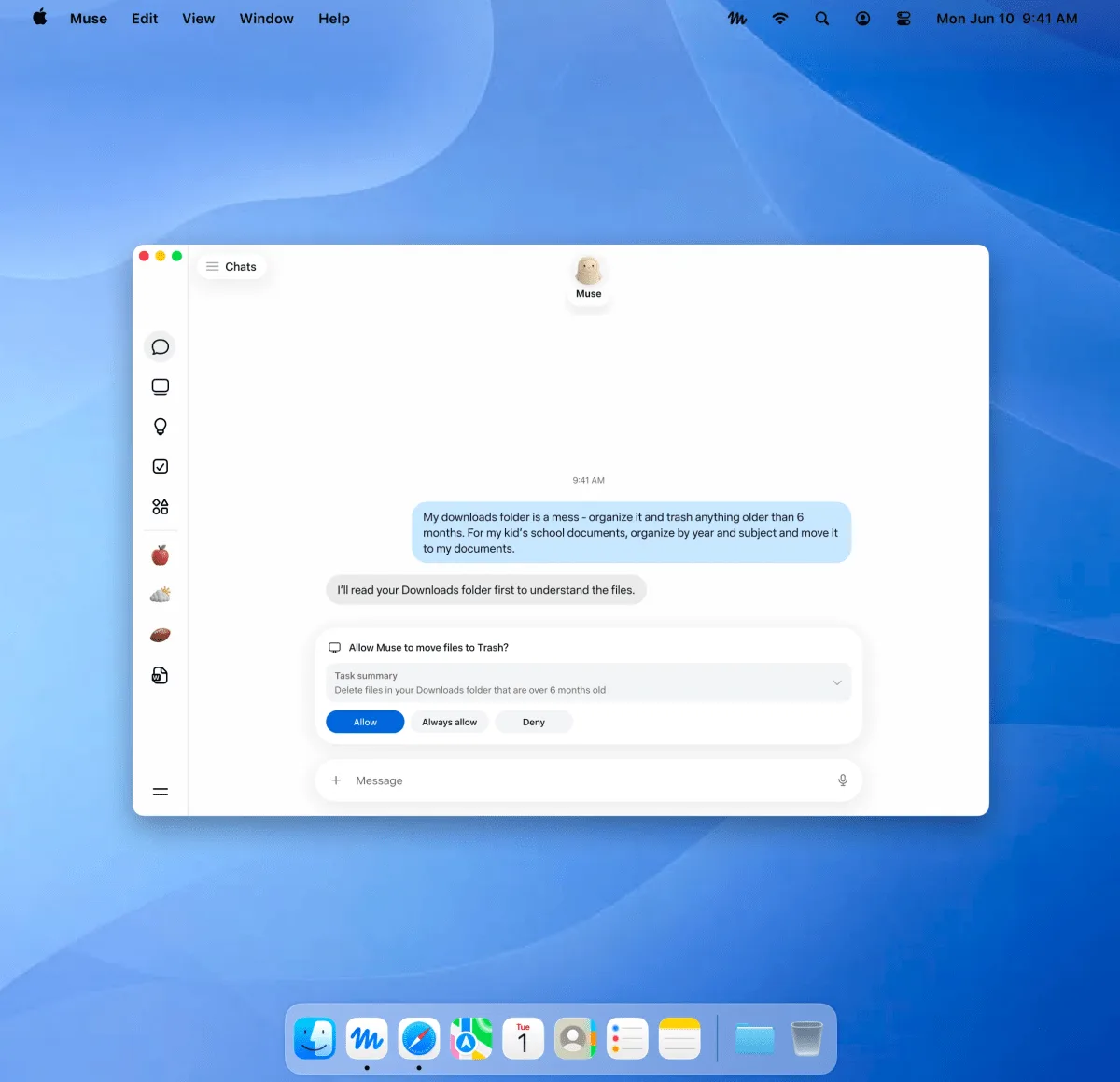
Meta announced Muse on September 8, 2026 as a personal agent that does things rather than answers questions, and named iOS, Android and the web, with AI glasses still to come. The Mac app arrived nine days later, announced by Alexandr Wang on X rather than through the company newsroom. The difference is not only the platform. Until now Muse worked inside a virtual machine Meta runs, watched by a second agent that has to approve anything leaving for the internet; the Mac app works in files, apps and browser tabs on a machine Meta does not run.
Metaverified