GitHub will retire six Copilot models on December 14, including Claude Fable 5 and Gemini 3.8 Flash
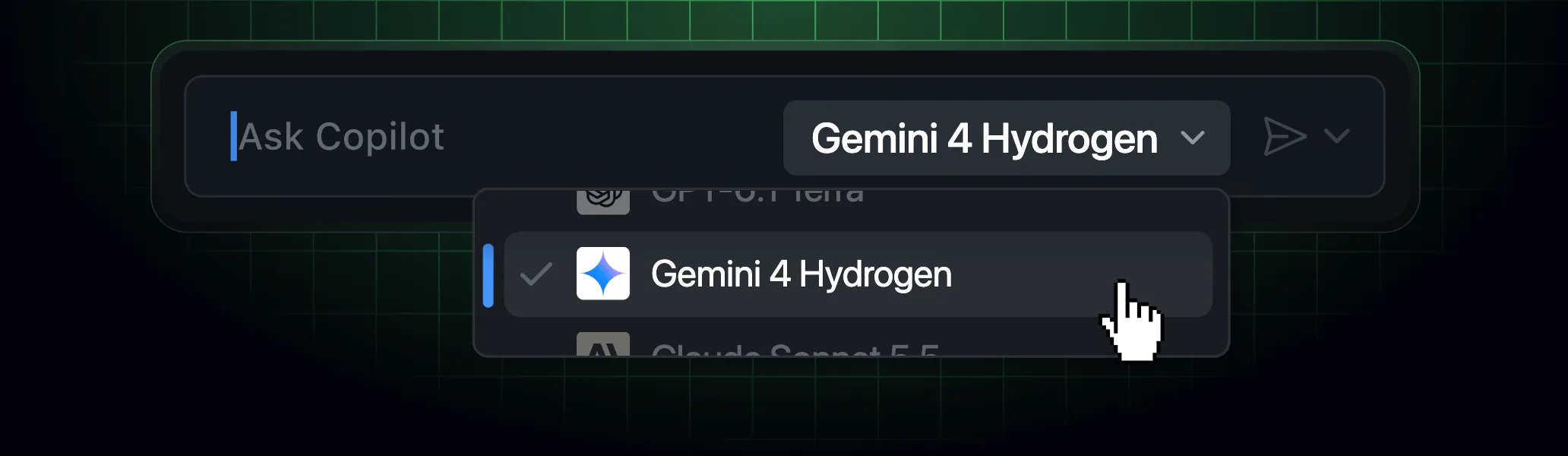
GitHub said on November 13, 2026, that six models will leave every part of Copilot on December 14, 2026. Five of them have a named replacement, and Kimi K3 does not. The same day, Gemini 4 Hydrogen reached general availability in Copilot and the Copilot app began accepting GitHub Enterprise Server accounts.
Source
Upcoming deprecation of selected GitHub Copilot models in DecemberGitHub Changelog: Copilot · Original published November 13, 2026
GitHub will stop offering six models in Copilot on December 14, 2026: Claude Fable 5, Claude Haiku 4.5, Gemini 3.8 Flash, Gemini 4 Argon, Grok 4.6, and Kimi K3. The retirement covers every Copilot experience, from Copilot Chat and inline edits to ask and agent modes and code completions. Workflows and integrations that call one of these models by name need to move to a supported model before that date.
What replaces each model
GitHub suggests a successor for five of the six models. For the sixth, the successor is listed as to be announced.
- Claude Fable 5 is replaced by Claude Fable 5.2.
- Claude Haiku 4.5 is replaced by Claude Haiku 5.5.
- Gemini 3.8 Flash is replaced by Gemini 4 Hydrogen.
- Gemini 4 Argon is replaced by Gemini 4 Carbon.
- Grok 4.6 is replaced by Grok 4.7.
- Kimi K3 has no named replacement yet.
Claude Haiku 4.5 stays available to individual Copilot subscribers on annual plans, so the retirement does not apply to them. In Copilot Business and Copilot Enterprise, the replacements are switched on automatically under default model enablement. That does not happen if an administrator turned off the global default or disabled the specific model. In that case, the replacements have to be enabled through their model policies in Copilot settings. The retired models are removed without any action from users.
Gemini 4 Hydrogen is generally available
Gemini 4 Hydrogen, which GitHub describes as Google's latest Flash model, became generally available in Copilot on November 13, 2026. According to GitHub, the model is built for fast agentic coding, tool use, and multistep workflows, and it follows instructions better than Gemini 3.8 Flash. It is billed at the provider's list price under usage-based billing.
The model is offered on the Copilot Pro, Pro+, Max, Business, and Enterprise plans. It can be picked in Visual Studio Code, Visual Studio, Xcode, Eclipse, and JetBrains IDEs, as well as in Copilot CLI, the Copilot coding agent, the Copilot app, GitHub Mobile, the Copilot SDK, and on github.com. The rollout is gradual, so the model may not appear for everyone at once.
Enterprise Server accounts in the Copilot app
The GitHub Copilot app can now add an account on GitHub Enterprise Server (GHES), the version of GitHub that companies run on their own servers. With that account, the app works with the server's remote repositories, issues, and pull requests. The feature was an opt-in preview until now and is generally available from version 1.2.0 of the app. The user first signs in with a GitHub.com or GHE.com account, then adds the server under Settings, Accounts, and Add account. Cloud sessions are not offered for GHES.
Sources
Once a week, in your inbox
The whole week's news, gathered into one email. No ads, no passing your address on, one-click unsubscribe.
The address is used only for this roundup. It is not sold and not passed to anyone.
Related
GitHub will bill organizations for Copilot code review by default starting December 30
GitHub said on November 25, 2026, that Copilot code review for licensed members will be billed to the organization that owns the repository whenever no billing choice has been saved. The change applies to Copilot Business and Copilot Enterprise. Administrators who want to keep the current arrangement have to select Member before December 30, 2026.
GitHub Changelogverified
OpenClaw 2026.11.10 turns on Deep Research by default and lets users take over the agent's browser
OpenClaw's new release includes Deep Research, which looks through several sources and returns a report with quotes and gaps marked. It is on by default and uses the models the user has already set up. A second addition lets a user take over a browser tab during a sign-in, although the agent can still capture the page. The optional Knowledge plugin stores memory in local Markdown files.
OpenClawverified

AWS WAF will bill each protected resource from February 2027 and drop its fees for rules
Amazon is changing how it charges for AWS WAF, the firewall that filters traffic to web applications. Rules and rule sets become free, while every protected resource gets an hourly fee. Sites with many rules on a few resources stand to pay less, and companies that cover many resources with one rule set can pay several times more.
AWSverified