Skip to content

Tags

pricing

56 items

Page 2 of 2.

Assistants & appsmedium signal

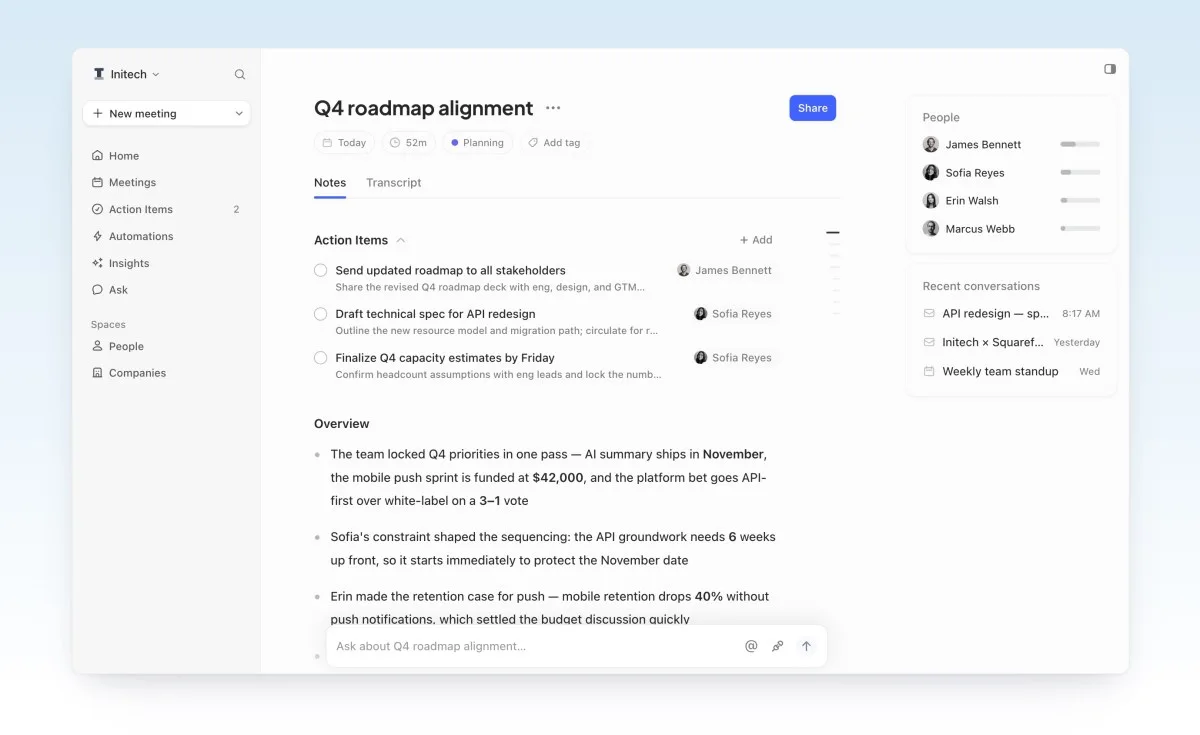
Circleback now has a free plan, and full API and MCP access starts at 15 dollars

The meeting note-taker replaced its lineup with four tiers: Free, Pro, Business and Enterprise. The free one records and transcribes without a cap on the number of meetings and keeps 30 days of history, and the release note says it is a plan rather than a trial. What it withholds is full access to the API, the Model Context Protocol server and the command-line tool. Those begin at $15 per user per month, which is where the line now runs for anyone feeding transcripts into an agent.

Circlebackverified
Assistants & appsmedium signal

Anthropic opens 10,000 Claude seats to scientists, free or $15 a month

Anthropic announced a Claude team plan for scientists on August 27: 10,000 seats worldwide for one year, standard seats free and premium seats with 5x usage limits at $15 per month. The plan is claimed by a principal investigator, who then adds their lab. Separately, the AI for Science program now takes researchers outside biology and grants up to $50,000 in credits per project. Access to models is not uniform, and the exceptions are the part worth reading.

Anthropicverified

Codingmedium signal

GitHub sets three Copilot dates: seats paid upfront, one chat policy, longer retention

One changelog entry on August 28 carries three separate changes. From September 1, new Copilot Business and Enterprise seats bought by card or PayPal must be paid for before anyone can use them, and existing card customers move to upfront charges on October 1. No earlier than September 28, chat on github.com, chat in GitHub Mobile and the cloud agent become one experience under one policy that is on by default, and chat data then stays for the life of the account instead of 28 days. On the same date, the default effort level for Copilot code review moves from Lite to Balanced.

GitHubverified

Modelsstrong signal

Memory sets what you can run locally, and price per token sets whether you should

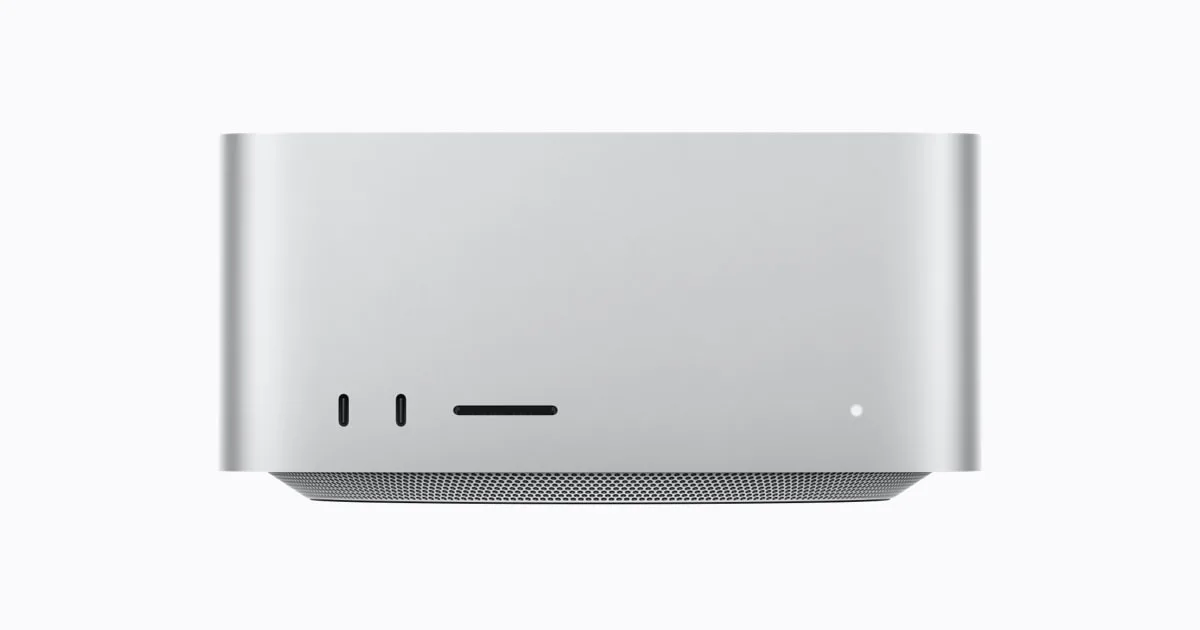
A local model has one hard requirement before speed, quality or license enter the discussion: the weights have to fit in memory. That turns the machine question into arithmetic you can do on paper, and Apple's August 25 desktops give you three price points to do it against — $899 for a 32GB ceiling, $2,499 for 128GB, $5,499 for 512GB. This guide works through what fits where, which runner to use, what each size class is good for, and how many tokens it takes before a machine beats paying by the token.

Apple, OpenRouter, DeepSeekverified

Codingmedium signal

A proxy that stripped one header was doubling Claude Code's API bill

Version 2.1.239 fixes streaming on Bedrock behind proxies that remove the response Content-Type header. Claude Code silently fell back to re-running every turn without streaming, and each turn was billed twice. The same release makes cost estimates show the 1.1× premium that data-residency workspaces pay.

Anthropicverified

Images & videomedium signal

FLUX Upscale prices video by the megapixel-second, and charges only for what comes out

Black Forest Labs released FLUX Upscale on August 20 as a standalone tool and endpoint that regenerates video up to 4K. It runs in two modes: Precise at $0.07 per megapixel-second and Creative at $0.10. The billing detail matters more than either rate, because the charge is calculated on the output alone, so the upscale factor you pick is what sets the bill.

Black Forest Labsverified

Modelsstrong signal

GPT-5.6 Sol drops to $4 and $20, and overtakes Claude Opus 5 on cost

OpenAI cut Sol's API price on August 21: input from $5 to $4, output from $30 to $20, cached input from $0.50 to $0.40. On a standard task the model goes from more expensive than Claude Opus 5 to cheaper than it. The cut is promotional and runs at least through November 21.

OpenAIverified

Modelsstrong signal

Gemini 3.7 Flash, read from Google's own numbers

Google shipped it on August 13, 2026, 23 days after Gemini 3.6 Flash, with large gains on coding and agent benchmarks and an introductory price it labels as such. All of that holds. Four things are visible only if you open the model card instead of the launch post, and one of them is a score that went down.

Googleverified

Modelsstrong signal

Best cheap models for high-volume work, priced per thousand calls

Six models, one task, one number: what a thousand calls cost when each sends 4,000 tokens in and gets 800 back. The cheapest row is $1.76 and the most expensive is $16.00, a nine-fold spread rather than the hundred-fold spread the category implies. Two things move the ranking more than the headline price does, and one of them has a date on it.

Anthropic, Google, OpenAIverified

Modelsstrong signal

Claude Sonnet 5, read from what Anthropic publishes

Two disclosures first: this is a reading of the vendor's own evaluations rather than our test, and it is written by a model that vendor built. With both stated, the published numbers still contain three things worth noticing before you pick this model.

Anthropicverified

Codingstrong signal

Claude Code vs Cursor: same $20, different shape

Both start at $20 a month, both speak MCP, both run skills and hooks, both reach CI. The difference is not the feature list. It is whether the agent lives inside an editor you adopt or inside the terminal you already have.

Anthropic, Cursorverified

Modelsstrong signal

Claude Opus 5 vs GPT-5.6 Sol: which is cheaper depends on a threshold OpenAI does not publish

Sol's price cut on August 21 put it below Opus 5 on both short-context columns — $4 against $5 on input, $20 against $25 on output. Its long-context column went the other way and still costs more. Opus 5's price sits between Sol's two columns, so the cheaper model depends on which column your request lands in, and OpenAI does not say where the boundary is.

Anthropic, OpenAIverified

Modelsstrong signal

Cut your model bill by 89% without changing what you ship

Four levers, all published, none of them clever: cache the fixed part of your prompt, batch what can wait, drop a tier where the task allows it, and stop paying multipliers you did not ask for. Worked all the way through on one real workload.

Anthropic, OpenAIverified

Images & videostrong signal

Best AI video generators, priced per second

Three ways to buy generated video in August 2026: per second through an API, as monthly credits with every model in one place, or as credits tuned for iteration. The same ten-second 1080p clip costs anywhere from $0.80 to $7.00 depending on which door you walk through.

Google, Runway, Lumaverified

Modelsstrong signal

Gemini 3.7 Flash: half the price and markedly better on code

Google released Gemini 3.7 Flash on August 13, just three weeks after 3.6. The gain on coding benchmarks is large: the DeepSWE v1.1 score rises from 49.0% to 65.3%, and FrontierCode 1.1 from 34.4% to 43.6%. Introductory pricing, in force through the end of 2026, is $0.75 per million input tokens and $3.75 per million output tokens — half what its predecessor launched at. The model is available through the Gemini API, in AI Studio, Android Studio, and Antigravity, and in Spark for AI Pro and Ultra subscribers.

9to5Google / Googleverified

Modelsstrong signal

Claude Opus 5: choosing how much effort to spend, at unchanged prices

The new flagship in the Opus line lets you set how much effort it spends on a task, across three levels: low, medium, and high. That is direct control over the trade-off between cost and quality. Pricing stayed where it was with 4.8, at five dollars per million input tokens and twenty-five per million output tokens, while scores on a large share of tasks sit close to Fable. Opus 5 became the default on the Max plan and the strongest model available on Pro, and it is called in the API as claude-opus-5.

Anthropicverified