The AWS MCP Server can now diagnose a Lambda function and the seven services around it
AWS published the serverless diagnostic capability on September 4, 2026. A coding agent connected to the AWS MCP Server can inspect a Lambda function together with its connected resources across seven services, compare error signals against a 7-day baseline, read deployment configuration, and analyze latency. It costs nothing extra. The server itself runs in only two regions, even though it reaches services in every commercial region.
Source
AWS MCP Server adds a serverless capability for AWS Lambda functionsAWS What's New — Machine Learning · Original published September 4, 2026
Debugging a Lambda function usually means leaving the editor: open the console, find the log group, guess which of the surrounding services changed. AWS published a capability on September 4, 2026 that moves that work into the agent already sitting in the editor, and charges nothing for it.
What the agent can look at
The capability lets an agent inspect a Lambda function together with the resources connected to it, rather than the function in isolation. AWS names seven services it can reach across: Amazon API Gateway, Amazon EventBridge, Amazon S3, Amazon DynamoDB, Amazon SNS, Amazon SQS, and AWS Step Functions. That list is the whole point, because a Lambda failure is usually a failure of the thing on the other side of it.
The one number in the announcement is a 7-day baseline. Error signals are correlated against it to pinpoint what changed, which is a different question from what is broken. AWS also lists recurring error identification, deployment configuration retrieval, recent change tracking, and service latency analysis.
- Correlating error signals against a 7-day baseline to identify what changed.
- Identifying errors that recur rather than errors that happened once.
- Retrieving deployment configuration and tracking recent changes.
- Analyzing latency across the connected services.
Where it runs, and where it can look
Two facts in the announcement are worth reading together. The AWS MCP Server itself runs in the US East (N. Virginia) and Europe (Frankfurt) regions. It can access services across all commercial AWS regions.
One possible reading is that a diagnostic question about a function in Sydney or São Paulo is answered by a server in Virginia or Frankfurt. For most teams that is a footnote. For a team whose data-residency rules name the region their workloads run in, it is a question to answer before the toolkit is configured, and the announcement does not answer it.
What this changes for a small team
Access comes through the Agent Toolkit for AWS or the standalone AWS MCP Server, and the toolkit is configured by running aws configure agent-toolkit from the AWS CLI. There is no new bill attached: AWS states that the serverless diagnostic capabilities are available at no additional cost.
What the announcement does not say is which permissions the agent needs, or whether the inspection is read-only. An agent that can read deployment configuration and recent changes is reading things that an ordinary developer role may not be scoped for, so the identity it runs under deserves a look before it is pointed at production.
„The serverless diagnostic capabilities in the AWS MCP Server are available at no additional cost.“
Related

The same SSRF bug turned up in MCP servers at Google, JPMorgan, and two governments
An independent researcher reported one class of server-side request forgery to five organizations that share no code, and all five confirmed and fixed it. Google's MCP Toolbox for Databases carried a high-severity CVE until version 1.5.0. Five US federal servers are still open. If you run an MCP server with any tool that fetches a web address, the four checks at the end apply to you.
Ars Technicaverified

Meta open-sources Muse Gadgets, which lets its Muse agent run shell commands on a Raspberry Pi
Meta published the Muse Gadgets repository on October 2, 2026, under the Apache 2.0 license. It contains firmware for ESP32 boards and a Linux device SDK that turns a Raspberry Pi into a device its Muse agent can operate. On Linux, Muse runs shell commands with the permissions of the account you install it for, including sudo if that account has it. Meta's documentation says pairing has no manufacturer verification and cannot prevent an active man-in-the-middle attack.
Metaverified
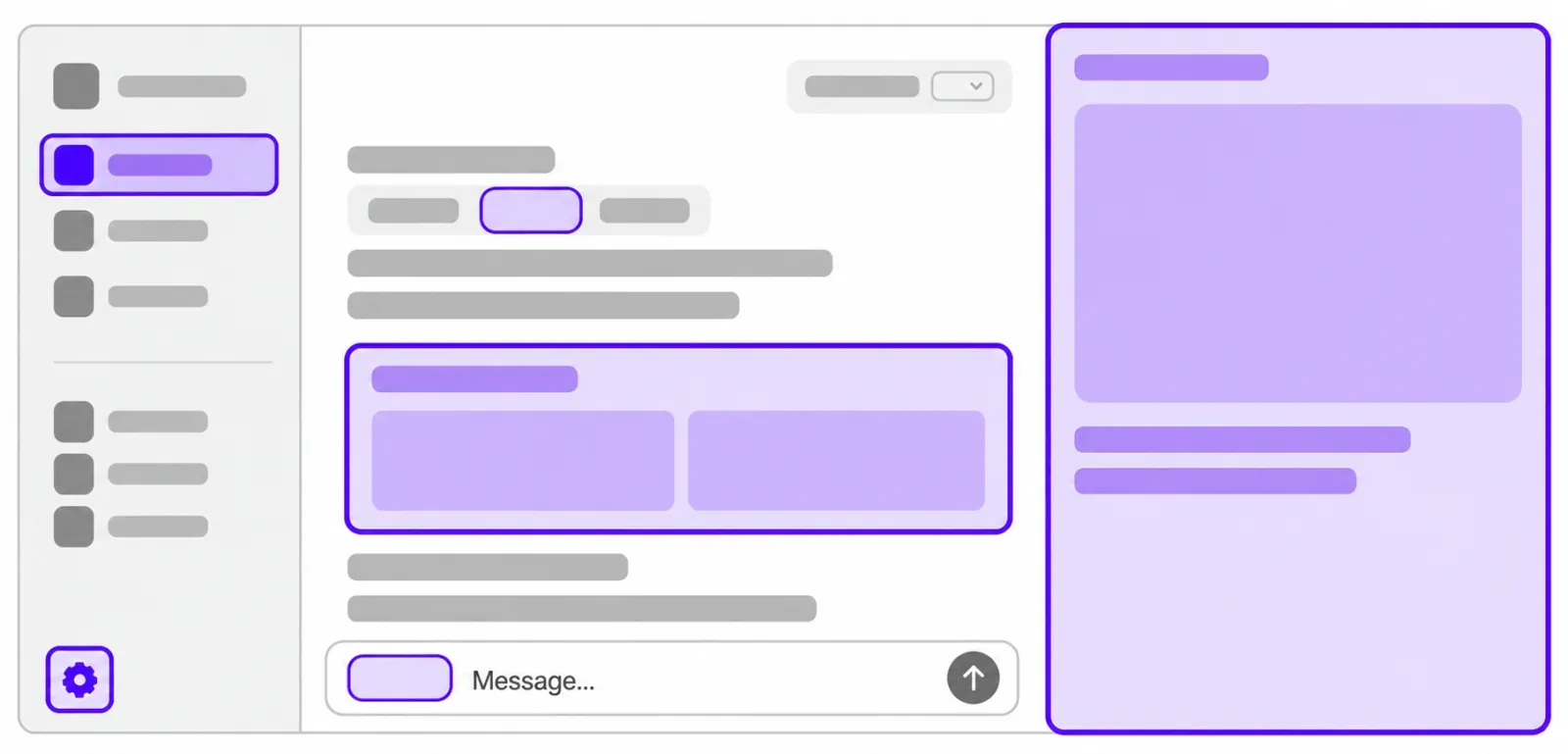
ChatGPT plugins can now run as sidebar apps and react to events from connected tools
OpenAI opened the interface layer it uses for its own ChatGPT features to outside developers. A plugin can now claim a place in the sidebar, open a panel beside a conversation, and act as the viewer for its own file types. A separate MCP Events integration lets a plugin start an automation when something happens in a connected app, which requires MCP 2.0 and webhook delivery. Sign in with ChatGPT lets a Plus or Pro allowance be spent in 16 partner tools.
OpenAIverified