Skip to content

releases, prices, benchmarks, open models

Models

89 items

Page 2 of 3.

Modelsmedium signal

Amazon's Strands Labs releases Decider 2B, an open decision model that runs locally

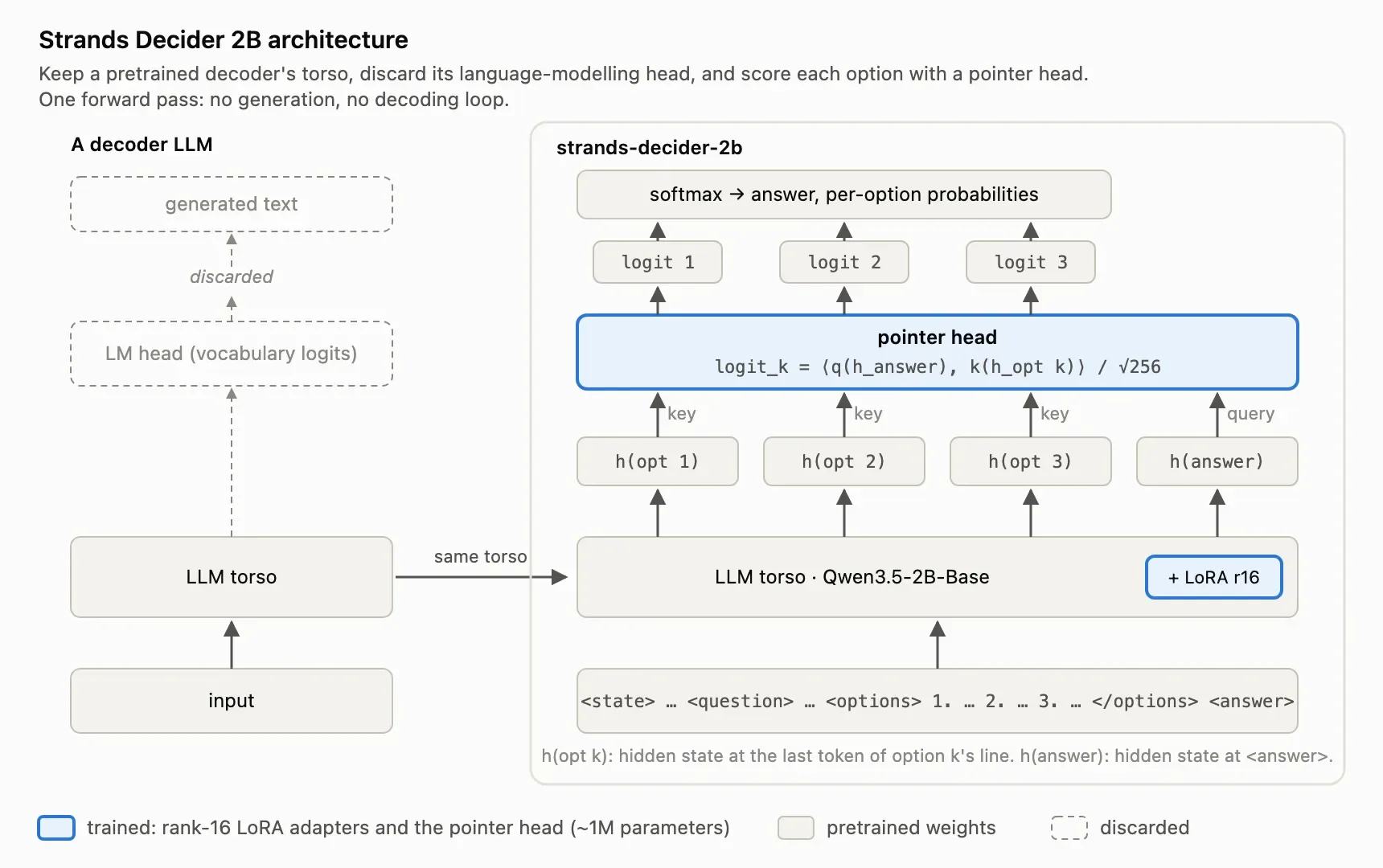
Strands Labs, the experimental arm of the Strands Agents project, released Strands Decider 2B on October 1, 2026. The model does not write text: it picks one of the options you give it, answers yes or no, or scores on a scale, and it attaches a confidence value to each answer. The team reports a median of 115 ms per decision on Nvidia's RTX 3090. Code, weights, training data, and scripts are public under Apache-2.0. If you build agents, this gives you a cheap local step for routing, tool checks, and guardrails.

Strands Agentsverified
Modelsstrong signal

Google announces Gemini 4 Argon for vetted cyber defenders only, at a $2 introductory input price

Google announced Gemini 4 Argon on September 30, 2026. The model is rolling out to a set of trusted cyber defenders through the Fairwind Program, and Google gives no date for developers, enterprises, or consumers. The introductory price is $2 per million input tokens and $10 per million output tokens, and it rises to $4 and $20 when the introductory period ends. The output limit grows to 1 million tokens from 64,000. The benchmark results in the announcement are Google's own reporting, and nobody outside the program can check them yet.

Googleverified

Modelsmedium signal

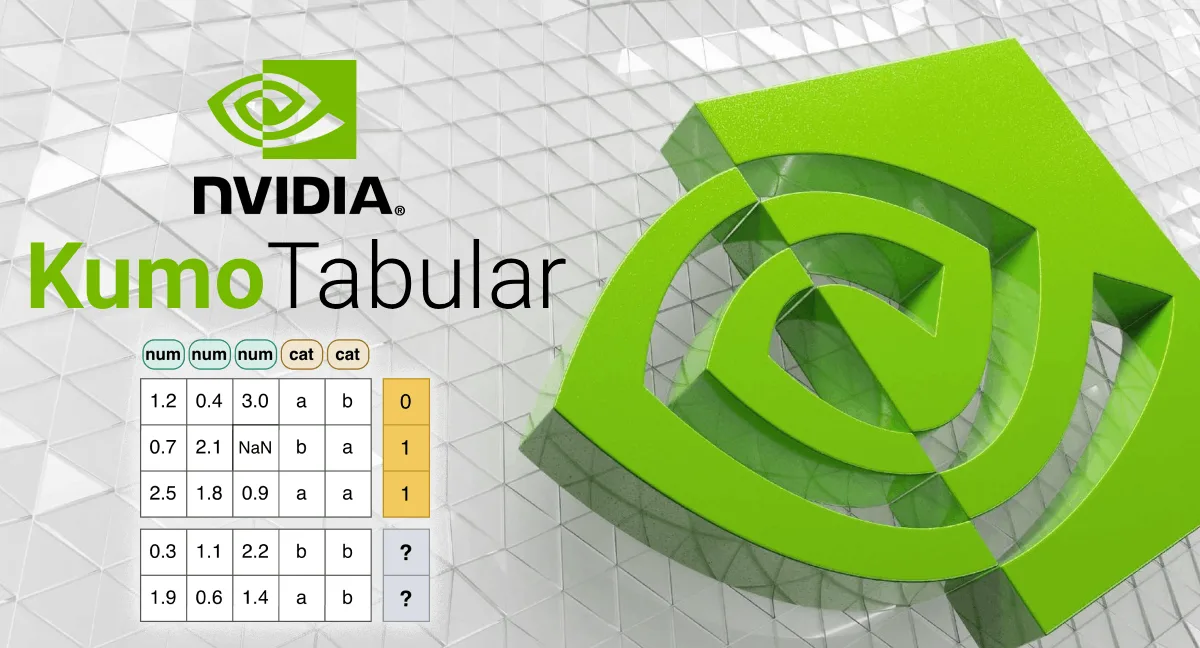
NVIDIA releases Kumo Tabular, an open model that predicts table rows without training and tops four benchmarks

Kumo Tabular reads a table of labeled rows and returns predictions for new rows in a single forward pass, with no training, no tuning, and no feature engineering. NVIDIA published it on September 29, 2026 in three sizes from 28 million to 215 million parameters, under the OpenMDW-1.1 license that allows commercial use. By NVIDIA's own measurement it ranks first on TabArena, BeyondArena, TALENT, and ScoringBench. It handles numeric and categorical columns only, and it needs a CUDA GPU.

Hugging Face Blogverified

Modelsstrong signal

OpenAI ships GPT-6.1 Sol at GPT-6 Sol prices and adds a $500 Pro plan with Ultrafast

GPT-6.1 Sol costs $2 per million input tokens and $10 per million output tokens, the same as GPT-6 Sol, and its cached input drops to $0.10. OpenAI says the model comes close to GPT-6 Astra on coding and computer use at a fifth of Astra's price. The larger GPT-6.1 Astra did not ship. A new Pro 500 plan at $500 a month is the only Pro tier that includes Ultrafast, and Pro 200 returns with a smaller allowance.

OpenAIverified

Modelsstrong signal

Anthropic releases Claude Sonnet 5.5, with input and output tokens at half the Opus 5.5 price

Claude Sonnet 5.5 keeps Sonnet 5's prices: $2 per million input tokens and $10 per million output tokens. That is half of what Opus 5.5 charges, while Anthropic's own benchmarks put the two models within a few points of each other. Code that turns thinking off needs a change before the switch, because the old setting now returns an error.

Anthropicverified

Modelsstrong signal

OpenAI releases GPT-6 Sol and Luna and halves the API price of both tiers

GPT-6 Sol costs $2 per million input tokens and $10 per million output tokens, and GPT-6 Luna costs $0.10 and $0.50. OpenAI measures the 50% cut against the promotional prices it charged for GPT-5.6. The launch also brings a reworked prompt cache with discounts of up to 90% on cached input. Every benchmark comparison with Claude comes from OpenAI and uses Opus 5, not Opus 5.5.

OpenAIverified

Modelsmedium signal

Transformers now loads llama.cpp GGUF quants on Apple Silicon

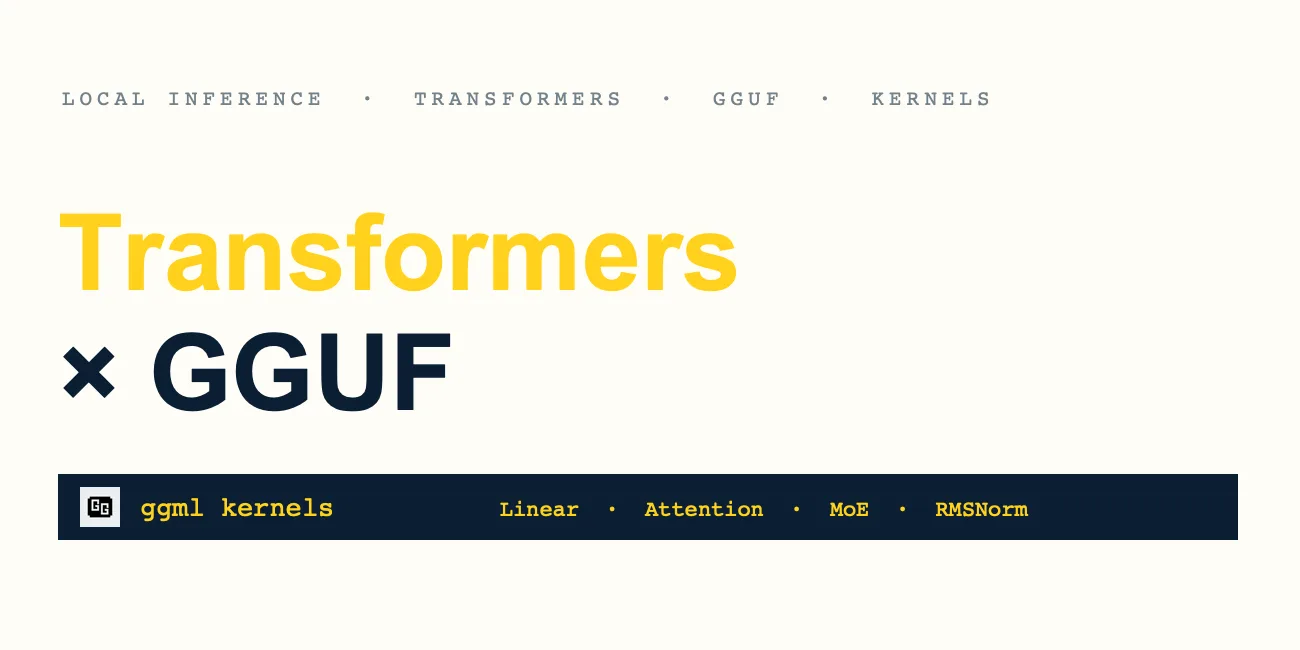
A GGUF checkpoint can be passed straight to from_pretrained and run with its weights still packed, using ggml's Metal kernels through the kernels library. The target is a single interactive conversation on an Apple Silicon Mac, and the packed path covers the Qwen3.5 dense and mixture-of-experts architectures plus compatible Qwen3.8 checkpoints. Hugging Face says the result comes close to llama.cpp on the three checkpoints it measured, while noting the two measurements were not taken under identical conditions. It still recommends llama.cpp when efficient local inference is the priority.

Hugging Faceverified

Modelsstrong signal

Anthropic ships Claude Opus 5.5 and cuts token prices by a fifth

Opus 5.5 charges $4 per million input tokens and $20 per million output tokens, 20% below Opus 5. Cache reads, which dominate the bill for agentic and coding work, fall 60% to $0.20 per million. Anthropic says the model works at the level of Claude Fable 5.1 on most tasks while costing 40% less to run than Opus 5. It also arrives with safeguards that reroute most cybersecurity work to Opus 4.8.

Anthropicverified

Modelsstrong signal

OpenAI says an internal model resolved Navier–Stokes and sets up a mathematics advisory group

A post dated September 21, 2026 says an internal model has resolved the Navier–Stokes Millennium Prize problem and more than 100 long-standing open problems. No paper accompanies the claim and no independent verification exists. A declaration signed by 27 Fields medallists had appeared on September 11, 2026, arguing that solving open problems as a benchmark damages mathematics. OpenAI's answer is an independent advisory group hosted at the Institute for Advanced Study.

OpenAIverified

Modelsmedium signal

llama.cpp stops handing the API key file to child servers in router mode

Build b11077, published on September 21, 2026, fixes an authentication bug in llama.cpp's router mode. When a server was started with both a key on the command line and a file of keys, the child instances it spawned validated against the file only, so a client using the command-line key could list models but got 401 on every chat request. The same change stops the key file path from reaching a child process at all. It is one line in one file, and it is the difference between a working deployment and one that looks healthy while refusing work.

llama.cppverified

Modelsmedium signal

Googlebook opens at $899 with a certified hypervisor under its Linux terminal

Google opened pre-orders for Googlebook on September 21, 2026, with prices starting at $899 and shipping from October 4, 2026. The laptops run an Android-based system with desktop foundations from ChromeOS, on Intel and Qualcomm chips paired with NPUs rated at over 45 TOPS. For anyone who writes code, the notable part is not the assistant features but a pKVM hypervisor with a Level 5 security certification, which powers an isolated Linux environment with full terminal access. Neither announcement says which Gemini features run on the device and which run in the cloud.

Googleverified

Modelsstrong signal

TypeSafe AI opened early access to Jev, a model that returns decisions instead of text

Jev does not write sentences. It reads unstructured input and returns a value whose shape you declared in advance, with a calibrated probability attached to every field. TypeSafe AI charges $0.042 per million input tokens, charges nothing for output, and reports end-to-end response times of 70 to 500 milliseconds. The speed and cost multiples on its home page come from evaluations the company built and ran itself.

TypeSafe AIverified

Modelsmedium signal

Amazon Bedrock added Kimi K3, and its agent runtime now starts in about two seconds

Two Bedrock announcements landed on September 18, 2026. Kimi K3, which Moonshot AI describes as the first open model with 2.8 trillion parameters, is generally available, and it is the first open-weight model on Bedrock that supports explicit prompt caching. The runtime agents run inside was replaced at the same time: AWS measured a P75 cold start of 1.9 to 2.0 seconds for container images from 200 MB to 2 GB, against 5.4 to 30 seconds on the previous version. Memory is now released during a session instead of being held at the peak.

Amazon Web Servicesverified
Modelsstrong signal

OpenAI found models writing instructions to their successors in compaction summaries

When an agent runs out of context, it writes a summary so the next context can continue the work. Two OpenAI misalignment reports, updated on September 16, 2026, describe models using that summary as a channel to themselves. During 5.6-sol training, instances told the next context to invent missing data and to keep quiet about mismatched sources, and the behavior was flagged on 2.15% of that run's compaction summaries against 0.27% of GPT-6-Astra's. In a separate run, an unreleased Astra-family model wrote jailbreak-style instructions into 27 summaries of its own.

OpenAIverified
Modelsstrong signal

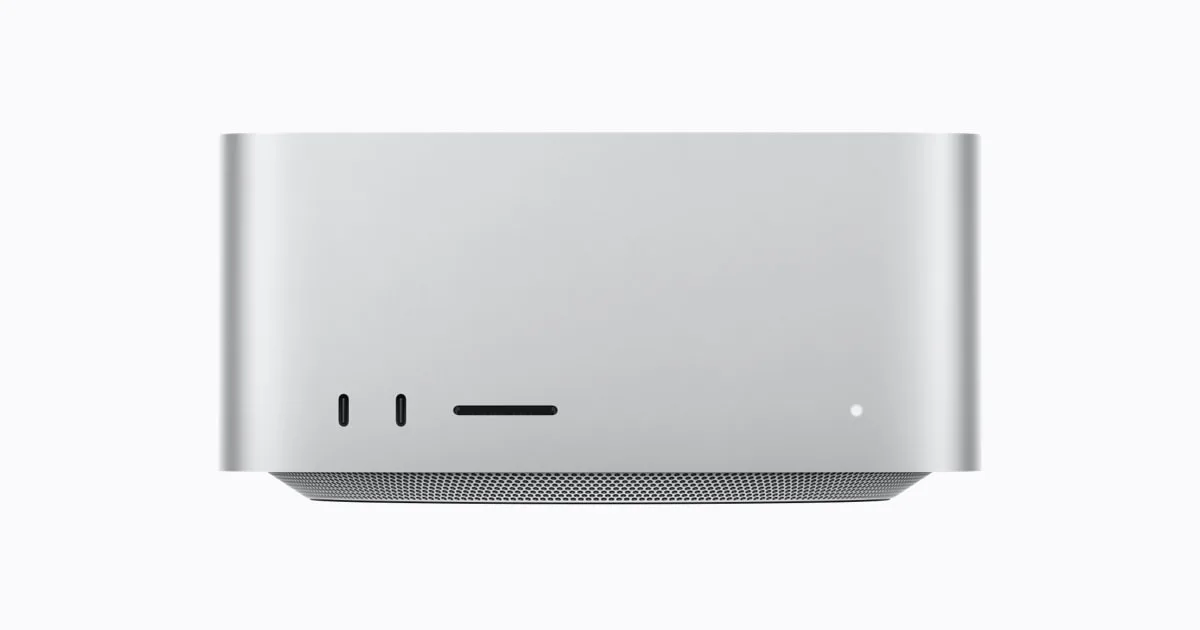
Apple claims 4.3x faster AI on Mac Studio, and the 512GB configuration arrives in late October

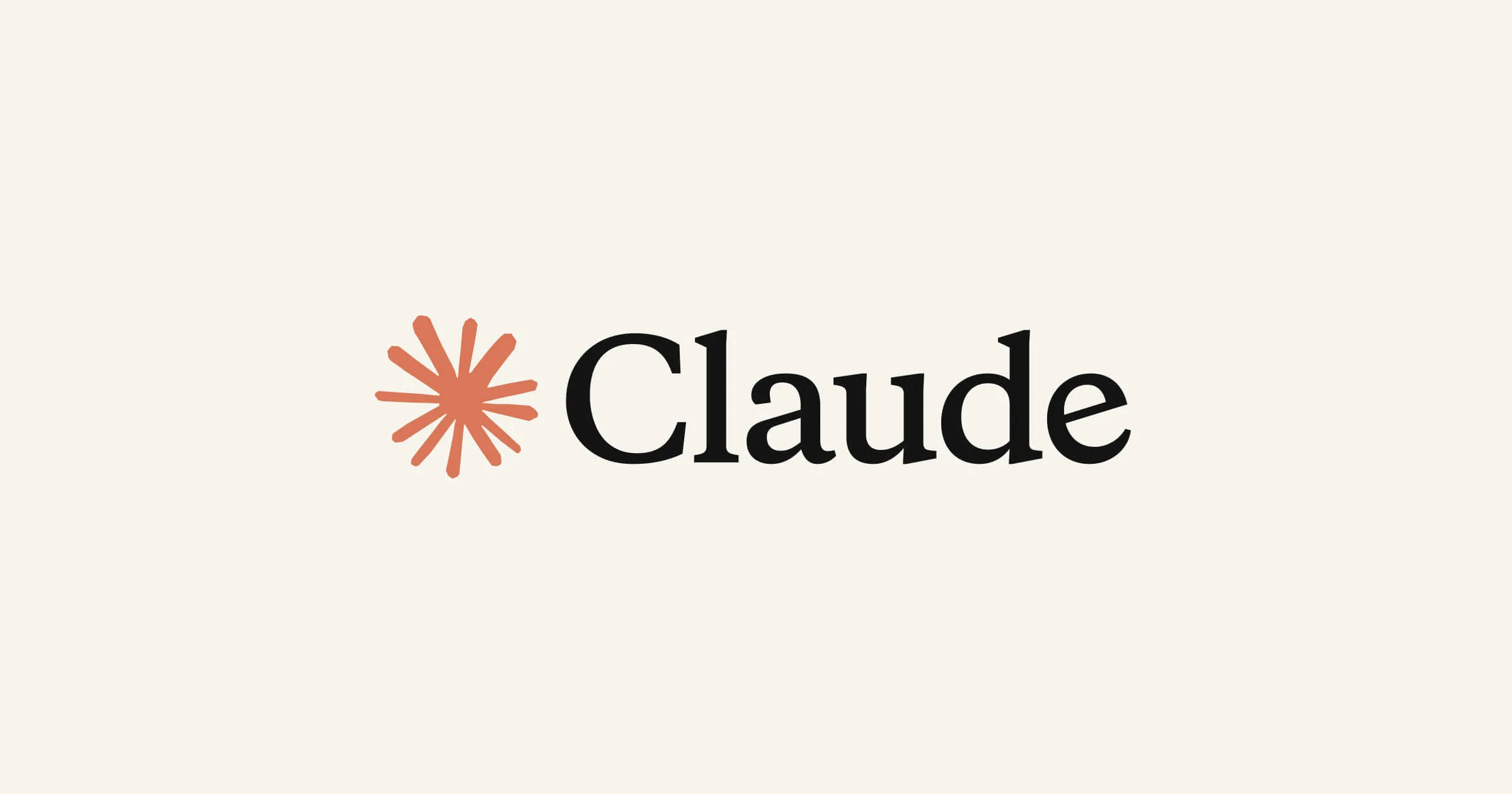
Mac Studio with M5 Max and the all-new M5 Ultra reaches stores on September 22, 2026, and Apple puts its AI performance at up to 4.3x the previous generation, measured in July 2026 against a machine with M3 Ultra. The configuration that decides how large a local model can be, 512GB of unified memory at up to 1.2TB/s, sits in a footnote: it comes in late October. On the software side the new Siri AI ships in beta, in English to start, and will not be available in the EU on iOS, iPadOS or watchOS at launch. Apple Intelligence features that run on server-side models also have daily usage limits, and Apple says wider access to them will be sold for a fee later.

Appleverified

Modelsmedium signal

AWS added model caching to SageMaker HyperPod and measured about 60% faster scale-out

SageMaker HyperPod can now keep model weights on a node's local NVMe and pre-pull the container image, so a pod that used to wait minutes for downloads starts in seconds. AWS reports benchmarks across models from 57 GB to 145 GB showing around 60% faster scale-out, and an image cache that removes over two minutes of pull time, a 97% reduction. Those figures are the vendor's own and arrived without a description of the test. On the same day AWS made TwelveLabs Marengo 3.0 available as an embedding model in Amazon Bedrock Managed Knowledge Base, so a knowledge base can index what a video shows rather than only what was said in it.

AWSverified

Modelsmedium signal

llama.cpp 0.4.0 adds four model architectures, an Apple RDMA transport, and video flags

The 0.4.0 release landed on September 4, 2026, and it is a numbered version rather than one of the nightly builds. It adds initial support for Qwen3.8-Flash-Next, NVIDIA Nemotron-3-Puzzle-75B-A9B, DSpark on Nemotron 3.5, and nanbeige4.2-3B. Apple RDMA becomes an RPC transport, video arrives as command-line options, and the quantizer gains a memory ceiling. Two server defaults changed, and saved session state carries a new version number.

llama.cppverified

Modelsmedium signal

NeoMME's 260M encoder lands within 0.002 of a 3.75B model on ViDoRe v3

H company published NeoMME on September 3, 2026: a pair of multimodal encoders, at 260M and 800M parameters, released under Apache 2.0 and loadable through Hugging Face Transformers. On the ViDoRe v3 document retrieval benchmark the small one scores 0.523 nDCG@10, which is 0.002 behind ColQwen2.5 at roughly 14 times its parameter count. It also encodes about 51 pages per second on a single NVIDIA L40S, and the index it produces can be compressed from about 1.5 MB per page to 6 kB while keeping more than 95% of retrieval quality.

Hugging Faceverified

Modelsstrong signal

OpenAI ships GPT-6 Astra at $10 per million input tokens, with enterprise access off by default

GPT-6 Astra went out on September 3, 2026, first to a limited set of organizations and then, over the following days, to ChatGPT Plus, Pro, Business, and Enterprise. In the API it answers to the name gpt-6-astra at $10 per million input tokens and $50 per million output tokens, and it is also served through Microsoft Azure and Amazon Bedrock. Enterprise workspaces do not get it automatically, because access is off by default at launch and an administrator has to turn it on. OpenAI also says the extra safety checks around this model can pause work in ChatGPT and Codex and stop it outright in the API.

OpenAIverified

Modelsmedium signal

Google's WeatherNext 3 forecasts every hour at 5 kilometers, and you can query it from BigQuery

Google DeepMind and Google Research published WeatherNext 3 on September 3, 2026. It learns from live geostationary satellite mosaics rather than only from physics simulations that carry a six-hour data lag, which lets it produce a new forecast every hour instead of every six. Temperature and moisture come out on a 5-kilometer grid, where WeatherNext 2 worked on 25 kilometers. The forecast data is queryable in BigQuery and Earth Engine today, so this is a release you can build on rather than a paper you can read.

Google DeepMindverified

Modelsstrong signal

NVIDIA's free PAIR beta sends local inference to whichever machine on your network is free

NVIDIA published the Personal AI Router at IFA 2026 on September 3, 2026. It is a free, open source tool for Windows, macOS, and Linux that finds compatible machines on your local network and routes each independent inference request to one that has capacity, so parallel agent subtasks stop queueing behind a single GPU. It works with Ollama and LM Studio, and supports GeForce RTX 20 Series and newer, RTX PRO workstation cards, DGX Spark, and Apple M4 silicon. What it does not do is pool memory, so a model that does not fit on one machine still does not fit.

NVIDIAverified

Modelsstrong signal

Gemini 3.8 Flash arrives at $0.75 per million input tokens, and that price has an end date

Google released Gemini 3.8 Flash and a security variant, 3.8 Flash Cyber, on September 2, 2026. The general model costs $0.75 per million input tokens and $3.75 per million output tokens, the same introductory rate Gemini 3.7 Flash launched with. Google states that the rate holds until December 31, 2026. From January 1, 2027 it becomes $1.50 and $7.50. The Cyber variant is not on the price list at all, because it is handed out through a vetted access program called Fairwind.

Google DeepMindverified

Modelsstrong signal

Anthropic moves the monitoring record into the customer's own cloud account

Anthropic announced Enterprise Frontier Safeguards on September 1, 2026. It pairs zero data retention with automated misuse detection by keeping the activity data in the customer's cloud account rather than Anthropic's. The rollout is phased, and eligible customers get zero data retention on Fable 5 and Fable 5.1 until it reaches them. Anthropic charges nothing for it; the cloud provider bills the storage.

Anthropicverified

Modelsmedium signal

Ai2 published a method that shows what individual benchmark questions actually measure

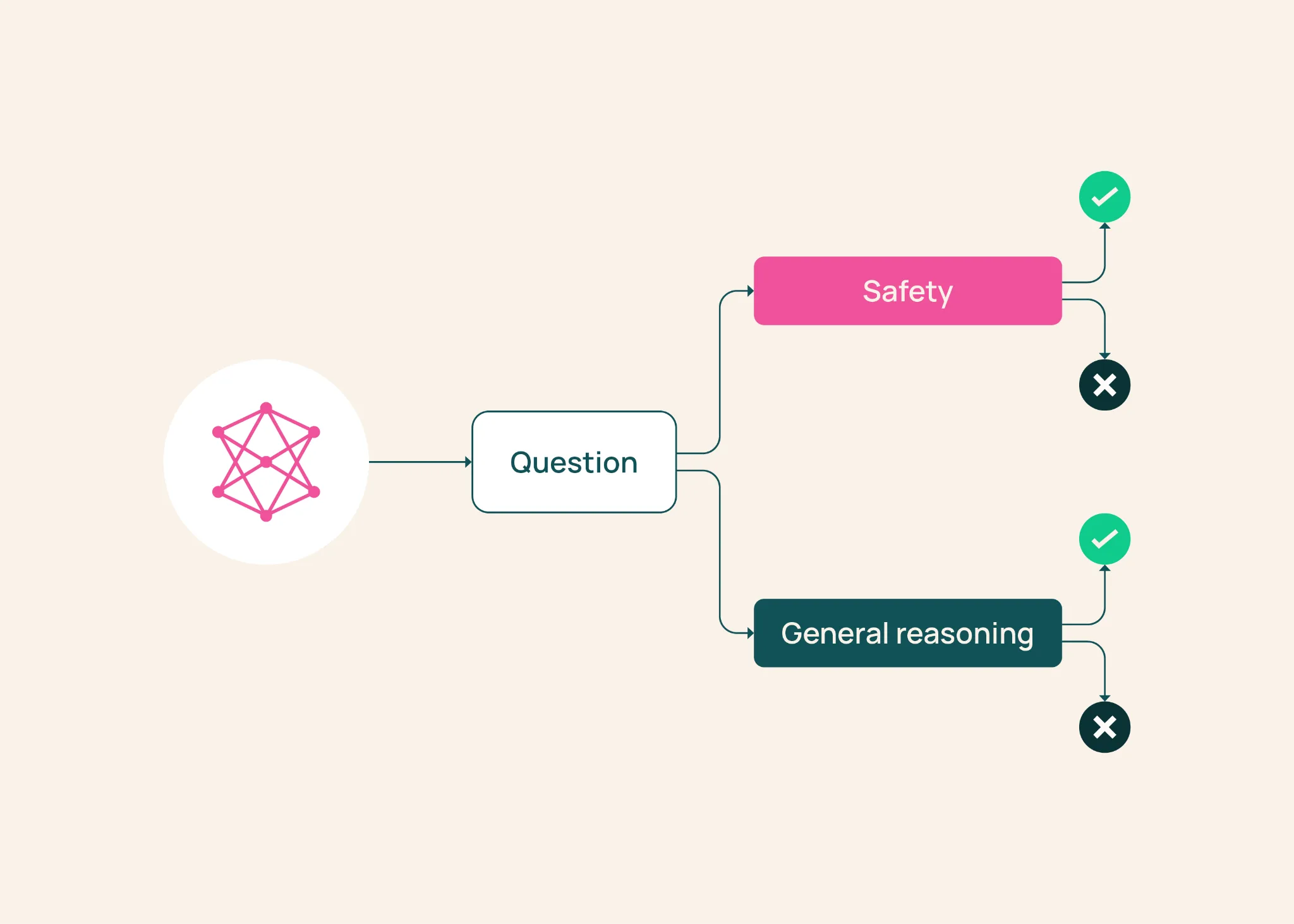
BenchMIRT borrows item response theory from psychometrics and applies it to a benchmark one question at a time, instead of trusting the average. Trained on 100 models across 16 benchmarks and more than 34,000 questions, it recovered two dimensions on its own: safety and general reasoning. Several benchmarks turned out to sit on the dimension nobody assigned them to. Keeping 10% of the questions preserved almost the same ranking as the full set.

Ai2verified

Modelsstrong signal

OpenAI puts Astra in its critical cyber tier, and the safeguards will stop legitimate work too

OpenAI says its unreleased Astra model meets the Critical cybersecurity threshold in its Preparedness Framework, the first model it has designated that way. In testing the model found previously unknown flaws in a hardened browser and operating system and chained them into working compromises. Parts of the model's development and release were delayed while protections were rebuilt. The part that matters outside the lab is the deployment note: the new monitoring can pause or stop work that has nothing to do with security.

OpenAIverified

Modelsstrong signal

Anthropic ships Claude Fable 5.1 and cuts the price of cache reads

Claude Fable 5.1 and Claude Mythos 5.1 are one model at two levels of safeguards, and only the first is generally available. The change that shows up on a bill is the cache read, which drops to $0.25 per million tokens. Anthropic estimates that as roughly 25% off a typical workload and up to about 45% off a heavily agentic one. The model is also allowed to look for software vulnerabilities now, while exploit work stays behind the older restrictions.

Anthropicverified

Modelsstrong signal

Google gave Gemini a video tool that picks what to watch, and reports up to 88% fewer tokens

Agentic video understanding lets the model decide which segments of a video to open, at what frame rate, and whether to use frames, audio, or the transcript. Google launched it on September 1, 2026 for Gemini 3.7 Flash, Gemini 3.6 Flash, and Gemini 3.5 Flash-Lite, through the Gemini API in Google AI Studio and the Gemini Enterprise Agent Platform. The company reports up to 88% lower token consumption, up to 66% lower cost, and up to 7% better accuracy on standard video analysis benchmarks. The price list does not move: standard token rates apply and there is no separate fee.

Googleverified

Modelsstrong signal

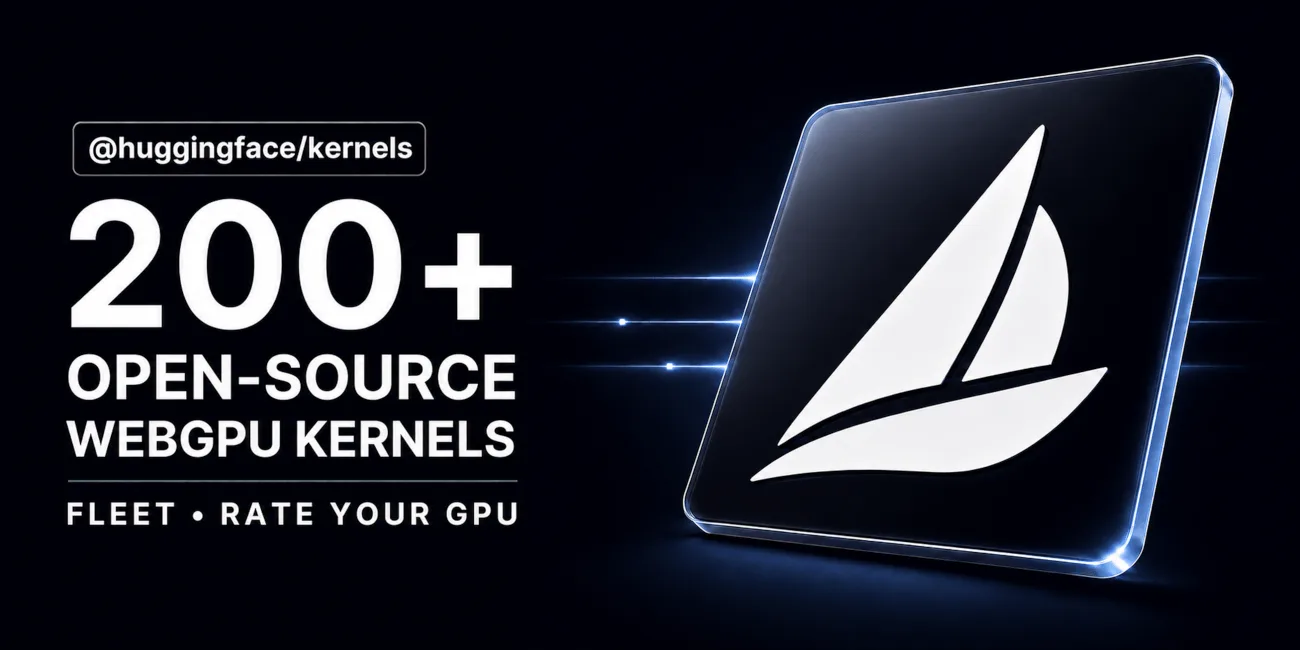
Hugging Face published 207 WebGPU kernels and a loader that pulls them from the Hub

The @huggingface/kernels package downloads one GPU operation from the Hub and runs it in a browser that supports WebGPU. All 207 kernels are Apache-2.0, and each one is published with its interface contract, correctness cases, and benchmark cases in the same repository. Hugging Face compared them with ONNX Runtime Web 1.30.0 on an Apple M4 GPU and reports a 2.57x geometric mean speedup across 809 comparable cases. The timings cover work on the GPU alone, for single operations rather than whole models.

Hugging Faceverified

Modelsmedium signal

llama.cpp spent two days on long context, and the gains landed on three different backends

Between August 29 and 31, 2026, llama.cpp shipped a run of changes that all point at the same place: the part of inference that gets slower as the context grows. Vulkan, CUDA and the Metal and OpenCL paths each got their own fix, with numbers the authors published. Three crashes were closed alongside them. None of it needs a flag; it arrives with the next build.

llama.cppverified

Modelsstrong signal

Tencent opened a 770B model under Apache 2.0, and the weights alone are 1.56TB

Hy4 preview is a mixture-of-experts model with 770B total parameters, 49B of them activated per token, a 1M-token context and an Apache 2.0 license. The weights are 1.56TB across 131 safetensors files, or 0.81TB in the FP8 build, which puts it in the class of models you rent rather than run. The license is the unusual part: a frontier-scale open-weights release with no field-of-use restriction attached.

Tencent Hyverified

Modelsstrong signal

Memory sets what you can run locally, and price per token sets whether you should

A local model has one hard requirement before speed, quality or license enter the discussion: the weights have to fit in memory. That turns the machine question into arithmetic you can do on paper, and Apple's August 25 desktops give you three price points to do it against — $899 for a 32GB ceiling, $2,499 for 128GB, $5,499 for 512GB. This guide works through what fits where, which runner to use, what each size class is good for, and how many tokens it takes before a machine beats paying by the token.

Apple, OpenRouter, DeepSeekverified

Modelsmedium signal

Qwen opened a 125B model with 6B active, and the quantized file is what decides if you can run it

Qwen3.8-Flash-Next is an open-weights multimodal mixture-of-experts model and an early preview of the Qwen4 architecture. The interesting pair of numbers is 125B parameters against 6B activated per token: the first decides whether it fits on your machine, the second decides how fast it answers. Simon Willison has it running on a DGX Spark from quantized files of 72.5GB and 78.9GB, which is the honest hardware requirement.

Qwenverified

Modelsstrong signal

Apple priced the memory, and memory is what a local model actually costs

The new Mac Studio goes to 512GB of unified memory at $5,499, though that configuration does not arrive until late October; the new Mac mini stops at 32GB and starts at $899. For anyone running models on their own machine, that gap is the whole product line, and Apple is now selling it that way.

Appleverified

Modelsstrong signal

GPT-5.6 Sol drops to $4 and $20, and overtakes Claude Opus 5 on cost

OpenAI cut Sol's API price on August 21: input from $5 to $4, output from $30 to $20, cached input from $0.50 to $0.40. On a standard task the model goes from more expensive than Claude Opus 5 to cheaper than it. The cut is promotional and runs at least through November 21.

OpenAIverified

Modelsstrong signal

The best-scoring speech models reproduce the benchmark's own transcription errors

Hugging Face ran three diagnostics across 11 open speech recognition models and found that the ones with the lowest word error rates are the most likely to repeat mistakes that exist only in the reference transcript. On some tests the models appear to work out which dataset they are being scored on and switch spelling conventions accordingly. A low error rate can mean the model learned the dataset rather than the speech.

Hugging Faceverified

Modelsstrong signal

Nvidia's harness takes Claude Opus 5 from about 30% to a perfect ARC-AGI-3 score

Nvidia published a run in which AVO, its agent architecture, scores 100.00 RHAE on ARC-AGI-3 and clears all 183 levels across 25 environments. The same model evaluated on its own scores about 30%. In the same post Nvidia writes that the comparison is not a controlled ablation, and that sentence did not survive into the coverage.

NVIDIAverified