Skip to content

Claude Code, Codex, Copilot, Cursor, MCP

Coding

111 items

Page 3 of 3.

Codingstrong signal

OpenClaw 2026.8.1 turns memory on by default and drops the bundled OpenProse plugin

The August release of the agent runtime enables three behaviors on its own: recall of earlier private conversations, background memory consolidation, and automatic application of skills its own scanner has approved. It also removes the bundled OpenProse plugin and the /prose command, and moves model routes named codex over to openai. Plugin authors face an SDK import gate on September 1, 2026.

OpenClawverified
Codingmedium signal

Gemini CLI stops loading repository MCP servers in an untrusted workspace

A fix merged into Gemini CLI on August 28, 2026 changes the order in which workspace trust is decided, and it shipped the next day in the nightly build v0.59.0-nightly.20260829. Environment signals such as GEMINI_RESTRICTED_MODE are now read before local options, and an untrusted signal ends the check immediately. In the A2A server, MCP server definitions that come from the repository are dropped when the workspace is not trusted. The stated purpose is to keep the server from starting processes it should not start.

Gemini CLIverified

Codingmedium signal

Copilot's CLI moved to a Rust runtime and kept its TypeScript terminal

GitHub's weekly Copilot roundup for August 28 carries one change that is structural rather than cosmetic: the command-line agent now runs on a native Rust runtime, while the terminal interface it draws stays in TypeScript. Around it sit smaller changes that all point the same way, toward deciding once how the agent behaves instead of deciding again every session. GitHub reports the speedup but publishes no figure for it.

GitHubverified

Codingmedium signal

AgentCore Memory can now keep one tenant's memories out of another's

AWS shipped two changes to Amazon Bedrock AgentCore Memory on August 28. Fine-grained access control enforces per-user and per-tenant isolation through AgentCore Gateway, using Cedar policies over the caller's identity instead of authorization code you write yourself. Flexible namespace variables let you scope long-term memories along your own dimensions, up to five keys per memory resource. AWS says the namespace variables come at no additional cost wherever AgentCore Memory is generally available; the announcement about fine-grained access control makes no such statement.

AWSverified

Codingmedium signal

Copilot in Visual Studio gets org-wide agents and a thinking-effort dial

GitHub's August update for Copilot in Visual Studio 2026 lets organization and enterprise owners publish custom agents that every repository in the organization can use. Supported models now expose Low, Medium and High thinking effort, so reasoning depth becomes a choice rather than a default. The Git agent will review uncommitted changes before you open a pull request, on GitHub and Azure DevOps alike. All of it lands on every Copilot plan, including the free one.

GitHubverified

Codingstrong signal

OpenAI sets a shutoff date for Cursor's access to its models

OpenAI notified SpaceX on August 28 that it intends to wind down the contract that puts its models inside Cursor, and it proposed November 12, 2026 as the shutoff date. The stated reason is that OpenAI cannot be confident SpaceX will stay inside its terms of service. Cursor is also cut out of Astra, the model OpenAI says is coming. If you write code in Cursor against an OpenAI model, that part of your setup now has an expiry date.

OpenAIverified

Codingmedium signal

GitHub sets three Copilot dates: seats paid upfront, one chat policy, longer retention

One changelog entry on August 28 carries three separate changes. From September 1, new Copilot Business and Enterprise seats bought by card or PayPal must be paid for before anyone can use them, and existing card customers move to upfront charges on October 1. No earlier than September 28, chat on github.com, chat in GitHub Mobile and the cloud agent become one experience under one policy that is on by default, and chat data then stays for the life of the account instead of 28 days. On the same date, the default effort level for Copilot code review moves from Lite to Balanced.

GitHubverified

Codingmedium signal

Claude Code 2.1.251 closes six ways a project could widen its own permissions

Anthropic published the release on August 28. Six of its fixes share one shape: something declared inside the working directory — a symlink, a plugin entry, a workflow script, a settings file — reached past the boundary the session had approved. Several changes now stop managed or project settings from weakening the sandbox or injecting credential headers without an explicit approval. The same release adds hooks that fire around a model switch and a per-session prompt-cache line in the cost command.

Anthropicverified

Codingweak signal

Cursor Cloud Agents no longer need a repository before they can start

Until now a cloud agent needed a connected GitHub account before it could do anything. From August 27 it can be prompted straight away, with Cursor creating an Origin repository in the background and offering to save the work once the build stands.

Cursorverified

Codingmedium signal

Claude Code 2.1.248 adds a restricted mode and stops leaking credential leftovers

One flag now strips the tools that run code, keeps file access inside the working directory, refuses bypassPermissions and ignores every settings file. The same release stops cloud reviews from uploading tfvars files and editor backups of private keys. Version 2.1.250 followed hours later with fixes only.

Anthropicverified

Codingstrong signal

Anthropic previews a standard that lets agents drive laboratory hardware

The Model Hardware Standard gives an agent one driver format for microscopes, liquid handlers and robotic arms, cutting integration work that used to take weeks down to hours or minutes. It is model-agnostic and reachable over the Model Context Protocol, but for now it is open only to selected labs and manufacturers, by application.

Anthropicverified

Codingmedium signal

Copilot's global model policy starts enforcing on September 1, and the default is on

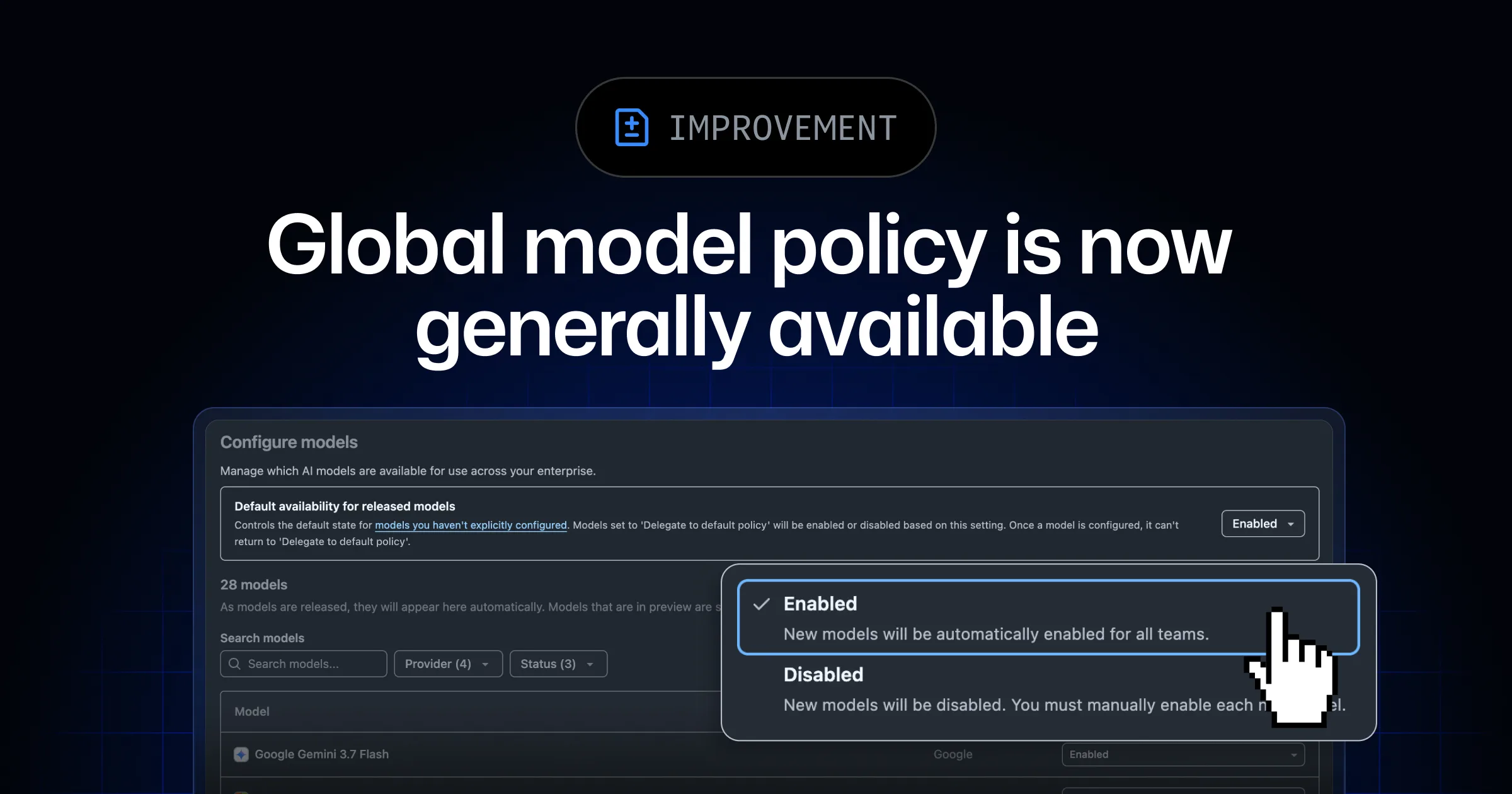
GitHub is rolling out enforcement of the default model policy for Copilot Business and Copilot Enterprise through September 1. Models an administrator never configured stop being unconfigured and start following the policy, and the policy ships enabled. Two categories are held back regardless of what you set: open-weight models, and models GitHub's data retention agreement does not cover. Anthropic's Fable 5 is in the second group.

GitHubverified

Codingmedium signal

Thirteen of twenty-four fixes in Gemini CLI 0.57 were filed by an agent

The stable release landed on August 25 with twenty-four entries. Thirteen of them are labeled SSR Agent — issue fixes written by automation and merged under one account, including two that touch how subagents behave.

Googleverified

Codingweak signal

Claude Code now warns about the permission rule that looks narrow and is not

Version 2.1.246 adds a startup warning for Bash allow rules that put a wildcard before the subcommand, such as Bash(git * main). It also puts auto mode's classifier rules into the permissions screen where they can be read and edited.

Anthropicverified

Codingweak signal

Claude Code crashed on startup on glibc 2.44, and 2.1.245 says so by name

The release published at 05:13 UTC on August 25 fixes a startup crash on Linux distributions shipping glibc 2.44 — Arch Linux, CachyOS and Fedora Rawhide are named. If the CLI stopped opening on a rolling-release machine this week, this is why.

Claude Code Releasesverified

Codingmedium signal

Both SDKs left httpx within eight days, and the plugins had to follow

llm-anthropic 0.27 landed on August 24 and now requires anthropic 1.x, which moved from httpx to httpx2. OpenAI made the same move in its 3.0.0 on August 12, eight days earlier. If you keep both plugins in one environment, they no longer upgrade independently.

Simon Willisonverified

Codingmedium signal

A proxy that stripped one header was doubling Claude Code's API bill

Version 2.1.239 fixes streaming on Bedrock behind proxies that remove the response Content-Type header. Claude Code silently fell back to re-running every turn without streaming, and each turn was billed twice. The same release makes cost estimates show the 1.1× premium that data-residency workspaces pay.

Anthropicverified

Codingmedium signal

llm 0.33 takes the pin out and moves to httpx2

Version 0.32.1 held fresh installs together by pinning the OpenAI Python package below 3.0.0. That was a holding action, and 0.33 does the actual repair: it upgrades to the OpenAI library 3.x and switches its HTTP client from httpx to httpx2. The release also carries changes you will notice in daily use, including a --key option on the embedding commands and server-side tool results that finally show up in llm logs.

Simon Willisonverified

Codingweak signal

A fresh install of llm broke because the OpenAI library stopped using httpx

Version 0.32.1 pins the OpenAI Python package below 3.0.0 so that new installations work again. Nothing in llm changed to cause the break: it imported httpx while relying on the OpenAI package to bring it along, and when that package dropped httpx the dependency simply stopped arriving. It is a small release with a lesson that outlives it.

Simon Willisonverified

Codingmedium signal

GitHub Copilot moved into Slack and Microsoft Teams on the same day

Both shipped on August 21 in public preview. Mention @GitHub in a channel and the agent triages issues, investigates failures, writes changes in a cloud sandbox and opens a pull request, with the conversation attached. The interesting part is not the capability list, which is familiar, but the room it moved into: the place where work gets discussed rather than written.

GitHubverified

Codingstrong signal

Claude Code vs Cursor: same $20, different shape

Both start at $20 a month, both speak MCP, both run skills and hooks, both reach CI. The difference is not the feature list. It is whether the agent lives inside an editor you adopt or inside the terminal you already have.

Anthropic, Cursorverified

Codingmedium signal

Claude gets a separate toolset for driving a browser

August 19 brought two changes to how Claude operates someone else's screen. The computer use tool moved to general availability as computer_toolset_20260801, with no beta header, actions grouped into a single turn, and zoom enabled from the start. Alongside it came browser_toolset_20260801, a separate set of 31 tools that works inside a browser you run yourself rather than across the whole desktop. The important difference is that this set reads the page accessibility tree and returns element references, so a click targets a reference such as ref_2 instead of a point in pixels — and that survives a layout shift.

Anthropicverified

Codingweak signal

Claude Code 2.1.238 stops memory growth in long sessions

The August 20 release fixes what got in the way during long stretches of work rather than adding features. Tool results returned by subagents are now freed as soon as they leave the recent-view window, so memory in long interactive sessions stops growing without a ceiling. The release also fixes custom output styles sliding back to the default tone mid-session, along with a run of stalls in Remote Control. A new keybindingFlavor setting restores Bash behavior, where Ctrl+W deletes back to the previous space, and claude mcp list no longer starts disabled servers just to check their status.

Anthropicverified

Codingweak signal

Workbench becomes Playground, and the old tool is gone

Since August 18, Workbench in the Claude console is called Playground and has been rebuilt from the ground up. The new tool supports every Messages API parameter and ships with templates that show how code execution and web search work. For every run it displays the complete request exactly as the SDK sends it, along with the raw API response, which makes it a way to learn the API rather than only a place to try prompts. The old Workbench shut down on August 17, saved prompts and evaluations do not carry over, and the experimental prompt tools APIs for generating and improving prompts were withdrawn with it.

Anthropicverified

Codingstrong signal

Files, Agent Skills, and the Admin API leave beta

On August 19, Anthropic moved a large part of the Claude platform from beta to general availability. The Files API no longer requires a beta header and gains file expiry through expires_in_seconds, pagination, and filtering by identifier, alongside a terabyte of storage per organization and a limit of 500 requests per minute. Agent Skills and the accompanying Skills API also became generally available, so skills now load through the Messages API without a single beta header. Managed Agents gain allow and block lists of domains for search and content fetching, and the session viewer in the console was redesigned with a timeline minimap and an Inspector panel. Anyone building an agent over client content gets three critical parts of the API that stop being a moving target.

Anthropicverified

Codingmedium signal

Claude Code sessions can now message each other

Two open sessions can talk: Claude finds the others with ListAgents and sends a message through SendMessage, either because you asked or on its own when a change in one session affects the work in another. Only text Claude writes crosses over — never conversation history, never files. Since version 2.1.232 you can also address a session directly by typing @ followed by its name. The feature runs on macOS and Linux and needs version 2.1.224 or later, and /list-agents shows what is available. It pays off most when you keep the frontend and backend of the same project in separate sessions.

Anthropicverified

Codingmedium signal

Auto mode becomes the default permission mode

Since August 14, auto mode is the default permission mode for new sessions on the Pro, Max, and Team plans. Instead of interrupting at every action, a classifier in the background lets safe actions through and stops risky ones. If you set a default mode yourself, it stays in force until you accept a one-time offer to switch, and a mode an organization mandates does not change automatically. One detail matters for your quota: the classifier calls auto mode makes do not count against usage limits, except on Enterprise plans and on accounts running through the Claude API, Bedrock, Google Cloud's agent platform or Foundry, where they consume tokens.

Anthropicverified

Codingweak signal

Claude Code 2.1.235 to 2.1.237: Concise style, ANTHROPIC_DEFAULT_MODEL, and spell checking

Three releases in three days change several things about daily work. Version 2.1.237 introduces a built-in Concise output style, in which Claude leads with the result and skips the preamble and the recap, and fixes prompt caching for sessions that go through a proxy gateway or a custom base URL. Version 2.1.236 adds the ANTHROPIC_DEFAULT_MODEL environment variable, which sets the model new sessions start on, and a notify_when_idle option that asks another session to report when it frees up. Version 2.1.235 introduces optional spell checking through aspell, hunspell, or ispell, and reduces memory and processor use for sessions running in the cloud.

Anthropicverified

Codingmedium signal

The claim that MCP reached a release candidate is not confirmed by the primary source

This item was built on secondhand reports from August. Checking the specification shows that Model Context Protocol has no release candidate stage at all: versions carry dates, revisions are marked draft, current or final, and the current one is 2026-07-28. What holds is the rest of it, that MCP is the layer everything an agent touches passes through and gets approved by.

agregatori vijestiverified